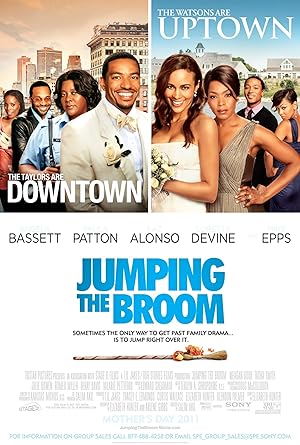
Jumping the Broom
Two very different families converge on Martha's Vineyard one weekend for a wedding.
Despite its small-scale budget of $6.6M, Jumping the Broom became a commercial success, earning $37.7M worldwide—a 471% return. The film's bold vision connected with viewers, proving that strong storytelling can transcend budget limitations.
3 wins & 13 nominations


Plot Structure
Story beats plotted across runtime


Narrative Arc
Emotional journey through the story's key moments
Story Circle
Blueprint 15-beat structure
Arcplot Score Breakdown
Weighted: Precision (70%) + Arc (15%) + Theme (15%)
Jumping the Broom (2011) exemplifies precise narrative architecture, characteristic of Salim Akil's storytelling approach. This structural analysis examines how the film's 15-point plot structure maps to proven narrative frameworks across 1 hour and 52 minutes. With an Arcplot score of 7.1, the film balances conventional beats with creative variation.
Characters
Cast & narrative archetypes

Sabrina Watson
Jason Taylor
Mrs. Pam Taylor
Claudine Watson
Chef McKenna
Blythe Watson
Geneva Watson
Greg Watson
Mr. Willie Earl Taylor
Malcolm Taylor
Main Cast & Characters
Sabrina Watson
Played by Paula Patton
Wealthy, educated bride from Martha's Vineyard who struggles between her upscale world and her fiancé's working-class Brooklyn family.
Jason Taylor
Played by Laz Alonso
Successful businessman groom caught between two families and cultures as he tries to unite them for his wedding.
Mrs. Pam Taylor
Played by Loretta Devine
Jason's strong-willed, working-class Brooklyn mother who feels disrespected by the Watson family's wealth and formality.
Claudine Watson
Played by Angela Bassett
Sabrina's sophisticated, controlling mother who values social status and tries to orchestrate the perfect wedding.
Chef McKenna
Played by Gary Dourdan
The charming, handsome wedding chef who stirs up romance and becomes entangled with the Watson family.
Blythe Watson
Played by Meagan Good
Sabrina's free-spirited, single sister who finds unexpected romance with the wedding chef.
Geneva Watson
Played by Valarie Pettiford
Sabrina's wise, traditional aunt who practices old customs and serves as the family's spiritual anchor.
Greg Watson
Played by Brian Stokes Mitchell
Claudine's refined husband and Sabrina's father who tries to keep peace between the feuding families.
Mr. Willie Earl Taylor
Played by Mike Epps
Jason's laid-back father who brings Brooklyn working-class sensibilities to the upscale Vineyard wedding.
Malcolm Taylor
Played by Pooch Hall
Jason's postal worker brother who harbors a secret that threatens to disrupt the wedding.
Structural Analysis
The Status Quo at 2 minutes (2% through the runtime) establishes Sabrina Watson, successful lawyer from wealthy family, maintains perfect image in her upscale Brooklyn life. Jason Taylor, working-class postal worker from Brooklyn, lives with his close-knit, spirited family.. Structural examination shows that this early placement immediately immerses viewers in the story world.
The inciting incident occurs at 12 minutes when Both families arrive at the Watson estate on Martha's Vineyard for the wedding weekend. Immediate culture clash begins as the reserved, upper-class Watsons meet the boisterous, working-class Taylors.. At 11% through the film, this Disruption aligns precisely with traditional story structure. This beat shifts the emotional landscape, launching the protagonist into the central conflict.
The First Threshold at 27 minutes marks the transition into Act II, occurring at 24% of the runtime. This shows the protagonist's commitment to Despite the family tensions, Sabrina and Jason reaffirm their commitment to each other and decide to push forward with the wedding weekend festivities, choosing love over family drama., moving from reaction to action.
At 56 minutes, the Midpoint arrives at 50% of the runtime—precisely centered, creating perfect narrative symmetry. Notably, this crucial beat Major revelation: Jason's mother Mrs. Taylor reveals she knew Sabrina's mother years ago, and a deep secret from the past threatens to derail everything. The truth about family history and old wounds comes to light, raising the stakes dramatically., fundamentally raising what's at risk. The emotional intensity shifts, dividing the narrative into clear before-and-after phases.
The Collapse moment at 83 minutes (74% through) represents the emotional nadir. Here, Sabrina calls off the wedding. The dream of uniting the families dies. Both Jason and Sabrina retreat to separate corners, believing their love cannot overcome the family divide and secrets that have been revealed., reveals the protagonist at their lowest point. This beat's placement in the final quarter sets up the climactic reversal.
The Second Threshold at 89 minutes initiates the final act resolution at 80% of the runtime. Both families realize their pride and prejudices nearly destroyed something beautiful. Parents on both sides apologize and give their blessing. Sabrina and Jason realize their love is stronger than family conflict - they choose each other and forgiveness., demonstrating the transformation achieved throughout the journey.
Emotional Journey
Jumping the Broom's emotional architecture traces a deliberate progression across 15 carefully calibrated beats.
Narrative Framework
This structural analysis employs structural analysis methodology used to understand storytelling architecture. By mapping Jumping the Broom against these established plot points, we can identify how Salim Akil utilizes or subverts traditional narrative conventions. The plot point approach reveals not only adherence to structural principles but also creative choices that distinguish Jumping the Broom within the comedy genre.
Salim Akil's Structural Approach
Among the 2 Salim Akil films analyzed on Arcplot, the average structural score is 7.3, reflecting strong command of classical structure. Jumping the Broom takes a more unconventional approach compared to the director's typical style. For comparative analysis, explore the complete Salim Akil filmography.
Comparative Analysis
Additional comedy films include The Bad Guys, Ella Enchanted and The Evening Star. For more Salim Akil analyses, see Sparkle.
Plot Points by Act
Act I
SetupStatus Quo
Sabrina Watson, successful lawyer from wealthy family, maintains perfect image in her upscale Brooklyn life. Jason Taylor, working-class postal worker from Brooklyn, lives with his close-knit, spirited family.
Theme
Mrs. Watson mentions that a marriage isn't just between two people, it's between two families - foreshadowing the class and cultural clash that will drive the story's conflict.
Worldbuilding
Establish both families: the upscale, Martha's Vineyard Watson family with their refined traditions and the working-class Taylor family from Brooklyn with their vibrant, unfiltered personalities. Sabrina and Jason's engagement and wedding plans are introduced.
Disruption
Both families arrive at the Watson estate on Martha's Vineyard for the wedding weekend. Immediate culture clash begins as the reserved, upper-class Watsons meet the boisterous, working-class Taylors.
Resistance
Tensions escalate between the families. Mrs. Watson tries to control every detail while Mrs. Taylor feels disrespected. Sabrina and Jason navigate their families' conflicts while trying to maintain their own relationship. Secret revelations begin to emerge.
Act II
ConfrontationFirst Threshold
Despite the family tensions, Sabrina and Jason reaffirm their commitment to each other and decide to push forward with the wedding weekend festivities, choosing love over family drama.
Mirror World
Chef McKenna (the estate chef) develops a connection with one of the bridesmaids, representing a subplot about authentic connection versus pretense. Other couples and family members explore themes of honesty and acceptance.
Premise
Wedding weekend activities unfold: rehearsal dinner, pre-wedding parties, family bonding attempts. Comic clashes between the families continue. Secrets begin surfacing about various family members, including relationship complications and hidden pasts.
Midpoint
Major revelation: Jason's mother Mrs. Taylor reveals she knew Sabrina's mother years ago, and a deep secret from the past threatens to derail everything. The truth about family history and old wounds comes to light, raising the stakes dramatically.
Opposition
Families fracture further as more secrets emerge. Mrs. Watson and Mrs. Taylor's confrontation intensifies. Sabrina questions whether the wedding should happen. Jason feels caught between his family and his bride. Supporting characters face their own crises of truth and identity.
Collapse
Sabrina calls off the wedding. The dream of uniting the families dies. Both Jason and Sabrina retreat to separate corners, believing their love cannot overcome the family divide and secrets that have been revealed.
Crisis
Sabrina and Jason separately reflect on what truly matters. Family members on both sides process their own prejudices, mistakes, and the real meaning of family. Dark night of doubt before dawn of clarity.
Act III
ResolutionSecond Threshold
Both families realize their pride and prejudices nearly destroyed something beautiful. Parents on both sides apologize and give their blessing. Sabrina and Jason realize their love is stronger than family conflict - they choose each other and forgiveness.
Synthesis
The wedding proceeds with both families united. The ceremony incorporates both traditions: "jumping the broom" (African-American tradition) and the upscale Watson aesthetic. Families blend, celebrate, and find common ground. Love and acceptance triumph.
Transformation
Sabrina and Jason, now married, surrounded by their unified families celebrating together. The image mirrors the opening separation but shows transformation: two families have become one, class divisions overcome by love and mutual respect.