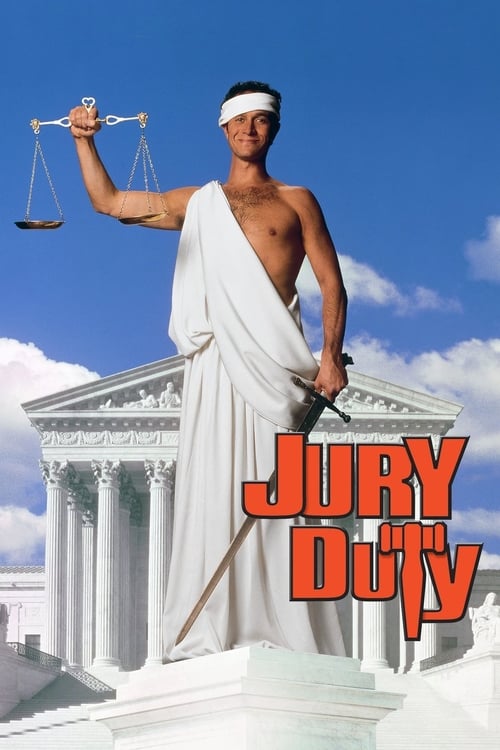
Jury Duty
When jobless Tommy Collins discovers that sequestered jurors earn free room and board as well as $5-a-day, he gets himself assigned to a jury in a murder trial. Once there, he does everything he can to prolong the trial and deliberations and make the sequestration more comfortable for himself.
The film earned $17.0M at the global box office.


Plot Structure
Story beats plotted across runtime


Narrative Arc
Emotional journey through the story's key moments
Story Circle
Blueprint 15-beat structure
Arcplot Score Breakdown
Weighted: Precision (70%) + Arc (15%) + Theme (15%)
Jury Duty (1995) exhibits strategically placed story structure, characteristic of John Fortenberry's storytelling approach. This structural analysis examines how the film's 15-point plot structure maps to proven narrative frameworks across 1 hour and 28 minutes. With an Arcplot score of 7.3, the film balances conventional beats with creative variation.
Characters
Cast & narrative archetypes

Tommy Collins
Monica
Judge Powell
Frank
Nathan
Jed
Main Cast & Characters
Tommy Collins
Played by Pauly Shore
An unemployed slacker who gets called for jury duty and becomes obsessed with a Las Vegas showgirl involved in the trial
Monica
Played by Tia Carrere
A Las Vegas showgirl who becomes the object of Tommy's affection during the trial
Judge Powell
Played by Brian Doyle-Murray
The stern judge presiding over the murder trial who must deal with Tommy's antics
Frank
Played by Sean Whalen
Tommy's trailer-living friend who represents his unmotivated lifestyle
Nathan
Played by Stanley Tucci
An uptight juror who clashes with Tommy's immature behavior throughout the trial
Jed
Played by Abe Vigoda
Tommy's friend who works at a drive-thru and shares his slacker attitude
Structural Analysis
The Status Quo at 1 minutes (1% through the runtime) establishes Tommy Collins is an unemployed slacker living off his mother, unemployed and aimless, playing video games and avoiding responsibility in his messy apartment.. Significantly, this early placement immediately immerses viewers in the story world.
The inciting incident occurs at 9 minutes when Tommy is forced to report to jury duty after failing to get out of it. He discovers jurors are sequestered in a luxury hotel with free room service, pool, and entertainment.. At 10% through the film, this Disruption aligns precisely with traditional story structure. This beat shifts the emotional landscape, launching the protagonist into the central conflict.
The First Threshold at 21 minutes marks the transition into Act II, occurring at 24% of the runtime. This shows the protagonist's commitment to Tommy actively chooses to manipulate the jury process to prolong the trial, deliberately creating conflict among jurors to prevent consensus and extend his free luxury hotel stay., moving from reaction to action.
At 45 minutes, the Midpoint arrives at 51% of the runtime—precisely centered, creating perfect narrative symmetry. The analysis reveals that this crucial beat Tommy appears to be winning - he's successfully extended the trial, is getting closer to Monica, and seems to have the perfect scam going. False victory as his manipulation is working perfectly., fundamentally raising what's at risk. The emotional intensity shifts, dividing the narrative into clear before-and-after phases.
The Collapse moment at 66 minutes (75% through) represents the emotional nadir. Here, Monica discovers Tommy's scheme and rejects him in disgust. Tommy is exposed as a fraud who has been manipulating the justice system for personal gain, destroying his relationship and reputation., reveals the protagonist at their lowest point. This beat's placement in the final quarter sets up the climactic reversal.
The Second Threshold at 70 minutes initiates the final act resolution at 79% of the runtime. Tommy realizes he must actually engage with the case honestly and take responsibility. He reviews the evidence with genuine focus for the first time and discovers real insights about the defendant's innocence., demonstrating the transformation achieved throughout the journey.
Emotional Journey
Jury Duty's emotional architecture traces a deliberate progression across 15 carefully calibrated beats.
Narrative Framework
This structural analysis employs systematic plot point analysis that identifies crucial turning points. By mapping Jury Duty against these established plot points, we can identify how John Fortenberry utilizes or subverts traditional narrative conventions. The plot point approach reveals not only adherence to structural principles but also creative choices that distinguish Jury Duty within the comedy genre.
John Fortenberry's Structural Approach
Among the 2 John Fortenberry films analyzed on Arcplot, the average structural score is 7.3, reflecting strong command of classical structure. Jury Duty exemplifies the director's characteristic narrative technique. For comparative analysis, explore the complete John Fortenberry filmography.
Comparative Analysis
Additional comedy films include The Bad Guys, Ella Enchanted and The Evening Star. For more John Fortenberry analyses, see A Night at the Roxbury.
Plot Points by Act
Act I
SetupStatus Quo
Tommy Collins is an unemployed slacker living off his mother, unemployed and aimless, playing video games and avoiding responsibility in his messy apartment.
Theme
Tommy's mother tells him he needs to "take responsibility" and be accountable for his life, establishing the theme of personal responsibility versus exploitation.
Worldbuilding
Tommy's pathetic unemployed life is established - he's broke, lives with his mother, gets eviction notices, and discovers a jury duty summons he initially tries to ignore.
Disruption
Tommy is forced to report to jury duty after failing to get out of it. He discovers jurors are sequestered in a luxury hotel with free room service, pool, and entertainment.
Resistance
Tommy debates whether to get kicked off the jury or stay for the perks. He meets the other jurors, including love interest Monica, and begins to see the trial as a free vacation opportunity.
Act II
ConfrontationFirst Threshold
Tommy actively chooses to manipulate the jury process to prolong the trial, deliberately creating conflict among jurors to prevent consensus and extend his free luxury hotel stay.
Mirror World
Tommy connects with Monica, a sincere juror who believes in civic duty and justice. She represents the responsible citizen Tommy could become.
Premise
Tommy lives it up in the hotel - ordering expensive room service, using the facilities, partying with jurors, and sabotaging deliberations to keep the trial going indefinitely while pursuing Monica.
Midpoint
Tommy appears to be winning - he's successfully extended the trial, is getting closer to Monica, and seems to have the perfect scam going. False victory as his manipulation is working perfectly.
Opposition
The judge and lawyers grow suspicious of Tommy's motives. Other jurors become frustrated with the endless deliberations. Monica begins to see through Tommy's manipulations and questions his integrity.
Collapse
Monica discovers Tommy's scheme and rejects him in disgust. Tommy is exposed as a fraud who has been manipulating the justice system for personal gain, destroying his relationship and reputation.
Crisis
Tommy faces the consequences of his selfishness - alone, despised by the other jurors, and forced to confront what his exploitation has cost him emotionally and morally.
Act III
ResolutionSecond Threshold
Tommy realizes he must actually engage with the case honestly and take responsibility. He reviews the evidence with genuine focus for the first time and discovers real insights about the defendant's innocence.
Synthesis
Tommy fights to convince the other jurors of the truth, using his newfound responsibility and integrity. He proves the defendant is innocent through actual detective work and persuades the jury to acquit.
Transformation
Tommy leaves the courthouse as a changed person - he's taken responsibility, done the right thing, and earned Monica's respect. He now has purpose and self-respect instead of just exploiting the system.