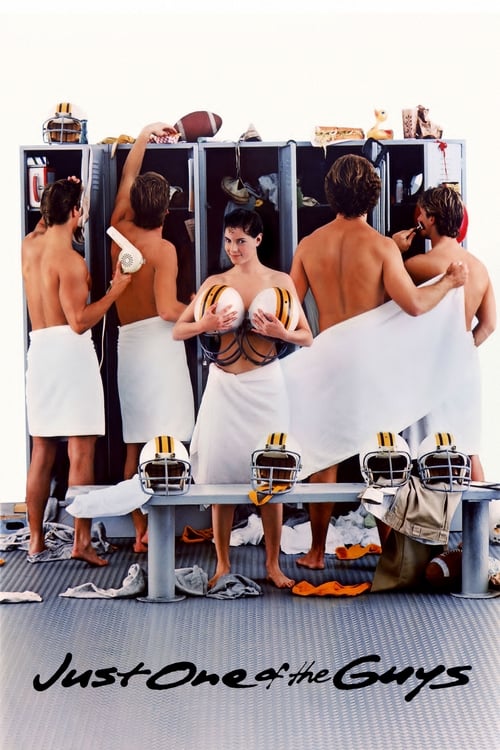
Just One of the Guys
When Terry Griffith loses her high school's writing competition, she's convinced that it's because she's a girl. So Terry decides to change high schools and pose as a boy to prove her point. Her brother, Buddy, helps her pass as a guy so well that she is soon making friends with the boys at school, including the attractive Rick, who becomes her new best friend. But her gender-swapping makes things difficult when she falls in love with him.
Working with a small-scale budget of $11.5M, the film achieved a modest success with $11.5M in global revenue (+0% profit margin).


Plot Structure
Story beats plotted across runtime


Narrative Arc
Emotional journey through the story's key moments
Story Circle
Blueprint 15-beat structure
Arcplot Score Breakdown
Weighted: Precision (70%) + Arc (15%) + Theme (15%)
Just One of the Guys (1985) exhibits meticulously timed narrative architecture, characteristic of Lisa Gottlieb's storytelling approach. This structural analysis examines how the film's 15-point plot structure maps to proven narrative frameworks across 1 hour and 40 minutes. With an Arcplot score of 7.3, the film balances conventional beats with creative variation.
Characters
Cast & narrative archetypes

Terry Griffith
Rick Morehouse
Buddy Griffith
Deborah Anne Griffith
Kevin Dolenz
Greg Tolan
Sandy
Main Cast & Characters
Terry Griffith
Played by Joyce Hyser
An ambitious high school journalist who disguises herself as a boy to prove she can succeed on merit in the male-dominated journalism world.
Rick Morehouse
Played by Clayton Rohner
A sensitive aspiring writer who befriends Terry (as a boy) and becomes her unlikely confidant and eventual love interest.
Buddy Griffith
Played by Billy Jayne
Terry's supportive younger brother who helps her maintain her male disguise and provides comic relief.
Deborah Anne Griffith
Played by Sherilyn Fenn
Terry's best friend, a boy-crazy cheerleader who represents traditional femininity and provides contrast to Terry's ambitions.
Kevin Dolenz
Played by Clayton Landey
Terry's shallow ex-boyfriend, a popular jock who epitomizes the superficial male attitudes Terry is trying to challenge.
Greg Tolan
Played by William Zabka
The arrogant school bully who torments Rick and serves as the primary antagonist at the new high school.
Sandy
Played by Leigh McCloskey
A forward girl who pursues Terry (in male disguise), creating awkward romantic complications.
Structural Analysis
The Status Quo at 1 minutes (1% through the runtime) establishes Terry Griffith confidently walks through her high school, popular and attractive but frustrated that people only see her looks, not her journalistic talent.. Of particular interest, this early placement immediately immerses viewers in the story world.
The inciting incident occurs at 11 minutes when Terry's article is rejected from the journalism contest. She's told her writing isn't being taken seriously, and she realizes her appearance is holding her back from being respected as a journalist.. At 11% through the film, this Disruption aligns precisely with traditional story structure. This beat shifts the emotional landscape, launching the protagonist into the central conflict.
The First Threshold at 24 minutes marks the transition into Act II, occurring at 24% of the runtime. This reveals the protagonist's commitment to Terry fully commits to the disguise, cuts her hair, binds her chest, and walks into her new high school as "Terry Griffith," a teenage boy. She crosses into the mirror world of male experience., moving from reaction to action.
At 49 minutes, the Midpoint arrives at 49% of the runtime—precisely centered, creating perfect narrative symmetry. The analysis reveals that this crucial beat False victory: Terry's article is praised, Rick is becoming confident and popular with her help, and her plan seems to be working perfectly. But she's also developing real feelings for Rick, complicating everything., fundamentally raising what's at risk. The emotional intensity shifts, dividing the narrative into clear before-and-after phases.
The Collapse moment at 74 minutes (74% through) represents the emotional nadir. Here, Everything falls apart: Terry's deception is revealed at the prom. Rick feels betrayed and humiliated, her relationship with Kevin ends, and she loses both her friendship and her credibility. The death of her false identity., demonstrates the protagonist at their lowest point. This beat's placement in the final quarter sets up the climactic reversal.
The Second Threshold at 80 minutes initiates the final act resolution at 80% of the runtime. Terry decides to own her truth and fight for genuine understanding. She synthesizes her experience as both genders with her authentic self, ready to face Rick and prove that real connection transcends deception., demonstrating the transformation achieved throughout the journey.
Emotional Journey
Just One of the Guys's emotional architecture traces a deliberate progression across 15 carefully calibrated beats.
Narrative Framework
This structural analysis employs proven narrative structure principles that track dramatic progression. By mapping Just One of the Guys against these established plot points, we can identify how Lisa Gottlieb utilizes or subverts traditional narrative conventions. The plot point approach reveals not only adherence to structural principles but also creative choices that distinguish Just One of the Guys within the comedy genre.
Comparative Analysis
Additional comedy films include The Bad Guys, Ella Enchanted and The Evening Star.
Plot Points by Act
Act I
SetupStatus Quo
Terry Griffith confidently walks through her high school, popular and attractive but frustrated that people only see her looks, not her journalistic talent.
Theme
Terry's teacher or friend suggests that being taken seriously isn't about appearance but about proving your worth - foreshadowing her journey to understand real equality.
Worldbuilding
Establishment of Terry's world: her boyfriend Kevin, her journalism ambitions, her supportive brother Buddy, and the sexism she faces when her article is rejected despite being well-written.
Disruption
Terry's article is rejected from the journalism contest. She's told her writing isn't being taken seriously, and she realizes her appearance is holding her back from being respected as a journalist.
Resistance
Terry debates her radical idea: disguise herself as a boy and transfer to another school to prove she can win the contest on merit alone. Her brother Buddy reluctantly helps with the transformation.
Act II
ConfrontationFirst Threshold
Terry fully commits to the disguise, cuts her hair, binds her chest, and walks into her new high school as "Terry Griffith," a teenage boy. She crosses into the mirror world of male experience.
Mirror World
Terry meets Rick Morehouse, a shy, awkward boy who becomes her best friend. Rick represents authentic connection beyond appearances - he likes "Terry" for who she is, not what she looks like.
Premise
The fun and games of being "one of the guys": Terry experiences male bonding, locker room talk, awkward encounters with girls attracted to her, and helps Rick gain confidence while writing her winning article.
Midpoint
False victory: Terry's article is praised, Rick is becoming confident and popular with her help, and her plan seems to be working perfectly. But she's also developing real feelings for Rick, complicating everything.
Opposition
The masquerade becomes harder to maintain: Rick starts dating Sandy, Terry's jealousy grows, her boyfriend Kevin becomes suspicious, close calls with discovery increase, and the emotional toll of living a lie intensifies.
Collapse
Everything falls apart: Terry's deception is revealed at the prom. Rick feels betrayed and humiliated, her relationship with Kevin ends, and she loses both her friendship and her credibility. The death of her false identity.
Crisis
Terry processes the consequences of her actions, confronting what she's learned about sexism, identity, and authentic connection. She realizes winning the contest means nothing if she's lost herself and hurt others.
Act III
ResolutionSecond Threshold
Terry decides to own her truth and fight for genuine understanding. She synthesizes her experience as both genders with her authentic self, ready to face Rick and prove that real connection transcends deception.
Synthesis
The finale: Terry confronts Rick, reveals her true motivations, and demonstrates that the person he befriended was real - just not the gender he assumed. She proves herself through vulnerability and honesty, not disguise.
Transformation
Terry, now fully herself - confident, authentic, and respected for her mind and character - shares a genuine connection with Rick. She's learned that true equality comes from being yourself, not becoming someone else.