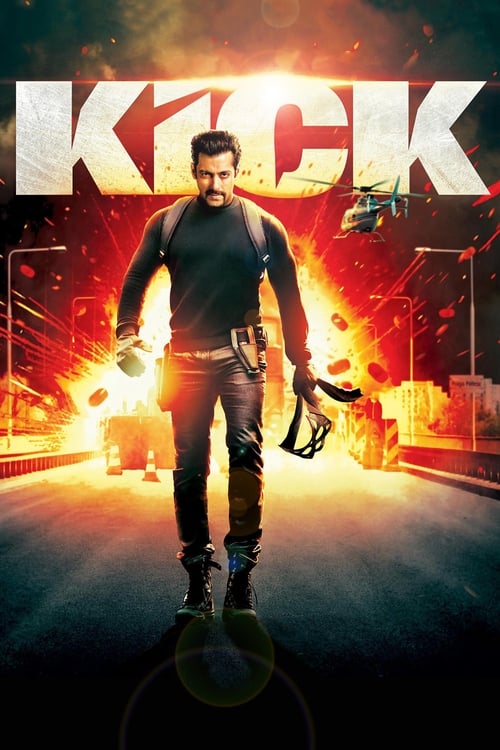
Kick
An adrenaline junkie walks away from a whirlwind romance and embraces a new life as a thief, though he soon finds himself pursued by veteran police officer and engaged in a turf war with a local gangster.
Despite a respectable budget of $22.0M, Kick became a commercial success, earning $55.0M worldwide—a 150% return.

Plot Structure
Story beats plotted across runtime


Narrative Arc
Emotional journey through the story's key moments
Story Circle
Blueprint 15-beat structure
Arcplot Score Breakdown
Weighted: Precision (70%) + Arc (15%) + Theme (15%)
Kick (2014) exemplifies precise plot construction, characteristic of Sajid Nadiadwala's storytelling approach. This structural analysis examines how the film's 15-point plot structure maps to proven narrative frameworks across 2 hours and 26 minutes. With an Arcplot score of 7.3, the film balances conventional beats with creative variation.
Characters
Cast & narrative archetypes

Devi Lal Singh / Devil
Dr. Shaina Mehra
Himanshu Tyagi
Shiv Gajra
Main Cast & Characters
Devi Lal Singh / Devil
Played by Salman Khan
An adrenaline junkie who becomes a masked vigilante robbing the corrupt to help the needy
Dr. Shaina Mehra
Played by Jacqueline Fernandez
A psychiatrist who becomes romantically involved with Devi and later helps expose his true identity
Himanshu Tyagi
Played by Randeep Hooda
A police officer determined to catch Devil, unaware of his connection to his sister's fiancé
Shiv Gajra
Played by Nawazuddin Siddiqui
A ruthless arms dealer and human trafficker who becomes Devil's primary target
Structural Analysis
The Status Quo at 2 minutes (1% through the runtime) establishes Shaina recounts her past relationship to her friend, establishing her world as a successful psychiatrist who once loved an unpredictable man named Devil.. Of particular interest, this early placement immediately immerses viewers in the story world.
The inciting incident occurs at 18 minutes when Devil breaks up with Shaina because their relationship no longer gives him the "kick" he craves, disrupting what could have been a stable life together.. At 12% through the film, this Disruption aligns precisely with traditional story structure. This beat shifts the emotional landscape, launching the protagonist into the central conflict.
The First Threshold at 36 minutes marks the transition into Act II, occurring at 25% of the runtime. This indicates the protagonist's commitment to The reveal that Devil is the legendary thief marks the full entry into Act 2. He actively chooses this dangerous life because it gives him the ultimate kick, stealing to fund a children's hospital., moving from reaction to action.
At 73 minutes, the Midpoint arrives at 50% of the runtime—precisely centered, creating perfect narrative symmetry. Of particular interest, this crucial beat Shiv Gajra, a ruthless arms dealer, is introduced as the true antagonist. His presence and Devil's history with him raise the stakes from playful heists to life-or-death conflict. False victory turns to real danger., fundamentally raising what's at risk. The emotional intensity shifts, dividing the narrative into clear before-and-after phases.
The Collapse moment at 110 minutes (75% through) represents the emotional nadir. Here, Devil's father is killed by Shiv Gajra's men. This "whiff of death" represents Devil's lowest point - his lifestyle has cost him the one family member who accepted him unconditionally., shows the protagonist at their lowest point. This beat's placement in the final quarter sets up the climactic reversal.
The Second Threshold at 117 minutes initiates the final act resolution at 80% of the runtime. Devil synthesizes his two selves: the man who needs kicks and the man who wants to protect others. He chooses to use his skills one final time - not for thrills, but for justice and love., demonstrating the transformation achieved throughout the journey.
Emotional Journey
Kick's emotional architecture traces a deliberate progression across 15 carefully calibrated beats.
Narrative Framework
This structural analysis employs a 15-point narrative structure framework that maps key story moments. By mapping Kick against these established plot points, we can identify how Sajid Nadiadwala utilizes or subverts traditional narrative conventions. The plot point approach reveals not only adherence to structural principles but also creative choices that distinguish Kick within the action genre.
Comparative Analysis
Additional action films include The Bad Guys, Puss in Boots and Venom: The Last Dance.
Plot Points by Act
Act I
SetupStatus Quo
Shaina recounts her past relationship to her friend, establishing her world as a successful psychiatrist who once loved an unpredictable man named Devil.
Theme
Devil's philosophy is introduced: he lives for the "kick" - the adrenaline rush - suggesting the theme that true fulfillment comes from following one's passion, not societal expectations.
Worldbuilding
Extended flashback establishes Devil's character through various jobs and relationships. We see his pattern of leaving everything once the excitement fades, setting up his inability to commit.
Disruption
Devil breaks up with Shaina because their relationship no longer gives him the "kick" he craves, disrupting what could have been a stable life together.
Resistance
Parallel timelines develop: Shaina tries to move on while the narrative reveals Devil has become "Devil Lal Singh," a mysterious Robin Hood-style thief. Police inspector Himanshu is introduced hunting this criminal.
Act II
ConfrontationFirst Threshold
The reveal that Devil is the legendary thief marks the full entry into Act 2. He actively chooses this dangerous life because it gives him the ultimate kick, stealing to fund a children's hospital.
Mirror World
Devil reconnects with Shaina through his thieving activities, and we see the children at the hospital he's funding - representing the good his unorthodox methods achieve and challenging conventional morality.
Premise
The "fun and games" of Devil's elaborate heists, cat-and-mouse games with police, and rekindling romance with Shaina. The promise of a charming thief pulling off spectacular crimes while doing good.
Midpoint
Shiv Gajra, a ruthless arms dealer, is introduced as the true antagonist. His presence and Devil's history with him raise the stakes from playful heists to life-or-death conflict. False victory turns to real danger.
Opposition
Shiv Gajra tightens his grip, pursuing both Devil and those he loves. The playful heists become deadly serious. Shaina and Devil's father are endangered. Devil's past catches up with him.
Collapse
Devil's father is killed by Shiv Gajra's men. This "whiff of death" represents Devil's lowest point - his lifestyle has cost him the one family member who accepted him unconditionally.
Crisis
Devil mourns his father and contemplates the cost of his choices. He faces the dark reality that his need for kicks has brought tragedy to those he loves. Moment of emotional reckoning.
Act III
ResolutionSecond Threshold
Devil synthesizes his two selves: the man who needs kicks and the man who wants to protect others. He chooses to use his skills one final time - not for thrills, but for justice and love.
Synthesis
The finale heist/confrontation with Shiv Gajra. Devil uses all his skills in an elaborate plan to take down the arms dealer, save Shaina, and complete the children's hospital - merging his need for excitement with genuine heroism.
Transformation
Devil and Shaina reunite at the completed children's hospital. Unlike the opening, Devil has found a kick that's sustainable - not abandoning commitment but finding purpose that combines love and excitement.