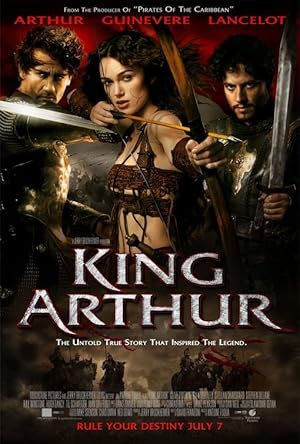
King Arthur
In 400 AD, the Roman Empire extends to Britain and the Romans become impressed with the fight skills of the warrior Sarmatian people, which are spared, but have to send their sons to serve Rome in the cavalry for fifteen years. Only after these services, these knights are free to return home. King Arthur and the Knights of the Round Table have their last mission before achieving their freedom.
Working with a considerable budget of $120.0M, the film achieved a steady performer with $203.6M in global revenue (+70% profit margin).
4 wins & 8 nominations


Plot Structure
Story beats plotted across runtime


Narrative Arc
Emotional journey through the story's key moments
Story Circle
Blueprint 15-beat structure
Arcplot Score Breakdown
Weighted: Precision (70%) + Arc (15%) + Theme (15%)
King Arthur (2004) reveals deliberately positioned narrative architecture, characteristic of Antoine Fuqua's storytelling approach. This structural analysis examines how the film's 15-point plot structure maps to proven narrative frameworks across 2 hours and 6 minutes. With an Arcplot score of 7.1, the film balances conventional beats with creative variation.
Characters
Cast & narrative archetypes

Arthur Castus
Lancelot
Guinevere
Tristan
Bors
Galahad
Gawain
Dagonet
Merlin
Cerdic
Main Cast & Characters
Arthur Castus
Played by Clive Owen
Roman cavalry officer leading Sarmatian knights, conflicted between duty to Rome and emerging sense of freedom and British identity.
Lancelot
Played by Ioan Gruffudd
Charismatic and loyal Sarmatian knight, Arthur's closest friend and most skilled warrior with dual-sword fighting style.
Guinevere
Played by Keira Knightley
Fierce Pictish warrior woman who becomes Arthur's love interest and strategic ally against the Saxons.
Tristan
Played by Mads Mikkelsen
Silent and deadly Sarmatian scout, expert tracker and archer who serves as the knights' reconnaissance specialist.
Bors
Played by Ray Winstone
Family man and fierce warrior among the knights, known for his humor and many children back home.
Galahad
Played by Hugh Dancy
Young, idealistic Sarmatian knight devoted to Arthur and the mission, represents youthful honor and sacrifice.
Gawain
Played by Joel Edgerton
Strong and dependable Sarmatian knight, loyal to Arthur and his brothers-in-arms.
Dagonet
Played by Ray Stevenson
Philosophical and brave Sarmatian knight who serves as moral compass for the group.
Merlin
Played by Stephen Dillane
Leader of the Pictish people, uses guerrilla tactics and ancient wisdom to resist Roman and Saxon invaders.
Cerdic
Played by Stellan Skarsgård
Ruthless Saxon warlord leading invasion of Britain, represents pure conquest and domination.
Structural Analysis
The Status Quo at 1 minutes (1% through the runtime) establishes Young Lancelot is taken from his Sarmatian homeland by Roman soldiers, establishing the forced conscription of knights who serve Rome against their will. This prologue reveals the origins of servitude that defines Arthur's knights.. Notably, this early placement immediately immerses viewers in the story world.
The inciting incident occurs at 15 minutes when Bishop Germanius arrives with devastating news: instead of receiving their freedom, the knights must undertake one final suicide mission—rescue a Roman family north of the Wall as Saxon invaders approach. Their promised liberation is cruelly delayed.. At 12% through the film, this Disruption aligns precisely with traditional story structure. This beat shifts the emotional landscape, launching the protagonist into the central conflict.
The First Threshold at 32 minutes marks the transition into Act II, occurring at 25% of the runtime. This reveals the protagonist's commitment to Arthur and his knights ride through Hadrian's Wall heading north into hostile territory, leaving Roman protection behind. They cross into the wilderness where Saxons and Woads threaten death. This is Arthur's choice to lead his men one final time despite the mission's injustice., moving from reaction to action.
At 63 minutes, the Midpoint arrives at 50% of the runtime—precisely centered, creating perfect narrative symmetry. The analysis reveals that this crucial beat The knights successfully cross the frozen lake as it cracks beneath the Saxon pursuers, killing many enemies. They achieve a false victory—the immediate threat is neutralized, but the main Saxon army still approaches. Arthur begins questioning whether Rome deserves his loyalty after witnessing Marius's cruelty., fundamentally raising what's at risk. The emotional intensity shifts, dividing the narrative into clear before-and-after phases.
The Collapse moment at 95 minutes (75% through) represents the emotional nadir. Here, The knights receive their freedom papers at last, but Arthur announces he will stay to defend the Britons against the Saxons alone if necessary. His men—his brothers—prepare to leave him. The fellowship that defined fifteen years appears to dissolve as each knight walks away with their discharge papers., shows the protagonist at their lowest point. This beat's placement in the final quarter sets up the climactic reversal.
The Second Threshold at 101 minutes initiates the final act resolution at 80% of the runtime. The knights return one by one—Lancelot first, then all the others—choosing to fight beside Arthur not as Roman conscripts but as free men and brothers. "Knights, my noble knights," Arthur says. They choose Britain and each other over safe passage to Rome. A new fellowship is forged through choice., demonstrating the transformation achieved throughout the journey.
Emotional Journey
King Arthur's emotional architecture traces a deliberate progression across 15 carefully calibrated beats.
Narrative Framework
This structural analysis employs structural analysis methodology used to understand storytelling architecture. By mapping King Arthur against these established plot points, we can identify how Antoine Fuqua utilizes or subverts traditional narrative conventions. The plot point approach reveals not only adherence to structural principles but also creative choices that distinguish King Arthur within the action genre.
Antoine Fuqua's Structural Approach
Among the 11 Antoine Fuqua films analyzed on Arcplot, the average structural score is 7.1, reflecting strong command of classical structure. King Arthur takes a more unconventional approach compared to the director's typical style. For comparative analysis, explore the complete Antoine Fuqua filmography.
Comparative Analysis
Additional action films include The Bad Guys, Puss in Boots and Venom: The Last Dance. For more Antoine Fuqua analyses, see The Equalizer 2, The Equalizer 3 and Bait.
Plot Points by Act
Act I
SetupStatus Quo
Young Lancelot is taken from his Sarmatian homeland by Roman soldiers, establishing the forced conscription of knights who serve Rome against their will. This prologue reveals the origins of servitude that defines Arthur's knights.
Theme
Bishop Germanius's representative states that Rome rewards those who serve faithfully, while Arthur's mentor reminds him that true freedom comes from choosing what to fight for—not from papers granted by an empire. The theme of earned freedom versus granted freedom is established.
Worldbuilding
Fifteen years later, Arthur and his Sarmatian knights patrol Hadrian's Wall as Roman cavalry. We meet the core knights—Lancelot, Bors, Tristan, Gawain, Galahad, and Dagonet—and see their brotherhood forged through years of service. The knights anticipate their discharge papers after fifteen years of servitude.
Disruption
Bishop Germanius arrives with devastating news: instead of receiving their freedom, the knights must undertake one final suicide mission—rescue a Roman family north of the Wall as Saxon invaders approach. Their promised liberation is cruelly delayed.
Resistance
The knights rage against the injustice but ultimately follow Arthur's leadership. They debate whether to desert or honor their commitment. Arthur struggles with his idealistic Roman values versus the corrupt reality of the empire he serves. The group prepares for their dangerous journey north.
Act II
ConfrontationFirst Threshold
Arthur and his knights ride through Hadrian's Wall heading north into hostile territory, leaving Roman protection behind. They cross into the wilderness where Saxons and Woads threaten death. This is Arthur's choice to lead his men one final time despite the mission's injustice.
Mirror World
Arthur discovers Guinevere imprisoned and tortured in a dungeon beneath the Roman estate, left to die by the Christian priest Marius. Her rescue introduces Arthur to the native Britons' perspective and begins their connection. Guinevere represents freedom through identity rather than Roman ideology.
Premise
The knights navigate the dangerous territory, rescue the Roman family, and flee south with Saxon forces in pursuit. Arthur bonds with Guinevere as she challenges his Roman ideals. The legendary frozen lake battle occurs where the knights use the ice against the pursuing Saxons, showcasing their warrior prowess.
Midpoint
The knights successfully cross the frozen lake as it cracks beneath the Saxon pursuers, killing many enemies. They achieve a false victory—the immediate threat is neutralized, but the main Saxon army still approaches. Arthur begins questioning whether Rome deserves his loyalty after witnessing Marius's cruelty.
Opposition
The group returns south but tensions escalate. Arthur executes Marius for his crimes against Britons. Cerdic and Cynric's Saxon army advances relentlessly. The knights finally receive their discharge papers but must decide whether to flee to Rome or stay and fight. Guinevere reveals she is a Woad warrior and asks Arthur to lead her people.
Collapse
The knights receive their freedom papers at last, but Arthur announces he will stay to defend the Britons against the Saxons alone if necessary. His men—his brothers—prepare to leave him. The fellowship that defined fifteen years appears to dissolve as each knight walks away with their discharge papers.
Crisis
Arthur faces the prospect of certain death defending a land and people not his own while his closest companions depart. He wrestles with his identity—Roman commander, Briton by birth, or something new entirely. The night before battle finds him alone at Hadrian's Wall, contemplating his father's legacy.
Act III
ResolutionSecond Threshold
The knights return one by one—Lancelot first, then all the others—choosing to fight beside Arthur not as Roman conscripts but as free men and brothers. "Knights, my noble knights," Arthur says. They choose Britain and each other over safe passage to Rome. A new fellowship is forged through choice.
Synthesis
The climactic Battle of Badon Hill unfolds. Arthur's knights and Merlin's Woads unite against the Saxon invasion. The battle is brutal—Lancelot and Tristan fall fighting heroically. Arthur personally defeats Cerdic in single combat. The Saxons are routed and Britain is saved through the sacrifice of free warriors.
Transformation
Arthur is crowned King of the Britons and marries Guinevere in a ceremony that honors both their traditions. Where once he served a distant empire as a conscript commander, he now leads a free people by their choice. Excalibur marks his father's grave as Arthur becomes the legendary king of his own land.