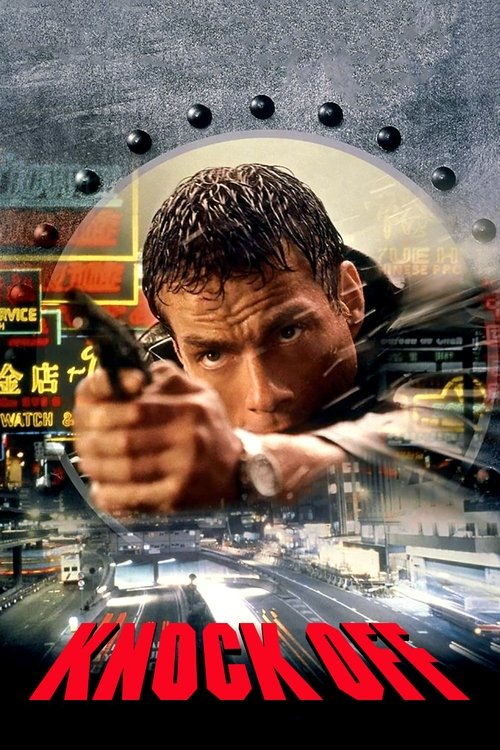
Knock Off
A fashion designer and his CIA agent business partner must join forces to stop a group of terrorists from smuggling explosives in counterfeit jeans during the handover of Hong Kong.
Working with a moderate budget of $35.0M, the film achieved a steady performer with $44.0M in global revenue (+26% profit margin).


Plot Structure
Story beats plotted across runtime


Narrative Arc
Emotional journey through the story's key moments
Story Circle
Blueprint 15-beat structure
Arcplot Score Breakdown
Weighted: Precision (70%) + Arc (15%) + Theme (15%)
Knock Off (1998) demonstrates carefully calibrated plot construction, characteristic of Tsui Hark's storytelling approach. This structural analysis examines how the film's 15-point plot structure maps to proven narrative frameworks across 1 hour and 31 minutes. With an Arcplot score of 6.8, the film balances conventional beats with creative variation.
Characters
Cast & narrative archetypes

Marcus Ray
Tommy Hendricks
Karen Leigh
Han
Eddie Wang
Main Cast & Characters
Marcus Ray
Played by Jean-Claude Van Damme
A fashion knockoff designer in Hong Kong who gets caught up in a deadly conspiracy involving counterfeit jeans with explosive micro-bombs.
Tommy Hendricks
Played by Rob Schneider
Marcus's streetwise business partner who helps him navigate the dangerous world of counterfeiting and international intrigue.
Karen Leigh
Played by Lela Rochon
A CIA agent undercover as a fashion designer who recruits Marcus to help stop a terrorist plot involving counterfeit goods.
Han
Played by Paul Sorvino
A ruthless CIA operative and the main antagonist who orchestrates the micro-bomb scheme for profit and power.
Eddie Wang
Played by Michael Wong
A local Hong Kong gangster and counterfeit goods dealer who initially works with Marcus before the conspiracy unfolds.
Structural Analysis
The Status Quo at 1 minutes (1% through the runtime) establishes Marcus Ray and Tommy Hendricks operate their knock-off jeans business in Hong Kong, making deals and hustling through the counterfeit goods market as small-time entrepreneurs.. Notably, this early placement immediately immerses viewers in the story world.
The inciting incident occurs at 11 minutes when Marcus and Tommy discover that their jeans contain hidden explosive devices - someone is using their counterfeit operation to smuggle micro-bombs, pulling them into a deadly conspiracy.. At 12% through the film, this Disruption aligns precisely with traditional story structure. This beat shifts the emotional landscape, launching the protagonist into the central conflict.
The First Threshold at 23 minutes marks the transition into Act II, occurring at 25% of the runtime. This illustrates the protagonist's commitment to Marcus and Tommy actively choose to help the CIA track down who's manufacturing the micro-bombs, committing themselves to the dangerous mission rather than running away., moving from reaction to action.
At 46 minutes, the Midpoint arrives at 50% of the runtime—precisely centered, creating perfect narrative symmetry. Of particular interest, this crucial beat Marcus and Tommy discover the conspiracy goes higher than expected - someone within the CIA or their own trusted circle is the mastermind, turning their false victory of progress into a false defeat., fundamentally raising what's at risk. The emotional intensity shifts, dividing the narrative into clear before-and-after phases.
The Collapse moment at 68 minutes (75% through) represents the emotional nadir. Here, Tommy is captured and faces execution, while Marcus is betrayed by someone he trusted. The mission appears to have failed completely, with the bombs still active and their deaths imminent., reveals the protagonist at their lowest point. This beat's placement in the final quarter sets up the climactic reversal.
The Second Threshold at 73 minutes initiates the final act resolution at 80% of the runtime. Marcus discovers the villain's true identity and final plan, synthesizing his street smarts with newfound genuine courage. He chooses authentic action over self-preservation, committing fully., demonstrating the transformation achieved throughout the journey.
Emotional Journey
Knock Off's emotional architecture traces a deliberate progression across 15 carefully calibrated beats.
Narrative Framework
This structural analysis employs structural analysis methodology used to understand storytelling architecture. By mapping Knock Off against these established plot points, we can identify how Tsui Hark utilizes or subverts traditional narrative conventions. The plot point approach reveals not only adherence to structural principles but also creative choices that distinguish Knock Off within the action genre.
Tsui Hark's Structural Approach
Among the 4 Tsui Hark films analyzed on Arcplot, the average structural score is 7.0, demonstrating varied approaches to story architecture. Knock Off takes a more unconventional approach compared to the director's typical style. For comparative analysis, explore the complete Tsui Hark filmography.
Comparative Analysis
Additional action films include The Bad Guys, Puss in Boots and Venom: The Last Dance. For more Tsui Hark analyses, see The Taking of Tiger Mountain, Double Team and The Master.
Plot Points by Act
Act I
SetupStatus Quo
Marcus Ray and Tommy Hendricks operate their knock-off jeans business in Hong Kong, making deals and hustling through the counterfeit goods market as small-time entrepreneurs.
Theme
A character warns that "everything fake has consequences" - establishing the theme that deception and counterfeit living eventually catch up with you, requiring authenticity and genuine action.
Worldbuilding
Introduction to Hong Kong's counterfeit goods underworld, Marcus and Tommy's business relationship, their connections with manufacturers, and the dangerous world of knock-off merchandise they navigate daily.
Disruption
Marcus and Tommy discover that their jeans contain hidden explosive devices - someone is using their counterfeit operation to smuggle micro-bombs, pulling them into a deadly conspiracy.
Resistance
Marcus resists getting involved in espionage while CIA agent Karen Leigh reveals herself and tries to recruit them. They debate whether to help or flee, learning the scope of the terrorist plot.
Act II
ConfrontationFirst Threshold
Marcus and Tommy actively choose to help the CIA track down who's manufacturing the micro-bombs, committing themselves to the dangerous mission rather than running away.
Mirror World
Marcus's developing relationship with Karen represents the thematic mirror - she embodies genuine commitment and authenticity versus his fake goods lifestyle, teaching him what real stakes and honest action mean.
Premise
Action-packed investigation through Hong Kong's underworld as Marcus and Tommy use their street connections to trace the bomb network, delivering the fun espionage-action premise with chases, fights, and narrow escapes.
Midpoint
Marcus and Tommy discover the conspiracy goes higher than expected - someone within the CIA or their own trusted circle is the mastermind, turning their false victory of progress into a false defeat.
Opposition
The true villain closes in, eliminating allies and tightening the noose. Marcus and Tommy are hunted by both criminals and corrupt officials, with trust eroding and options disappearing.
Collapse
Tommy is captured and faces execution, while Marcus is betrayed by someone he trusted. The mission appears to have failed completely, with the bombs still active and their deaths imminent.
Crisis
Marcus faces his darkest moment alone, stripped of allies and resources, confronting that his counterfeit lifestyle and avoidance of real commitment has led to catastrophe.
Act III
ResolutionSecond Threshold
Marcus discovers the villain's true identity and final plan, synthesizing his street smarts with newfound genuine courage. He chooses authentic action over self-preservation, committing fully.
Synthesis
Marcus and Tommy execute a desperate final assault, using their knowledge of the counterfeit network combined with real heroism to stop the bombs, rescue each other, and defeat the conspiracy.
Transformation
Marcus stands as a genuine hero rather than a knock-off hustler, having earned authentic relationships and self-respect through real courage, mirroring his opening image but transformed.