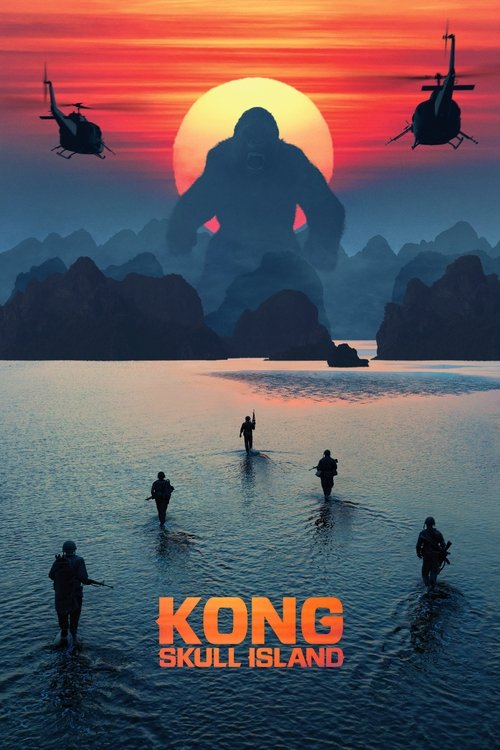
Kong: Skull Island
After the Vietnam war, a team of scientists explores an uncharted island in the Pacific, venturing into the domain of the mighty Kong and must fight to escape a primal Eden.
Despite a massive budget of $185.0M, Kong: Skull Island became a box office success, earning $566.7M worldwide—a 206% return. This commercial performance validated the ambitious narrative scope, confirming that audiences embrace innovative storytelling even at blockbuster scale.
Nominated for 1 Oscar. 1 win & 22 nominations


Plot Structure
Story beats plotted across runtime


Narrative Arc
Emotional journey through the story's key moments
Story Circle
Blueprint 15-beat structure
Characters
Cast & narrative archetypes

James Conrad
Mason Weaver
Preston Packard
Hank Marlow
Bill Randa
Houston Brooks
San
Jack Chapman
Main Cast & Characters
James Conrad
Played by Tom Hiddleston
A former British SAS Captain and skilled tracker hired to guide the expedition through Skull Island.
Mason Weaver
Played by Brie Larson
A photojournalist and anti-war activist who joins the expedition to expose military operations.
Preston Packard
Played by Samuel L. Jackson
A U.S. Army Lieutenant Colonel seeking one last mission after Vietnam, obsessed with revenge against Kong.
Hank Marlow
Played by John C. Reilly
A WWII pilot stranded on Skull Island for 28 years who befriended the native Iwi tribe.
Bill Randa
Played by John Goodman
A senior Monarch official obsessed with proving the existence of massive unidentified terrestrial organisms.
Houston Brooks
Played by Corey Hawkins
A Monarch scientist and geologist who joins the expedition to study seismic activity and gather evidence.
San
Played by Tian Jing
A female member of the native Iwi tribe who interacts with the expedition members.
Jack Chapman
Played by Toby Kebbell
A U.S. Army helicopter pilot and close friend of Packard, killed early in the expedition.
Structural Analysis
The Status Quo at 1 minutes (1% through the runtime) establishes 1973: The Vietnam War is ending. Soldiers are going home. Two soldiers crash on Skull Island and encounter Kong, establishing a world where monsters exist beyond human knowledge.. Structural examination shows that this early placement immediately immerses viewers in the story world.
The inciting incident occurs at 15 minutes when The expedition receives approval and funding to explore Skull Island. The team departs, leaving their normal world behind for an uncharted destination that will change everything.. At 13% through the film, this Disruption is delayed, allowing extended setup of the story world. This beat shifts the emotional landscape, launching the protagonist into the central conflict.
The First Threshold at 30 minutes marks the transition into Act II, occurring at 25% of the runtime. This illustrates the protagonist's commitment to The helicopters penetrate the perpetual storm surrounding Skull Island and begin dropping seismic charges. Kong appears and violently attacks, destroying most of the helicopters and scattering survivors across the island. The expedition is now trapped in Kong's world., moving from reaction to action.
At 60 minutes, the Midpoint arrives at 50% of the runtime—precisely centered, creating perfect narrative symmetry. The analysis reveals that this crucial beat Chapman is killed by a Skullcrawler, revealing the true apex predator of the island. The stakes are raised - these creatures killed Kong's family and want to take over. Meanwhile, Packard becomes obsessed with killing Kong, rejecting the evidence that Kong is the protector., fundamentally raising what's at risk. The emotional intensity shifts, dividing the narrative into clear before-and-after phases.
The Collapse moment at 89 minutes (76% through) represents the emotional nadir. Here, Packard ignites the napalm trap. Kong is set ablaze and weakened. Packard prepares to execute Kong with explosives despite Conrad and Mason's pleas. The "whiff of death" - both the potential death of Kong (the island's protector) and the moral death of Packard's humanity., illustrates the protagonist at their lowest point. This beat's placement in the final quarter sets up the climactic reversal.
The Second Threshold at 95 minutes initiates the final act resolution at 80% of the runtime. Conrad realizes they must help Kong defeat the Skullcrawler to survive and escape. The synthesis: human ingenuity working with nature's power rather than against it. Mason and Conrad choose to trust Kong and draw the creature to him., demonstrating the transformation achieved throughout the journey.
Emotional Journey
Kong: Skull Island's emotional architecture traces a deliberate progression across 15 carefully calibrated beats.
Narrative Framework
This structural analysis employs systematic plot point analysis that identifies crucial turning points. By mapping Kong: Skull Island against these established plot points, we can identify how Jordan Vogt-Roberts utilizes or subverts traditional narrative conventions. The plot point approach reveals not only adherence to structural principles but also creative choices that distinguish Kong: Skull Island within the action genre.
Comparative Analysis
Additional action films include The Bad Guys, Puss in Boots and Venom: The Last Dance.
Plot Points by Act
Act I
SetupStatus Quo
1973: The Vietnam War is ending. Soldiers are going home. Two soldiers crash on Skull Island and encounter Kong, establishing a world where monsters exist beyond human knowledge.
Theme
Bill Randa tells Packard: "Mark my words - there'll never be a more screwed-up time in Washington." The theme of man's destructive nature and need to control versus nature's power is introduced.
Worldbuilding
Introduction of the main characters: Bill Randa and Houston Brooks from Monarch pushing for the expedition; Mason Weaver, the anti-war photographer; Conrad, the tracker; and Colonel Packard's helicopter squadron. The mission to map Skull Island is assembled.
Disruption
The expedition receives approval and funding to explore Skull Island. The team departs, leaving their normal world behind for an uncharted destination that will change everything.
Resistance
The journey to Skull Island. The team travels by ship, debates the mission, establishes relationships and tensions. Packard wants purpose after the war ends. Mason suspects hidden agendas. Conrad is mercenary but skilled. They prepare to enter the storm barrier.
Act II
ConfrontationFirst Threshold
The helicopters penetrate the perpetual storm surrounding Skull Island and begin dropping seismic charges. Kong appears and violently attacks, destroying most of the helicopters and scattering survivors across the island. The expedition is now trapped in Kong's world.
Mirror World
Conrad's group encounters Hank Marlow, the WWII pilot stranded since 1944, and the peaceful Iwi natives. Marlow represents humanity living in harmony with the island rather than trying to conquer it - the thematic counterpoint to Packard's aggression.
Premise
The promise of the premise: monster island adventure. Two groups navigate the island. Marlow explains Kong protects the island from the Skullcrawlers. The team encounters spectacular creatures, dangers, and wonders. Mason begins photographing to document rather than condemn.
Midpoint
Chapman is killed by a Skullcrawler, revealing the true apex predator of the island. The stakes are raised - these creatures killed Kong's family and want to take over. Meanwhile, Packard becomes obsessed with killing Kong, rejecting the evidence that Kong is the protector.
Opposition
The race to the rendezvous point intensifies. Packard sets a trap for Kong using his remaining napalm. Conrad and Mason realize Packard's vendetta will doom them all. The group splinters - Packard's military loyalty versus the truth about Kong's necessary role. More soldiers die.
Collapse
Packard ignites the napalm trap. Kong is set ablaze and weakened. Packard prepares to execute Kong with explosives despite Conrad and Mason's pleas. The "whiff of death" - both the potential death of Kong (the island's protector) and the moral death of Packard's humanity.
Crisis
Packard refuses to stand down. Conrad must choose between military loyalty and saving Kong. Packard is killed by Kong. The group escapes but awakens the massive alpha Skullcrawler. Without Kong at full strength, humanity faces the true monster of the island.
Act III
ResolutionSecond Threshold
Conrad realizes they must help Kong defeat the Skullcrawler to survive and escape. The synthesis: human ingenuity working with nature's power rather than against it. Mason and Conrad choose to trust Kong and draw the creature to him.
Synthesis
The finale battle. Kong fights the alpha Skullcrawler. The humans provide support - weapons, distractions, fire. Mason is nearly killed but saved by Kong. Kong defeats the creature using a ship propeller as a weapon, killing it. The survivors are rescued. Marlow finally goes home.
Transformation
Kong stands victorious on his island as the helicopters depart. Mason photographs him not as a monster to be destroyed, but as a king to be respected. The survivors have learned humanity isn't the apex - some things are bigger than us and should be left alone.