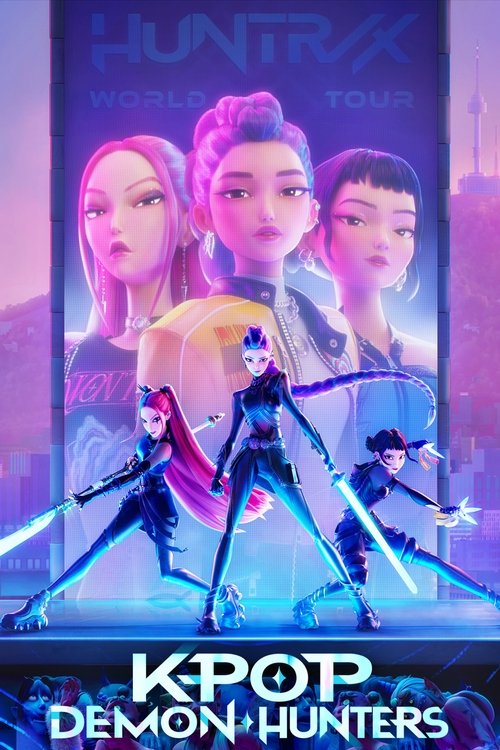
KPop Demon Hunters
When K-pop superstars Rumi, Mira and Zoey aren't selling out stadiums, they're using their secret powers to protect their fans from supernatural threats.
The film box office disappointment against its significant budget of $100.0M, earning $24.6M globally (-75% loss). While initial box office returns were modest, the film has gained appreciation for its unique voice within the fantasy genre.
25 wins & 33 nominations


Plot Structure
Story beats plotted across runtime


Narrative Arc
Emotional journey through the story's key moments
Story Circle
Blueprint 15-beat structure
Characters
Cast & narrative archetypes

Monica
Jess
Auntie Chu
Jamie
Gianna
Andy Kim
Bael
Sara
Main Cast & Characters
Monica
Played by Sana Asad
The fierce leader of the K-pop group who becomes the driving force behind their transformation into demon hunters, balancing her perfectionist idol persona with newfound warrior instincts.
Jess
Played by Cathy Ang
The group's main vocalist and emotional heart, whose empathic nature proves unexpectedly useful in sensing demonic presences.
Auntie Chu
Played by Tiffany Haddish
A mysterious older woman who reveals the supernatural world to the girls and trains them in demon hunting, serving as their guide into this dangerous new reality.
Jamie
Played by Camille Ramsey
The group's rapper and rebel, whose skepticism and street smarts make her both the comic relief and an unlikely hero when chaos erupts.
Gianna
Played by Miya Cech
The youngest and most innocent member of the group, whose hidden inner strength emerges when her friends are threatened.
Andy Kim
Played by Sung Kang
The group's charming but demanding manager who gets caught up in the supernatural events and must choose between protecting his career or his artists.
Bael
Played by Matthew Moy
An ancient and powerful demon lord who targets the K-pop group, viewing their popularity and influence as a vessel for spreading his corruption.
Sara
Played by Michelle Yeoh
A rival K-pop idol who becomes possessed by demonic forces, serving as both an antagonist and a victim in need of saving.
Structural Analysis
The Status Quo at 1 minutes (1% through the runtime) establishes The K-pop girl group performs at a small venue to a sparse crowd, establishing their struggling career and desperate need for a breakthrough in the competitive music industry.. Structural examination shows that this early placement immediately immerses viewers in the story world.
The inciting incident occurs at 12 minutes when During a late-night practice session, the group witnesses a demonic entity attack a rival idol, revealing that supernatural forces are preying on the K-pop industry.. At 12% through the film, this Disruption aligns precisely with traditional story structure. This beat shifts the emotional landscape, launching the protagonist into the central conflict.
The First Threshold at 24 minutes marks the transition into Act II, occurring at 25% of the runtime. This demonstrates the protagonist's commitment to The group makes the collective decision to accept their destiny as demon hunters, receiving enchanted accessories that transform their performance skills into supernatural combat abilities., moving from reaction to action.
At 48 minutes, the Midpoint arrives at 50% of the runtime—precisely centered, creating perfect narrative symmetry. Structural examination shows that this crucial beat The group achieves a major victory against a powerful demon during a live broadcast, which goes viral and ironically boosts their fame - a false victory as their success draws the attention of the demon king., fundamentally raising what's at risk. The emotional intensity shifts, dividing the narrative into clear before-and-after phases.
The Collapse moment at 72 minutes (75% through) represents the emotional nadir. Here, The demon king possesses their beloved manager, forcing them to fight someone they love. In the battle, the shaman mentor sacrifices herself to save them, and the group disbands in grief and guilt., indicates the protagonist at their lowest point. This beat's placement in the final quarter sets up the climactic reversal.
The Second Threshold at 77 minutes initiates the final act resolution at 80% of the runtime. The leader discovers the shaman's final message: true power comes from harmony, not individual talent. She reunites the group with a new understanding that their bond is their real weapon., demonstrating the transformation achieved throughout the journey.
Emotional Journey
KPop Demon Hunters's emotional architecture traces a deliberate progression across 15 carefully calibrated beats.
Narrative Framework
This structural analysis employs systematic plot point analysis that identifies crucial turning points. By mapping KPop Demon Hunters against these established plot points, we can identify how Chris Appelhans utilizes or subverts traditional narrative conventions. The plot point approach reveals not only adherence to structural principles but also creative choices that distinguish KPop Demon Hunters within the fantasy genre.
Chris Appelhans's Structural Approach
Among the 2 Chris Appelhans films analyzed on Arcplot, the average structural score is 7.2, reflecting strong command of classical structure. KPop Demon Hunters exemplifies the director's characteristic narrative technique. For comparative analysis, explore the complete Chris Appelhans filmography.
Comparative Analysis
Additional fantasy films include Thinner, Ella Enchanted and Conan the Barbarian. For more Chris Appelhans analyses, see Wish Dragon.
Plot Points by Act
Act I
SetupStatus Quo
The K-pop girl group performs at a small venue to a sparse crowd, establishing their struggling career and desperate need for a breakthrough in the competitive music industry.
Theme
Their manager tells them, "Sometimes the thing that makes you different is the thing that makes you powerful" - foreshadowing how their unique bond will become their greatest weapon against evil.
Worldbuilding
The group's dynamics are established: their individual personalities, tensions, dreams of stardom, and the pressure from their entertainment company to succeed or be disbanded.
Disruption
During a late-night practice session, the group witnesses a demonic entity attack a rival idol, revealing that supernatural forces are preying on the K-pop industry.
Resistance
The girls debate whether to get involved, initially trying to dismiss what they saw. A mysterious shaman figure appears and reveals that ancient demons feed on the fame and energy of performers, and the group has been chosen to stop them.
Act II
ConfrontationFirst Threshold
The group makes the collective decision to accept their destiny as demon hunters, receiving enchanted accessories that transform their performance skills into supernatural combat abilities.
Mirror World
The girls begin training together in their new roles, and their fractured relationships start healing as they learn to trust and depend on each other beyond just their choreography.
Premise
The fun and games of K-pop demon hunting: the group battles various demons while maintaining their idol schedules, using synchronized dance moves as combat techniques and discovering their individual supernatural powers.
Midpoint
The group achieves a major victory against a powerful demon during a live broadcast, which goes viral and ironically boosts their fame - a false victory as their success draws the attention of the demon king.
Opposition
The demon king begins targeting the group directly, turning fans against them, sabotaging their careers, and exploiting the individual insecurities of each member to drive wedges between them.
Collapse
The demon king possesses their beloved manager, forcing them to fight someone they love. In the battle, the shaman mentor sacrifices herself to save them, and the group disbands in grief and guilt.
Crisis
Separated and alone, each member confronts her deepest fears and failures. They realize that their individual pursuit of fame was what made them vulnerable to the demons in the first place.
Act III
ResolutionSecond Threshold
The leader discovers the shaman's final message: true power comes from harmony, not individual talent. She reunites the group with a new understanding that their bond is their real weapon.
Synthesis
The reunited group confronts the demon king at a massive concert venue, combining their powers in perfect synchronization. Their ultimate attack is a performance that channels pure positive energy from their genuine friendship.
Transformation
The group performs again, but now to a massive adoring crowd - transformed from desperate fame-seekers into confident artists who fight for each other. Their manager, freed from possession, watches proudly.