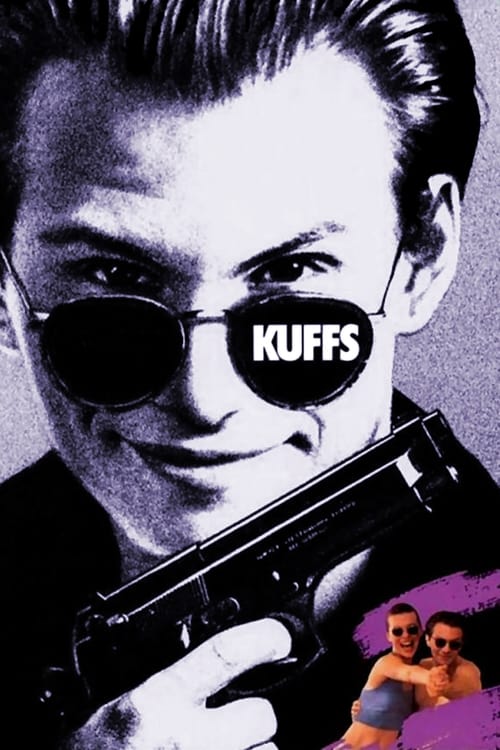
Kuffs
George Kuffs didn't finish high-school, just lost his job, and his college-age girlfriend is pregnant. To top it off, George's brother Brad is killed and George inherits Brad's "patrol special" privatized police district and all the problems that come with it.
Despite its tight budget of $10.0M, Kuffs became a solid performer, earning $21.1M worldwide—a 111% return.


Plot Structure
Story beats plotted across runtime


Narrative Arc
Emotional journey through the story's key moments
Story Circle
Blueprint 15-beat structure
Arcplot Score Breakdown
Weighted: Precision (70%) + Arc (15%) + Theme (15%)
Kuffs (1992) exemplifies strategically placed dramatic framework, characteristic of Bruce A. Evans's storytelling approach. This structural analysis examines how the film's 15-point plot structure maps to proven narrative frameworks across 1 hour and 42 minutes. With an Arcplot score of 7.6, the film showcases strong structural fundamentals.
Characters
Cast & narrative archetypes

George Kuffs
Maya Carlton
Ted Bukovsky
Kane
Brad Kuffs
Sam Jones
Nikki
Main Cast & Characters
George Kuffs
Played by Christian Slater
A carefree college dropout who reluctantly inherits his brother's private patrol district and must grow up fast when thrust into responsibility and danger.
Maya Carlton
Played by Milla Jovovich
George's pregnant girlfriend who challenges him to take responsibility for their relationship and future family.
Ted Bukovsky
Played by Bruce Boxleitner
George's older brother and mentor figure who runs a patrol special district and is murdered, setting the story in motion.
Kane
Played by Leon Rippy
The ruthless antagonist and corrupt businessman responsible for Ted's murder, operating a criminal empire.
Brad Kuffs
Played by George De La Pena
George's father, a veteran patrol special who provides wisdom and represents the family legacy of law enforcement.
Sam Jones
Played by Tony Goldwyn
A fellow patrol special officer who becomes George's partner and ally in running the district.
Nikki
Played by Ashley Judd
Ted's widow who George must work with to manage the patrol district after her husband's death.
Structural Analysis
The Status Quo at 1 minutes (1% through the runtime) establishes George Kuffs is a 21-year-old college dropout living an irresponsible life in San Francisco, breaking the fourth wall to tell us he's aimless and broke, avoiding commitment to his pregnant girlfriend Maya.. The analysis reveals that this early placement immediately immerses viewers in the story world.
The inciting incident occurs at 12 minutes when Brad is murdered in front of George during a violent confrontation with criminals. George watches his brother die in his arms, destroying his carefree world and creating an obligation he cannot escape.. At 12% through the film, this Disruption aligns precisely with traditional story structure. This beat shifts the emotional landscape, launching the protagonist into the central conflict.
The First Threshold at 26 minutes marks the transition into Act II, occurring at 25% of the runtime. This shows the protagonist's commitment to George decides to keep the patrol district and become a Patrol Special officer himself, committing to find his brother's killer. He chooses responsibility over running away, entering the world of law enforcement., moving from reaction to action.
At 51 minutes, the Midpoint arrives at 50% of the runtime—precisely centered, creating perfect narrative symmetry. Notably, this crucial beat George identifies the main villain behind Brad's murder - crime boss Sam Jones - and believes he's close to solving the case. False victory: he thinks he's ready but doesn't understand how dangerous his enemies are., fundamentally raising what's at risk. The emotional intensity shifts, dividing the narrative into clear before-and-after phases.
The Collapse moment at 77 minutes (75% through) represents the emotional nadir. Here, The villains kidnap Maya, putting both her and their unborn child in mortal danger. George realizes his reckless investigation has endangered the person he loves most - the ultimate consequence of his immaturity., indicates the protagonist at their lowest point. This beat's placement in the final quarter sets up the climactic reversal.
The Second Threshold at 82 minutes initiates the final act resolution at 80% of the runtime. George synthesizes everything: combines his street-smart resourcefulness with his new training, accepts full responsibility for Maya and the baby, and commits to finish what Brad started. He becomes the man his brother believed he could be., demonstrating the transformation achieved throughout the journey.
Emotional Journey
Kuffs's emotional architecture traces a deliberate progression across 15 carefully calibrated beats.
Narrative Framework
This structural analysis employs a 15-point narrative structure framework that maps key story moments. By mapping Kuffs against these established plot points, we can identify how Bruce A. Evans utilizes or subverts traditional narrative conventions. The plot point approach reveals not only adherence to structural principles but also creative choices that distinguish Kuffs within the action genre.
Bruce A. Evans's Structural Approach
Among the 2 Bruce A. Evans films analyzed on Arcplot, the average structural score is 7.3, reflecting strong command of classical structure. Kuffs represents one of the director's most structurally precise works. For comparative analysis, explore the complete Bruce A. Evans filmography.
Comparative Analysis
Additional action films include The Bad Guys, Puss in Boots and Venom: The Last Dance. For more Bruce A. Evans analyses, see Mr. Brooks.
Plot Points by Act
Act I
SetupStatus Quo
George Kuffs is a 21-year-old college dropout living an irresponsible life in San Francisco, breaking the fourth wall to tell us he's aimless and broke, avoiding commitment to his pregnant girlfriend Maya.
Theme
George's brother Brad tells him "It's time to grow up and take responsibility" - the core theme about maturity and accepting adult obligations that George will resist until forced to embrace.
Worldbuilding
Establishing George's immature world: mooching off others, running from Maya and the pregnancy, visiting his successful brother Brad who runs a Patrol Special police district, learning about the private police force system in San Francisco.
Disruption
Brad is murdered in front of George during a violent confrontation with criminals. George watches his brother die in his arms, destroying his carefree world and creating an obligation he cannot escape.
Resistance
George debates what to do: wants to sell Brad's patrol district and leave town with the money, but meets Brad's partner Ted Bukovsky who explains the business, the community Brad served, and the unsolved murder. George resists responsibility.
Act II
ConfrontationFirst Threshold
George decides to keep the patrol district and become a Patrol Special officer himself, committing to find his brother's killer. He chooses responsibility over running away, entering the world of law enforcement.
Mirror World
George reconnects with Maya, his pregnant girlfriend, who represents the life and responsibility he's been avoiding. She challenges him to prove he's changed and can be trusted as a partner and father.
Premise
George learns to be a cop: comedic training montages, rookie mistakes, fourth-wall-breaking commentary, investigating his brother's murder, building relationship with Ted, pursuing leads on the criminal organization, slowly proving himself capable.
Midpoint
George identifies the main villain behind Brad's murder - crime boss Sam Jones - and believes he's close to solving the case. False victory: he thinks he's ready but doesn't understand how dangerous his enemies are.
Opposition
The criminals strike back: George is targeted, Maya is threatened, his investigation hits walls, Ted questions his readiness, corrupt officials block his progress. George's immaturity and inexperience become dangerous liabilities.
Collapse
The villains kidnap Maya, putting both her and their unborn child in mortal danger. George realizes his reckless investigation has endangered the person he loves most - the ultimate consequence of his immaturity.
Crisis
George faces his darkest moment, consumed by fear of losing Maya and their baby. He must confront that being responsible means protecting others, not just playing cop. Ted offers wisdom about what Brad would have done.
Act III
ResolutionSecond Threshold
George synthesizes everything: combines his street-smart resourcefulness with his new training, accepts full responsibility for Maya and the baby, and commits to finish what Brad started. He becomes the man his brother believed he could be.
Synthesis
Final confrontation: George executes a plan to rescue Maya and take down Sam Jones' organization, using both his innate cleverness and his developed skills. Climactic action sequence where George proves he's truly grown up.
Transformation
George, now a confident and responsible man, commits to Maya and their future child, continues running Brad's patrol district honorably. Breaking the fourth wall one last time, he shows he's become the man he needed to be.