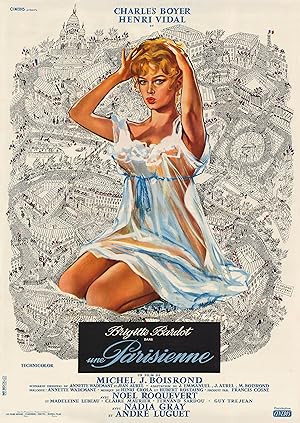
La Parisienne
The President of France's daughter falls for her father's attaché and asks to be his mistress. Instead he marries her and flies off on their honeymoon where she meets the prince who makes friends with her. This leads to a scandalous trip to Nice. Did something go wrong? They both come back with a cold. Is it from swimming or an assignation? The husband is jealous. What's the truth?
Despite its minimal budget of $450K, La Parisienne became a commercial juggernaut, earning $8.0M worldwide—a remarkable 1678% return. The film's unique voice resonated with audiences, confirming that strong storytelling can transcend budget limitations.

Plot Structure
Story beats plotted across runtime


Narrative Arc
Emotional journey through the story's key moments
Story Circle
Blueprint 15-beat structure
Arcplot Score Breakdown
Weighted: Precision (70%) + Arc (15%) + Theme (15%)
La Parisienne (1957) reveals deliberately positioned plot construction, characteristic of Michel Boisrond's storytelling approach. This structural analysis examines how the film's 15-point plot structure maps to proven narrative frameworks across 1 hour and 26 minutes. With an Arcplot score of 6.9, the film balances conventional beats with creative variation.
Characters
Cast & narrative archetypes

Brigitte Laurier
Michel Legrand
Caroline Dupont
Henri Maréchal
Mme. Laurier
Main Cast & Characters
Brigitte Laurier
Played by Brigitte Bardot
A charming young Parisienne who navigates romance and social intrigue with cunning and wit.
Michel Legrand
Played by Charles Boyer
A sophisticated politician and diplomat who becomes romantically involved with Brigitte.
Caroline Dupont
Played by Noël Roquevert
Michel's socialite wife who maintains appearances while managing her own affairs.
Henri Maréchal
Played by Henri Vidal
A young, passionate suitor competing for Brigitte's affections.
Mme. Laurier
Played by Madeleine Lebeau
Brigitte's worldly mother who offers cynical advice about men and marriage.
Structural Analysis
The Status Quo at 1 minutes (1% through the runtime) establishes Brigitte, a young Parisienne, is introduced in her comfortable life as the mistress of the Prime Minister, living a sophisticated but morally ambiguous existence in high society Paris.. Significantly, this early placement immediately immerses viewers in the story world.
The inciting incident occurs at 10 minutes when Brigitte meets a younger, charming man who awakens genuine romantic feelings she hasn't experienced with the Prime Minister, disrupting her carefully maintained arrangement.. At 12% through the film, this Disruption aligns precisely with traditional story structure. This beat shifts the emotional landscape, launching the protagonist into the central conflict.
The First Threshold at 21 minutes marks the transition into Act II, occurring at 24% of the runtime. This shows the protagonist's commitment to Brigitte actively chooses to pursue the relationship with the younger man, deciding to risk her comfortable arrangement for the possibility of genuine love., moving from reaction to action.
At 43 minutes, the Midpoint arrives at 50% of the runtime—precisely centered, creating perfect narrative symmetry. Significantly, this crucial beat Brigitte believes she can successfully manage both relationships, experiencing a false victory when it seems she can have love and security simultaneously., fundamentally raising what's at risk. The emotional intensity shifts, dividing the narrative into clear before-and-after phases.
The Collapse moment at 64 minutes (74% through) represents the emotional nadir. Here, The truth is revealed, resulting in the loss of both relationships simultaneously. Brigitte faces social humiliation and the death of her carefully constructed identity., demonstrates the protagonist at their lowest point. This beat's placement in the final quarter sets up the climactic reversal.
The Second Threshold at 69 minutes initiates the final act resolution at 80% of the runtime. Brigitte realizes that true happiness requires honesty and choosing love over security, synthesizing her understanding of what truly matters in life., demonstrating the transformation achieved throughout the journey.
Emotional Journey
La Parisienne's emotional architecture traces a deliberate progression across 15 carefully calibrated beats.
Narrative Framework
This structural analysis employs a 15-point narrative structure framework that maps key story moments. By mapping La Parisienne against these established plot points, we can identify how Michel Boisrond utilizes or subverts traditional narrative conventions. The plot point approach reveals not only adherence to structural principles but also creative choices that distinguish La Parisienne within the comedy genre.
Comparative Analysis
Additional comedy films include The Bad Guys, Ella Enchanted and The Evening Star.
Plot Points by Act
Act I
SetupStatus Quo
Brigitte, a young Parisienne, is introduced in her comfortable life as the mistress of the Prime Minister, living a sophisticated but morally ambiguous existence in high society Paris.
Theme
A confidante remarks on the nature of love versus ambition in Parisian society, suggesting that choosing between the heart and social advancement defines one's character.
Worldbuilding
Establishment of Brigitte's world: her relationship with the Prime Minister, the political circles she navigates, her social position, and the underlying tension between her desires and her circumstances.
Disruption
Brigitte meets a younger, charming man who awakens genuine romantic feelings she hasn't experienced with the Prime Minister, disrupting her carefully maintained arrangement.
Resistance
Brigitte debates between security and passion, consulting with friends and wrestling with her conscience about pursuing true love versus maintaining her privileged position.
Act II
ConfrontationFirst Threshold
Brigitte actively chooses to pursue the relationship with the younger man, deciding to risk her comfortable arrangement for the possibility of genuine love.
Mirror World
The younger man introduces Brigitte to a simpler, more authentic world outside political circles, representing the genuine connection she's been missing.
Premise
The romantic comedy explores the contrast between Brigitte's two worlds: secret rendezvous with her new love while maintaining appearances with the Prime Minister, creating humorous complications.
Midpoint
Brigitte believes she can successfully manage both relationships, experiencing a false victory when it seems she can have love and security simultaneously.
Opposition
The deception becomes increasingly difficult to maintain; the Prime Minister grows suspicious, the younger man demands commitment, and Brigitte's dual life begins to collapse under mounting pressure.
Collapse
The truth is revealed, resulting in the loss of both relationships simultaneously. Brigitte faces social humiliation and the death of her carefully constructed identity.
Crisis
Brigitte confronts her choices and the person she has become, experiencing genuine remorse and self-reflection about authenticity versus manipulation.
Act III
ResolutionSecond Threshold
Brigitte realizes that true happiness requires honesty and choosing love over security, synthesizing her understanding of what truly matters in life.
Synthesis
Brigitte makes amends, confronts both men honestly, and takes action to rebuild her life on authentic terms rather than manipulation and deception.
Transformation
The closing image shows Brigitte transformed from calculating mistress to genuine woman, having chosen authenticity and love over social position, embodying personal growth.