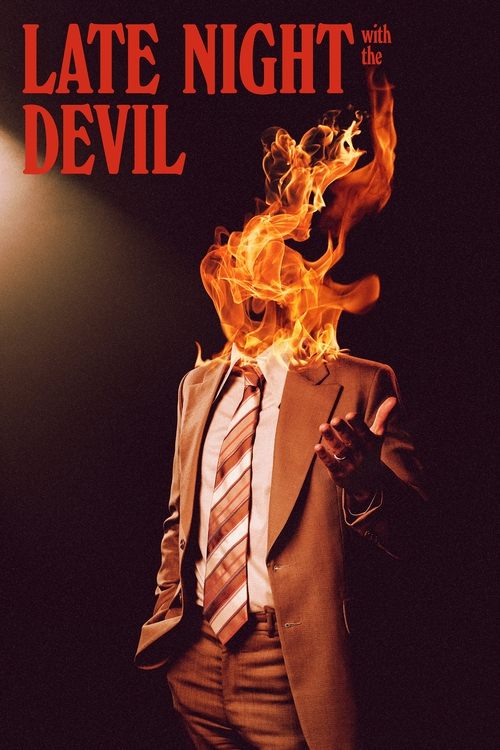
Late Night with the Devil
A live broadcast of a late-night talk show in 1977 goes horribly wrong, unleashing evil into the nation's living rooms.
Despite its limited budget of $2.0M, Late Night with the Devil became a box office phenomenon, earning $15.5M worldwide—a remarkable 673% return. The film's distinctive approach connected with viewers, illustrating how strong storytelling can transcend budget limitations.
11 wins & 38 nominations


Plot Structure
Story beats plotted across runtime


Narrative Arc
Emotional journey through the story's key moments
Story Circle
Blueprint 15-beat structure
Arcplot Score Breakdown
Weighted: Precision (70%) + Arc (15%) + Theme (15%)
Late Night with the Devil (2024) exemplifies meticulously timed narrative design, characteristic of Cameron Cairnes's storytelling approach. This structural analysis examines how the film's 15-point plot structure maps to proven narrative frameworks across 1 hour and 33 minutes. With an Arcplot score of 6.4, the film takes an unconventional approach to traditional narrative frameworks.
Characters
Cast & narrative archetypes

Jack Delroy
Lilly
June Ross-Mitchell
Carmichael Haig
Christou
Gus McConnell
Madeleine Delroy
Main Cast & Characters
Jack Delroy
Played by David Dastmalchian
Ambitious late-night talk show host whose desperate pursuit of ratings leads him to host a Halloween special that spirals into supernatural horror. Haunted by his wife's death and rumored ties to a mysterious cult.
Lilly
Played by Ingrid Torelli
A young girl who survived a satanic cult massacre and is believed to be possessed by the demon Abraxas. Her supernatural abilities become the terrifying centerpiece of Jack's Halloween broadcast.
June Ross-Mitchell
Played by Laura Gordon
A parapsychologist and author who serves as Lilly's guardian and advocate. She brings Lilly on the show to prove the existence of demonic possession while trying to protect her.
Carmichael Haig
Played by Ian Bliss
A renowned skeptic and debunker who appears on the show to challenge the supernatural claims. His aggressive attempts to expose Lilly as a fraud have catastrophic consequences.
Christou
Played by Fayssal Bazzi
A flamboyant psychic medium who performs on the Halloween special, claiming to communicate with the dead. His act takes a dark turn when he appears to make genuine contact with spirits.
Gus McConnell
Played by Rhys Auteri
Jack's loyal sidekick and announcer on Night Owls. He provides comic relief but becomes increasingly unsettled as the broadcast descends into chaos.
Madeleine Delroy
Played by Georgina Haig
Jack's deceased wife whose death from cancer haunts him. Her memory and possible supernatural presence loom over the events of the Halloween special.
Structural Analysis
The Status Quo at 1 minutes (1% through the runtime) establishes Documentary footage establishes Jack Delroy as the ambitious second-place late-night host, desperate to beat Johnny Carson in the ratings, showing his ordinary world of showbiz ambition before the tragic events to come.. Significantly, this early placement immediately immerses viewers in the story world.
The inciting incident occurs at 11 minutes when The live Halloween special begins with the introduction of controversial parapsychologist Dr. June Ross-Mitchell and her supposedly possessed patient Lilly, bringing genuine supernatural danger into what should be routine entertainment.. At 12% through the film, this Disruption aligns precisely with traditional story structure. This beat shifts the emotional landscape, launching the protagonist into the central conflict.
The First Threshold at 23 minutes marks the transition into Act II, occurring at 25% of the runtime. This reveals the protagonist's commitment to Despite warnings and Christou's collapse (vomiting worms), Jack makes the active choice to continue the broadcast and proceed with the demon possession demonstration, crossing the point of no return for ratings., moving from reaction to action.
At 47 minutes, the Midpoint arrives at 50% of the runtime—precisely centered, creating perfect narrative symmetry. Notably, this crucial beat During the live possession segment, Lilly/Abraxas reveals devastating truths about Jack—his Grove membership, his pact for fame, Madeleine's sacrifice—raising the stakes and transforming this from showbiz stunt to personal reckoning. False victory becomes false defeat., fundamentally raising what's at risk. The emotional intensity shifts, dividing the narrative into clear before-and-after phases.
The Collapse moment at 70 minutes (75% through) represents the emotional nadir. Here, The whiff of death: June Ross-Mitchell is killed in graphic supernatural fashion, the broadcast descends into complete chaos, and Jack loses all control as the ritual spirals into genuine horror, destroying everything he built., shows the protagonist at their lowest point. This beat's placement in the final quarter sets up the climactic reversal.
The Second Threshold at 74 minutes initiates the final act resolution at 80% of the runtime. Jack realizes the truth: Lilly must be sacrificed to complete the Grove's ritual, and he must choose between his soul and his ambition. He synthesizes what he's learned—but makes the damning choice to proceed with the sacrifice., demonstrating the transformation achieved throughout the journey.
Emotional Journey
Late Night with the Devil's emotional architecture traces a deliberate progression across 15 carefully calibrated beats.
Narrative Framework
This structural analysis employs systematic plot point analysis that identifies crucial turning points. By mapping Late Night with the Devil against these established plot points, we can identify how Cameron Cairnes utilizes or subverts traditional narrative conventions. The plot point approach reveals not only adherence to structural principles but also creative choices that distinguish Late Night with the Devil within the horror genre.
Comparative Analysis
Additional horror films include Thinner, A Nightmare on Elm Street and Mary Reilly.
Plot Points by Act
Act I
SetupStatus Quo
Documentary footage establishes Jack Delroy as the ambitious second-place late-night host, desperate to beat Johnny Carson in the ratings, showing his ordinary world of showbiz ambition before the tragic events to come.
Theme
A colleague or narrator mentions the price of fame and what people will sacrifice to achieve it, establishing the central thematic question: how far will Jack go for success?
Worldbuilding
Archival footage and narration establish the 1970s talk show world, Jack's rivalry with Carson, his wife Madeleine's death from cancer, the mysterious Grove cult connection, and the setup for the fateful 1977 Halloween special that will be our main story.
Disruption
The live Halloween special begins with the introduction of controversial parapsychologist Dr. June Ross-Mitchell and her supposedly possessed patient Lilly, bringing genuine supernatural danger into what should be routine entertainment.
Resistance
Jack navigates the early segments with skeptic Carmichael Haig, psychic Christou, and begins to sense something is genuinely wrong as Christou delivers disturbing messages, but Jack debates whether to continue the show or pull the plug.
Act II
ConfrontationFirst Threshold
Despite warnings and Christou's collapse (vomiting worms), Jack makes the active choice to continue the broadcast and proceed with the demon possession demonstration, crossing the point of no return for ratings.
Mirror World
Lilly, the possessed girl, serves as Jack's thematic mirror—both are vessels controlled by external forces (she by the demon Abraxas, he by ambition and possibly the Grove cult), reflecting what happens when you surrender your soul.
Premise
The "fun and games" of the premise—a live TV séance and demon possession demonstration—unfolds with escalating supernatural phenomena, telekinesis, and disturbing revelations as Jack explores this dangerous new world of real occult power.
Midpoint
During the live possession segment, Lilly/Abraxas reveals devastating truths about Jack—his Grove membership, his pact for fame, Madeleine's sacrifice—raising the stakes and transforming this from showbiz stunt to personal reckoning. False victory becomes false defeat.
Opposition
The demon's power intensifies, chaos erupts on set, the skeptic Carmichael tries to maintain control, staff members react in horror, and Jack's carefully constructed facade crumbles as his dark secrets are exposed and supernatural forces close in.
Collapse
The whiff of death: June Ross-Mitchell is killed in graphic supernatural fashion, the broadcast descends into complete chaos, and Jack loses all control as the ritual spirals into genuine horror, destroying everything he built.
Crisis
In the dark night aftermath, Jack confronts the full reality of his Faustian bargain as bodies pile up and the demon's true purpose becomes clear—this was never about the show, but about completing Jack's sacrifice.
Act III
ResolutionSecond Threshold
Jack realizes the truth: Lilly must be sacrificed to complete the Grove's ritual, and he must choose between his soul and his ambition. He synthesizes what he's learned—but makes the damning choice to proceed with the sacrifice.
Synthesis
The finale: Jack completes the ritual sacrifice of Lilly on live television, fully embracing his role as the Grove's servant, as reality breaks down and the demonic forces consume the studio in a crescendo of horror.
Transformation
The closing image reveals Jack's complete corruption: he has become a vessel for Abraxas, his humanity sacrificed for fame. The broadcast ends with his soul fully consumed, mirroring but inverting the ambitious showman we met at the start.