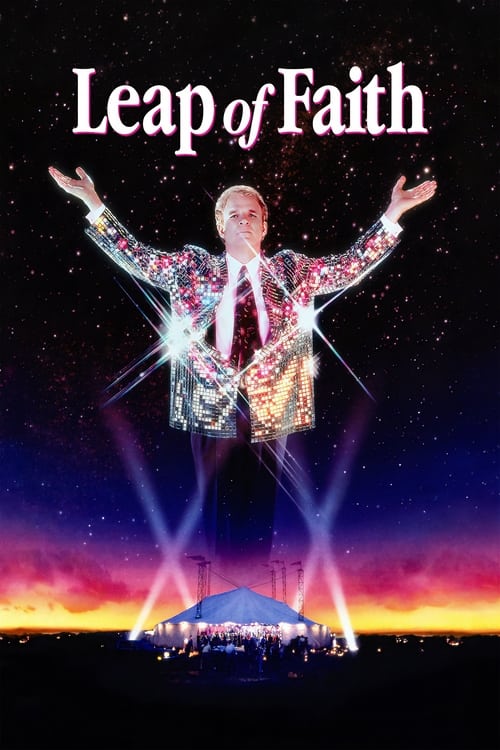
Leap of Faith
Jonas Nightengale is a fraudulent Christian faith healer who makes a living travelling around America holding revival meetings and conducting 'miracles' with the help of his friend and manager, Jane, and their entourage.
Working with a moderate budget of $20.0M, the film achieved a steady performer with $23.4M in global revenue (+17% profit margin).


Plot Structure
Story beats plotted across runtime


Narrative Arc
Emotional journey through the story's key moments
Story Circle
Blueprint 15-beat structure
Arcplot Score Breakdown
Weighted: Precision (70%) + Arc (15%) + Theme (15%)
Leap of Faith (1992) exhibits precise dramatic framework, characteristic of Richard Pearce's storytelling approach. This structural analysis examines how the film's 15-point plot structure maps to proven narrative frameworks across 1 hour and 48 minutes. With an Arcplot score of 6.4, the film takes an unconventional approach to traditional narrative frameworks.
Characters
Cast & narrative archetypes

Jonas Nightengale
Marva
Sheriff Will Braverman
Jane Larson
Boyd
Ornella
Main Cast & Characters
Jonas Nightengale
Played by Steve Martin
A charismatic con artist faith healer who stages elaborate revival shows to fleece small-town believers. Stranded in Kansas, he faces his greatest challenge when his cynicism meets genuine human need.
Marva
Played by Debra Winger
Jonas's savvy manager and longtime accomplice who orchestrates the technical side of their faith healing scams. She's loyal, pragmatic, and shares his mercenary worldview.
Sheriff Will Braverman
Played by Liam Neeson
The principled local sheriff who sees through Jonas's con and tries to protect his town from exploitation. He represents moral authority and skepticism grounded in care for his community.
Jane Larson
Played by Lukas Haas
A widowed waitress and single mother who becomes romantically involved with Jonas despite her brother's warnings. She represents the genuine faith and hope that challenges Jonas's cynicism.
Boyd
Played by Lukas Haas
A young boy with a disability who desperately believes Jonas can heal him. His innocent faith becomes the moral fulcrum of the story, forcing Jonas to confront the human cost of his deceptions.
Ornella
Played by Meat Loaf
A mysterious elderly woman who seems to possess genuine spiritual insight. She quietly observes Jonas and hints at deeper truths beyond his con game.
Structural Analysis
The Status Quo at 1 minutes (1% through the runtime) establishes Jonas Nightengale runs a slick traveling faith-healing revival show, conning believers across America with theatrical miracles and planted accomplices.. Notably, this early placement immediately immerses viewers in the story world.
The inciting incident occurs at 14 minutes when The tour bus breaks down in Rustwater, Kansas, a dying one-stoplight town. They're stuck waiting for parts, forced to stay in a place where nothing works and nobody has money.. At 13% through the film, this Disruption is delayed, allowing extended setup of the story world. This beat shifts the emotional landscape, launching the protagonist into the central conflict.
The First Threshold at 27 minutes marks the transition into Act II, occurring at 25% of the runtime. This demonstrates the protagonist's commitment to Jonas decides to fully commit to the con in Rustwater, setting up his tent revival despite Sheriff Marva's opposition. He chooses to stay and run the show rather than wait passively for repairs., moving from reaction to action.
At 54 minutes, the Midpoint arrives at 50% of the runtime—precisely centered, creating perfect narrative symmetry. Notably, this crucial beat Rain finally comes to the drought-stricken town during one of Jonas's services—a genuine miracle he didn't manufacture. The town erupts in joy, attributing it to Jonas's prayers. Jonas is shaken; for the first time, something real happened., fundamentally raising what's at risk. The emotional intensity shifts, dividing the narrative into clear before-and-after phases.
The Collapse moment at 81 minutes (75% through) represents the emotional nadir. Here, During the final revival, Boyd wheels himself to the stage begging Jonas to heal him so he can walk. Jonas knows he can't deliver a real miracle. Faced with Boyd's pure faith and desperate hope, Jonas is confronted with the harm his cons cause. His cynical worldview dies., indicates the protagonist at their lowest point. This beat's placement in the final quarter sets up the climactic reversal.
The Second Threshold at 86 minutes initiates the final act resolution at 80% of the runtime. Jonas refuses to fake Boyd's healing. Instead, he tells Boyd honestly that he can't make him walk, but encourages him to hold onto his faith—real faith, not in Jonas, but in something greater. Jonas chooses truth over the con for the first time., demonstrating the transformation achieved throughout the journey.
Emotional Journey
Leap of Faith's emotional architecture traces a deliberate progression across 15 carefully calibrated beats.
Narrative Framework
This structural analysis employs proven narrative structure principles that track dramatic progression. By mapping Leap of Faith against these established plot points, we can identify how Richard Pearce utilizes or subverts traditional narrative conventions. The plot point approach reveals not only adherence to structural principles but also creative choices that distinguish Leap of Faith within the comedy genre.
Richard Pearce's Structural Approach
Among the 3 Richard Pearce films analyzed on Arcplot, the average structural score is 7.0, demonstrating varied approaches to story architecture. Leap of Faith takes a more unconventional approach compared to the director's typical style. For comparative analysis, explore the complete Richard Pearce filmography.
Comparative Analysis
Additional comedy films include The Bad Guys, Ella Enchanted and The Evening Star. For more Richard Pearce analyses, see No Mercy, A Family Thing.
Plot Points by Act
Act I
SetupStatus Quo
Jonas Nightengale runs a slick traveling faith-healing revival show, conning believers across America with theatrical miracles and planted accomplices.
Theme
Jane, Jonas's manager, warns him about pushing too hard: "One day you're gonna believe your own act." The theme of authentic faith versus manufactured belief is introduced.
Worldbuilding
We see Jonas's elaborate con operation: the computerized prayer cards, the earpiece feeding him information, the planted "miracles," and his cynical crew working the marks in small-town America.
Disruption
The tour bus breaks down in Rustwater, Kansas, a dying one-stoplight town. They're stuck waiting for parts, forced to stay in a place where nothing works and nobody has money.
Resistance
Jonas debates leaving but decides to set up a revival to fleece the town. He meets Sheriff Marva, a skeptical single mother and waitress who sees through him, and her disabled brother Boyd. Jonas resists genuine connection.
Act II
ConfrontationFirst Threshold
Jonas decides to fully commit to the con in Rustwater, setting up his tent revival despite Sheriff Marva's opposition. He chooses to stay and run the show rather than wait passively for repairs.
Mirror World
Jonas connects with Boyd, Marva's wheelchair-bound teenage brother who is genuine, hopeful, and believes in real miracles. Boyd represents everything Jonas has abandoned: authentic faith and innocence.
Premise
Jonas runs his revival shows, performing fake healings and working the crowd. He spars with Marva, who challenges his cynicism. Despite himself, Jonas begins to care about Boyd and the desperate townspeople. The con is working, but something is shifting in Jonas.
Midpoint
Rain finally comes to the drought-stricken town during one of Jonas's services—a genuine miracle he didn't manufacture. The town erupts in joy, attributing it to Jonas's prayers. Jonas is shaken; for the first time, something real happened.
Opposition
Jonas grows closer to Marva and Boyd, but the weight of his deception increases. Boyd desperately wants Jonas to heal him. Marva begins to trust Jonas despite her better judgment. The bus parts arrive—Jonas can leave, but now he's emotionally invested.
Collapse
During the final revival, Boyd wheels himself to the stage begging Jonas to heal him so he can walk. Jonas knows he can't deliver a real miracle. Faced with Boyd's pure faith and desperate hope, Jonas is confronted with the harm his cons cause. His cynical worldview dies.
Crisis
Jonas grapples with his conscience. He can't heal Boyd, but he can't bring himself to fake it either. He faces the darkness of what he's become—a man so empty he's been selling hope he doesn't believe in to people who desperately need it.
Act III
ResolutionSecond Threshold
Jonas refuses to fake Boyd's healing. Instead, he tells Boyd honestly that he can't make him walk, but encourages him to hold onto his faith—real faith, not in Jonas, but in something greater. Jonas chooses truth over the con for the first time.
Synthesis
Jonas prepares to leave Rustwater. He returns the money he took from the town, making amends. He says goodbye to Marva and Boyd, transformed by having encountered genuine faith and love. The con man becomes honest.
Transformation
As Jonas leaves town, Boyd stands up and takes his first steps—a real miracle that Jonas didn't manufacture and doesn't witness. Jonas drives away changed, perhaps not believing in God, but believing in something beyond cynicism. Faith has transformed him.