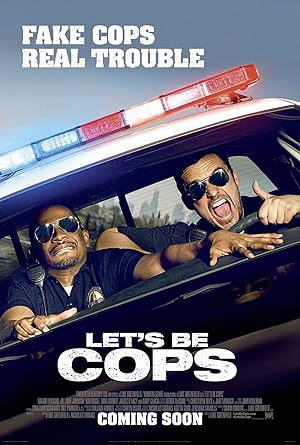
Let's Be Cops
It's the ultimate buddy cop movie except for one thing: they're not cops. When two struggling pals dress as police officers for a costume party, they become neighborhood sensations. But when these newly-minted "heroes" get tangled in a real life web of mobsters and dirty detectives, they must put their fake badges on the line.
Despite a mid-range budget of $17.0M, Let's Be Cops became a commercial juggernaut, earning $136.6M worldwide—a remarkable 704% return.


Plot Structure
Story beats plotted across runtime


Narrative Arc
Emotional journey through the story's key moments
Story Circle
Blueprint 15-beat structure
Arcplot Score Breakdown
Weighted: Precision (70%) + Arc (15%) + Theme (15%)
Let's Be Cops (2014) reveals strategically placed narrative architecture, characteristic of Luke Greenfield's storytelling approach. This structural analysis examines how the film's 15-point plot structure maps to proven narrative frameworks across 1 hour and 44 minutes. With an Arcplot score of 7.4, the film balances conventional beats with creative variation.
Characters
Cast & narrative archetypes

Ryan O'Flanagan
Justin Miller
Josie
Mossi Kasic
Officer Segars
Brolin
Main Cast & Characters
Ryan O'Flanagan
Played by Jake Johnson
A struggling video game designer who impersonates a cop with his best friend, eventually finding purpose and confidence through the masquerade.
Justin Miller
Played by Damon Wayans Jr.
A failed football player turned bartender who embraces the fake cop persona more enthusiastically than his friend, seeking validation and excitement.
Josie
Played by Nina Dobrev
A waitress and aspiring makeup artist who becomes Ryan's love interest and helps ground him in reality.
Mossi Kasic
Played by James D'Arcy
A ruthless Albanian mobster and the main antagonist who runs a criminal empire in Los Angeles.
Officer Segars
Played by Rob Riggle
A real LAPD officer who becomes suspicious of Ryan and Justin's fake cop activities.
Brolin
Played by Keegan-Michael Key
A tough street thug who works for Mossi and becomes a recurring obstacle for the fake cops.
Structural Analysis
The Status Quo at 1 minutes (1% through the runtime) establishes Ryan and Justin are struggling thirty-somethings in Los Angeles. Ryan's video game pitch is rejected, and Justin works as a server at a restaurant. They're losers going nowhere, defined by their failures and lack of direction.. Of particular interest, this early placement immediately immerses viewers in the story world.
The inciting incident occurs at 12 minutes when They attend their college reunion wearing cop costumes (thinking it's a costume party, but it's actually a masquerade ball). Humiliated and embarrassed, they leave early - this external event forces them to confront their loser status.. At 11% through the film, this Disruption aligns precisely with traditional story structure. This beat shifts the emotional landscape, launching the protagonist into the central conflict.
The First Threshold at 25 minutes marks the transition into Act II, occurring at 24% of the runtime. This illustrates the protagonist's commitment to Ryan makes an active choice to go all-in: he orders real police uniforms and equipment online. They commit to the lie, crossing into a new world where they're actually impersonating officers. No turning back., moving from reaction to action.
At 51 minutes, the Midpoint arrives at 49% of the runtime—precisely centered, creating perfect narrative symmetry. Structural examination shows that this crucial beat False victory: They break up a real criminal operation or get recognition from actual cops/community. They're on top of the world, believing they can pull this off. But the stakes raise - real criminals (Mossi and his gang) now see them as threats., fundamentally raising what's at risk. The emotional intensity shifts, dividing the narrative into clear before-and-after phases.
The Collapse moment at 76 minutes (73% through) represents the emotional nadir. Here, Their lies are exposed: Josie discovers they're not real cops, feeling betrayed. The criminals attack them or someone gets seriously hurt. Their friendship fractures as Justin blames Ryan. Everything crashes down - the fantasy dies., reveals the protagonist at their lowest point. This beat's placement in the final quarter sets up the climactic reversal.
The Second Threshold at 83 minutes initiates the final act resolution at 80% of the runtime. New information: Josie or someone they care about is in real danger from Mossi's gang. They realize they can use what they learned (actual courage, friendship, resourcefulness) without the costumes. Time to be real heroes, not fake cops., demonstrating the transformation achieved throughout the journey.
Emotional Journey
Let's Be Cops's emotional architecture traces a deliberate progression across 15 carefully calibrated beats.
Narrative Framework
This structural analysis employs systematic plot point analysis that identifies crucial turning points. By mapping Let's Be Cops against these established plot points, we can identify how Luke Greenfield utilizes or subverts traditional narrative conventions. The plot point approach reveals not only adherence to structural principles but also creative choices that distinguish Let's Be Cops within the action genre.
Luke Greenfield's Structural Approach
Among the 4 Luke Greenfield films analyzed on Arcplot, the average structural score is 7.4, reflecting strong command of classical structure. Let's Be Cops represents one of the director's most structurally precise works. For comparative analysis, explore the complete Luke Greenfield filmography.
Comparative Analysis
Additional action films include The Bad Guys, Puss in Boots and Venom: The Last Dance. For more Luke Greenfield analyses, see The Girl Next Door, Something Borrowed and The Animal.
Plot Points by Act
Act I
SetupStatus Quo
Ryan and Justin are struggling thirty-somethings in Los Angeles. Ryan's video game pitch is rejected, and Justin works as a server at a restaurant. They're losers going nowhere, defined by their failures and lack of direction.
Theme
At their college reunion planning, someone mentions "fake it till you make it" or comments on how people pretend to be successful. The theme: authenticity vs. performance, and whether pretending to be something can make you become it.
Worldbuilding
Establishing their pathetic lives: Ryan's failed game designer career, Justin's dead-end job, their shared apartment. The college reunion looms as a reminder of their failures. Their world is defined by mediocrity and missed opportunities.
Disruption
They attend their college reunion wearing cop costumes (thinking it's a costume party, but it's actually a masquerade ball). Humiliated and embarrassed, they leave early - this external event forces them to confront their loser status.
Resistance
Walking home in their cop costumes, they discover people treat them with respect and fear. Justin debates whether to continue the charade, while Ryan (more desperate) pushes to keep going. They test the waters of their fake authority.
Act II
ConfrontationFirst Threshold
Ryan makes an active choice to go all-in: he orders real police uniforms and equipment online. They commit to the lie, crossing into a new world where they're actually impersonating officers. No turning back.
Mirror World
Introduction of Josie, a woman in Ryan's building who he's attracted to. She represents authenticity and real connection - everything their fake cop personas are not. She'll become the relationship that teaches them about honesty.
Premise
The promise of the premise: they play cop around LA, breaking up parties, getting respect, attracting women, living the fantasy. They stumble onto real crimes but stay in over their heads. Living the high life of fake authority.
Midpoint
False victory: They break up a real criminal operation or get recognition from actual cops/community. They're on top of the world, believing they can pull this off. But the stakes raise - real criminals (Mossi and his gang) now see them as threats.
Opposition
The dangerous mobster Mossi investigates them. Real cops get suspicious. Josie gets closer to Ryan, making the lie harder to maintain. Justin wants out but Ryan refuses. Their fake personas create real enemies and real consequences close in.
Collapse
Their lies are exposed: Josie discovers they're not real cops, feeling betrayed. The criminals attack them or someone gets seriously hurt. Their friendship fractures as Justin blames Ryan. Everything crashes down - the fantasy dies.
Crisis
Ryan and Justin separate, processing their failure. Ryan confronts what he's become - someone who lies to feel important. Dark night of realizing the fake cop persona was compensation for feeling powerless in real life. The emotional low point.
Act III
ResolutionSecond Threshold
New information: Josie or someone they care about is in real danger from Mossi's gang. They realize they can use what they learned (actual courage, friendship, resourcefulness) without the costumes. Time to be real heroes, not fake cops.
Synthesis
The finale confrontation with Mossi and his gang. They rescue Josie/stop the criminals, but this time they succeed through real courage and friendship, not fake badges. They come clean to the real police. Authenticity wins over performance.
Transformation
Closing image mirrors the opening: Ryan and Justin together, but transformed. Ryan pursues real work/passion honestly. Justin has confidence without the costume. They're still friends, still flawed, but now authentic. Real respect instead of fake authority.