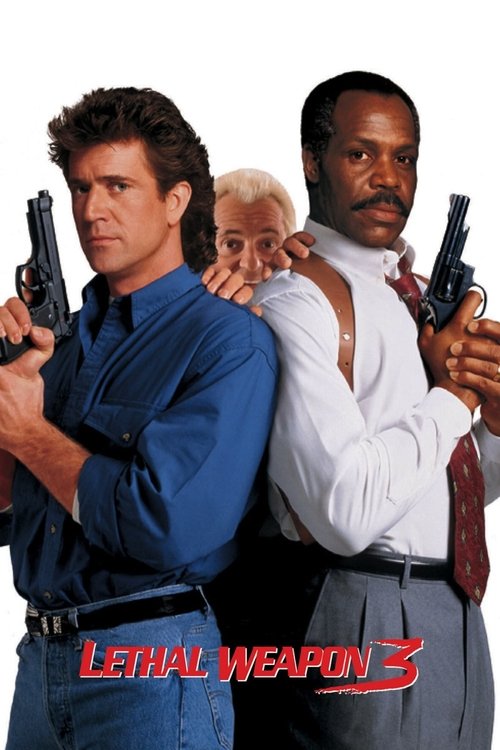
Lethal Weapon 3
Riggs and Murtaugh pursue a former officer who uses his knowledge of police procedure and policies to steal and sell confiscated guns and ammunition to local street gangs.
Despite a respectable budget of $35.0M, Lethal Weapon 3 became a massive hit, earning $321.7M worldwide—a remarkable 819% return.
3 wins & 4 nominations


Plot Structure
Story beats plotted across runtime


Narrative Arc
Emotional journey through the story's key moments
Story Circle
Blueprint 15-beat structure
Arcplot Score Breakdown
Weighted: Precision (70%) + Arc (15%) + Theme (15%)
Lethal Weapon 3 (1992) exhibits precise dramatic framework, characteristic of Richard Donner's storytelling approach. This structural analysis examines how the film's 15-point plot structure maps to proven narrative frameworks across 1 hour and 58 minutes. With an Arcplot score of 7.0, the film balances conventional beats with creative variation.
Structural Analysis
The Status Quo at 1 minutes (1% through the runtime) establishes Riggs and Murtaugh arrive at a bomb threat scene with casual banter, establishing their partnership dynamic and Riggs's reckless nature seven days before Murtaugh's retirement.. The analysis reveals that this early placement immediately immerses viewers in the story world.
The inciting incident occurs at 12 minutes when The building explosion from the failed bomb defusal demotes Riggs and Murtaugh to patrol duty, threatening their detective careers and Murtaugh's dignified retirement.. At 10% through the film, this Disruption aligns precisely with traditional story structure. This beat shifts the emotional landscape, launching the protagonist into the central conflict.
The First Threshold at 29 minutes marks the transition into Act II, occurring at 24% of the runtime. This shows the protagonist's commitment to Riggs and Murtaugh actively choose to defy their demotion and pursue the armor-piercing bullets case, fully committing to investigate Jack Travis despite being ordered to stay away., moving from reaction to action.
At 58 minutes, the Midpoint arrives at 50% of the runtime—precisely centered, creating perfect narrative symmetry. Significantly, this crucial beat The team discovers that Jack Travis is systematically stealing military-grade weapons from police evidence and the operation is larger than expected, raising the stakes as they realize cops are dying from these weapons on the streets., fundamentally raising what's at risk. The emotional intensity shifts, dividing the narrative into clear before-and-after phases.
The Collapse moment at 86 minutes (73% through) represents the emotional nadir. Here, A young cop is killed with the armor-piercing bullets in a devastating shootout, bringing the "whiff of death" home and making the case deeply personal, especially as Murtaugh realizes the dead officer reminds him of his own mortality and impending retirement., demonstrates the protagonist at their lowest point. This beat's placement in the final quarter sets up the climactic reversal.
The Second Threshold at 92 minutes initiates the final act resolution at 78% of the runtime. The team discovers Travis's final weapons deal location and timing, and Murtaugh decides he cannot retire while this threat exists, synthesizing his desire for safety with his duty to protect, choosing one last fight., demonstrating the transformation achieved throughout the journey.
Emotional Journey
Lethal Weapon 3's emotional architecture traces a deliberate progression across 15 carefully calibrated beats.
Narrative Framework
This structural analysis employs structural analysis methodology used to understand storytelling architecture. By mapping Lethal Weapon 3 against these established plot points, we can identify how Richard Donner utilizes or subverts traditional narrative conventions. The plot point approach reveals not only adherence to structural principles but also creative choices that distinguish Lethal Weapon 3 within the action genre.
Richard Donner's Structural Approach
Among the 16 Richard Donner films analyzed on Arcplot, the average structural score is 6.9, demonstrating varied approaches to story architecture. Lethal Weapon 3 represents one of the director's most structurally precise works. For comparative analysis, explore the complete Richard Donner filmography.
Comparative Analysis
Additional action films include The Bad Guys, Puss in Boots and Venom: The Last Dance. For more Richard Donner analyses, see Assassins, Superman and Lethal Weapon 2.
Plot Points by Act
Act I
SetupStatus Quo
Riggs and Murtaugh arrive at a bomb threat scene with casual banter, establishing their partnership dynamic and Riggs's reckless nature seven days before Murtaugh's retirement.
Theme
Murtaugh reflects on getting too old for this and looking forward to retirement, establishing the theme of aging, legacy, and what it means to continue or let go.
Worldbuilding
Setup of Riggs and Murtaugh's partnership dynamic, the bomb threat disaster that gets them demoted to uniform duty, introduction of internal affairs investigator Lorna Cole, and establishment of an illegal weapons smuggling operation.
Disruption
The building explosion from the failed bomb defusal demotes Riggs and Murtaugh to patrol duty, threatening their detective careers and Murtaugh's dignified retirement.
Resistance
Riggs and Murtaugh work patrol duty in frustration, stumble onto the armor-piercing bullets case, debate whether to pursue it against orders, and begin investigating the connection to Jack Travis and the weapons operation.
Act II
ConfrontationFirst Threshold
Riggs and Murtaugh actively choose to defy their demotion and pursue the armor-piercing bullets case, fully committing to investigate Jack Travis despite being ordered to stay away.
Mirror World
Riggs meets Lorna Cole during the investigation and they connect over their shared scars and warrior mentality, introducing the romantic subplot that will teach Riggs about partnership beyond his bond with Murtaugh.
Premise
Riggs and Murtaugh team with Lorna Cole to investigate the armor-piercing bullets, engaging in action sequences, uncovering the weapons smuggling operation from a police storage facility, and discovering Jack Travis is a former cop stealing confiscated weapons.
Midpoint
The team discovers that Jack Travis is systematically stealing military-grade weapons from police evidence and the operation is larger than expected, raising the stakes as they realize cops are dying from these weapons on the streets.
Opposition
Jack Travis becomes aware of the investigation and strikes back, the body count rises, Riggs's relationship with Lorna deepens, and the team faces bureaucratic resistance while trying to stop the weapons shipments before more cops die.
Collapse
A young cop is killed with the armor-piercing bullets in a devastating shootout, bringing the "whiff of death" home and making the case deeply personal, especially as Murtaugh realizes the dead officer reminds him of his own mortality and impending retirement.
Crisis
Riggs and Murtaugh process the young officer's death, questioning whether they can stop Travis and whether Murtaugh should risk his life and retirement for this fight, facing their darkest doubts.
Act III
ResolutionSecond Threshold
The team discovers Travis's final weapons deal location and timing, and Murtaugh decides he cannot retire while this threat exists, synthesizing his desire for safety with his duty to protect, choosing one last fight.
Synthesis
The finale assault on the construction site where Travis is making his final deal, extended action sequence with Riggs, Murtaugh, and Lorna working together, culminating in the confrontation with Travis and resolution of the weapons smuggling operation.
Transformation
Murtaugh, having survived and stopped Travis, decides not to retire after all, while Riggs has found new partnership with Lorna, showing both characters transformed from their opening state regarding connection, purpose, and aging.