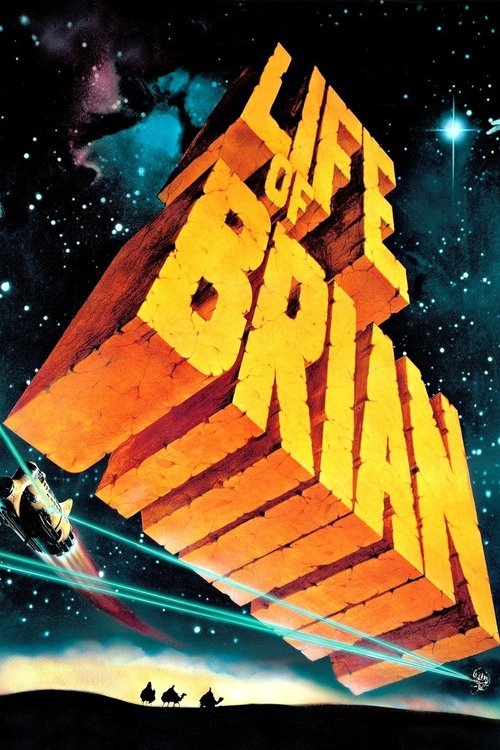
Life of Brian
Brian Cohen is an average young Jewish man, but through a series of ridiculous events, he gains a reputation as the Messiah. When he's not dodging his followers or being scolded by his shrill mother, the hapless Brian has to contend with the pompous Pontius Pilate and acronym-obsessed members of a separatist movement. Rife with Monty Python's signature absurdity, the tale finds Brian's life paralleling Biblical lore, albeit with many more laughs.
Despite its modest budget of $4.0M, Life of Brian became a box office success, earning $20.8M worldwide—a 421% return. The film's innovative storytelling attracted moviegoers, illustrating how strong storytelling can transcend budget limitations.


Plot Structure
Story beats plotted across runtime


Narrative Arc
Emotional journey through the story's key moments
Story Circle
Blueprint 15-beat structure
Arcplot Score Breakdown
Weighted: Precision (70%) + Arc (15%) + Theme (15%)
Life of Brian (1979) exemplifies precise narrative architecture, characteristic of Terry Jones's storytelling approach. This structural analysis examines how the film's 15-point plot structure maps to proven narrative frameworks across 1 hour and 34 minutes. With an Arcplot score of 6.9, the film balances conventional beats with creative variation.
Characters
Cast & narrative archetypes

Brian Cohen
Reg
Stan/Loretta
Pontius Pilate
Mandy Cohen
Judith
Main Cast & Characters
Brian Cohen
Played by Graham Chapman
An ordinary Jewish man mistaken for the Messiah in 1st century Judea, desperately trying to convince people he's not special.
Reg
Played by John Cleese
Leader of the People's Front of Judea, a revolutionary obsessed with organizational rhetoric over action.
Stan/Loretta
Played by Eric Idle
A revolutionary who wants the right to have babies despite biological limitations, representing ideological extremism.
Pontius Pilate
Played by Michael Palin
Roman governor with a speech impediment, ineffectual and easily manipulated by the crowd.
Mandy Cohen
Played by Terry Jones
Brian's sharp-tongued, domineering mother who reveals his true parentage and dismisses his messianic claims.
Judith
Played by Sue Jones-Davies
A passionate revolutionary and Brian's love interest, more committed to the cause than to Brian himself.
Structural Analysis
The Status Quo at 1 minutes (1% through the runtime) establishes Three wise men arrive at a manger in Bethlehem seeking the newborn king. Brian is born in the stable next door to Jesus, establishing the film's central comic premise of mistaken identity and being in the wrong place at the wrong time.. Notably, this early placement immediately immerses viewers in the story world.
The inciting incident occurs at 12 minutes when Brian encounters Judith at the stoning and becomes infatuated. More importantly, he attends a meeting of the People's Front of Judea where Reg passionately argues against Roman oppression ("What have the Romans ever done for us?"). Brian is inspired to join the revolutionary cause, driven by both ideology and his attraction to Judith.. At 13% through the film, this Disruption is delayed, allowing extended setup of the story world. This beat shifts the emotional landscape, launching the protagonist into the central conflict.
The First Threshold at 24 minutes marks the transition into Act II, occurring at 25% of the runtime. This reveals the protagonist's commitment to Brian is caught painting "Romans Go Home" by a Roman centurion who forces him to correct his Latin grammar while writing the slogan hundreds of times on the palace walls. When guards discover him, Brian must flee for his life, jumping from a tower and accidentally crashing into a sermon being given by a prophet, launching him irreversibly into chaos., moving from reaction to action.
At 47 minutes, the Midpoint arrives at 50% of the runtime—precisely centered, creating perfect narrative symmetry. Significantly, this crucial beat Brian spends the night with Judith - a false victory where he experiences love and connection. He wakes to find hundreds of followers outside his window waiting for him to emerge. He appears naked before them, and they interpret everything as miraculous (the shoe, the gourd). Brian seems to have everything - romance and devotees - but he's trapped. The stakes raise as his unwanted fame becomes inescapable., fundamentally raising what's at risk. The emotional intensity shifts, dividing the narrative into clear before-and-after phases.
The Collapse moment at 71 minutes (75% through) represents the emotional nadir. Here, Brian is captured by the Romans and sentenced to crucifixion. The People's Front of Judea, who he joined to make a difference, debate endlessly about procedure rather than mounting a rescue ("What's the point of a motion if we've already..."). His prophetic following cannot or will not save him. All hope of rescue dies as he faces literal death, abandoned by everyone., shows the protagonist at their lowest point. This beat's placement in the final quarter sets up the climactic reversal.
The Second Threshold at 75 minutes initiates the final act resolution at 80% of the runtime. Brian has a moment of clarity when his mother visits and shows no sympathy ("Worse things happen at sea"). He realizes no one is coming to save him - not revolutionaries, not followers, not miracles. He must face his fate with whatever dignity he can muster. The realization is bleak but brings acceptance: he is just a man who made choices, and this is the consequence., demonstrating the transformation achieved throughout the journey.
Emotional Journey
Life of Brian's emotional architecture traces a deliberate progression across 15 carefully calibrated beats.
Narrative Framework
This structural analysis employs proven narrative structure principles that track dramatic progression. By mapping Life of Brian against these established plot points, we can identify how Terry Jones utilizes or subverts traditional narrative conventions. The plot point approach reveals not only adherence to structural principles but also creative choices that distinguish Life of Brian within the comedy genre.
Terry Jones's Structural Approach
Among the 3 Terry Jones films analyzed on Arcplot, the average structural score is 7.2, reflecting strong command of classical structure. Life of Brian takes a more unconventional approach compared to the director's typical style. For comparative analysis, explore the complete Terry Jones filmography.
Comparative Analysis
Additional comedy films include The Bad Guys, Ella Enchanted and The Evening Star. For more Terry Jones analyses, see Absolutely Anything, Monty Python's The Meaning of Life.
Plot Points by Act
Act I
SetupStatus Quo
Three wise men arrive at a manger in Bethlehem seeking the newborn king. Brian is born in the stable next door to Jesus, establishing the film's central comic premise of mistaken identity and being in the wrong place at the wrong time.
Theme
The wise men realize their mistake and take back their gifts from Brian's mother, stating "We were led by a star." The theme of seeking meaning and following false prophets is introduced - people desperately want someone to follow, even when it's the wrong person.
Worldbuilding
Adult Brian lives under Roman occupation in Judea. We see the various revolutionary factions (People's Front of Judea vs. Judean People's Front), the oppressive Romans, public stonings, and religious zealotry. Brian attends the Sermon on the Mount but can't hear properly from the back. His world is one of petty squabbles, bureaucratic revolutionaries, and genuine oppression.
Disruption
Brian encounters Judith at the stoning and becomes infatuated. More importantly, he attends a meeting of the People's Front of Judea where Reg passionately argues against Roman oppression ("What have the Romans ever done for us?"). Brian is inspired to join the revolutionary cause, driven by both ideology and his attraction to Judith.
Resistance
Brian debates whether he can truly be a revolutionary. He trains with the People's Front of Judea, learns their methods, and accepts increasingly dangerous assignments. He must sneak into Pilate's palace to paint anti-Roman graffiti, facing his fears and proving his commitment to the cause despite the risks.
Act II
ConfrontationFirst Threshold
Brian is caught painting "Romans Go Home" by a Roman centurion who forces him to correct his Latin grammar while writing the slogan hundreds of times on the palace walls. When guards discover him, Brian must flee for his life, jumping from a tower and accidentally crashing into a sermon being given by a prophet, launching him irreversibly into chaos.
Mirror World
After hiding from Romans by pretending to be a prophet, Brian finds that a crowd has gathered and believes everything he says. An ex-leper and other followers appear, representing the mirror to Brian's journey - they desperately seek meaning and leadership. This relationship will teach Brian about the danger of blind faith and the burden of unwanted messiahship.
Premise
The "fun and games" of being mistaken for the Messiah. Brian tries desperately to convince his growing followers he's not special - he tells them to think for themselves, but they mindlessly repeat "Yes, we must think for ourselves!" The promise of the premise: watching someone who wants nothing to do with religion accidentally become a religious figure, with increasingly absurd misunderstandings and near-misses with Romans.
Midpoint
Brian spends the night with Judith - a false victory where he experiences love and connection. He wakes to find hundreds of followers outside his window waiting for him to emerge. He appears naked before them, and they interpret everything as miraculous (the shoe, the gourd). Brian seems to have everything - romance and devotees - but he's trapped. The stakes raise as his unwanted fame becomes inescapable.
Opposition
The pressure intensifies from all sides. Brian's mother denounces him ("He's not the Messiah, he's a very naughty boy!"). Rival prophets and factions emerge. The Romans actively hunt him. The People's Front of Judea reveals they plan to use his fame for their cause but won't actually help him. Brian is caught between religious fanatics, revolutionary politics, and Roman authority, with no escape.
Collapse
Brian is captured by the Romans and sentenced to crucifixion. The People's Front of Judea, who he joined to make a difference, debate endlessly about procedure rather than mounting a rescue ("What's the point of a motion if we've already..."). His prophetic following cannot or will not save him. All hope of rescue dies as he faces literal death, abandoned by everyone.
Crisis
Brian hangs on the cross in despair. A false rescue attempt by the People's Front results in them saving the wrong person (one who wants to be crucified). Even a "miracle" rescue by commandos frees everyone except Brian. He processes his dark fate - betrayed by zealots, abandoned by revolutionaries, forgotten by followers, facing certain death for a cause he never chose.
Act III
ResolutionSecond Threshold
Brian has a moment of clarity when his mother visits and shows no sympathy ("Worse things happen at sea"). He realizes no one is coming to save him - not revolutionaries, not followers, not miracles. He must face his fate with whatever dignity he can muster. The realization is bleak but brings acceptance: he is just a man who made choices, and this is the consequence.
Synthesis
The finale shows Brian and other condemned prisoners on their crosses. Rather than a heroic resolution, there is dark comedy and absurdism. Fellow prisoner Mr. Frisbee III tries to look on the bright side. The prisoners break into song ("Always Look on the Bright Side of Life"), finding human connection and dark humor in their shared doom. No rescue comes. No miracle occurs. Just men facing death together.
Transformation
Brian, still on the cross, joins in whistling "Always Look on the Bright Side of Life" as the camera pulls back to show rows of crucified men against the sunset. The closing image mirrors the opening - where he was mistakenly identified as special at birth, he dies as just another man on a cross. But he has transformed: from seeking meaning through others (revolution, prophecy) to accepting the absurdity of existence with humor and grace.