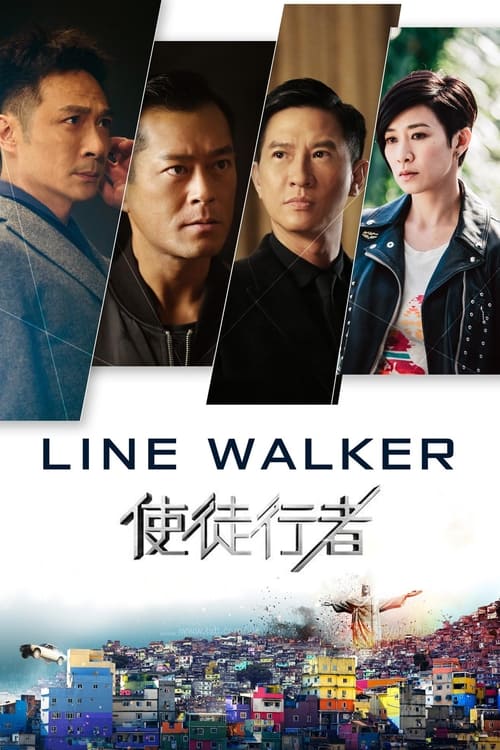
Line Walker
The details of undercover police officers are deleted from a police database and a senior officer is left struggling to know who are the undercover officers and who are the criminals.
The film earned $88.7M at the global box office.

Plot Structure
Story beats plotted across runtime


Narrative Arc
Emotional journey through the story's key moments
Story Circle
Blueprint 15-beat structure
Arcplot Score Breakdown
Weighted: Precision (70%) + Arc (15%) + Theme (15%)
Line Walker (2016) exhibits deliberately positioned story structure, characteristic of Jazz Boon's storytelling approach. This structural analysis examines how the film's 11-point plot structure maps to proven narrative frameworks across 1 hour and 48 minutes. With an Arcplot score of 6.8, the film balances conventional beats with creative variation.
Structural Analysis
The Status Quo at 1 minutes (1% through the runtime) establishes Five undercover agents are embedded deep within Hong Kong's criminal underworld, their identities known only to their handler Superintendent Q. The status quo shows an intricate web of covert operations running smoothly in the shadows.. Significantly, this early placement immediately immerses viewers in the story world.
The inciting incident occurs at 14 minutes when Superintendent Q dies in a car explosion, taking with him the only record of the five undercover agents' true identities. The protected system is shattered, leaving the agents stranded without extraction protocol and their identities potentially exposed.. At 13% through the film, this Disruption is delayed, allowing extended setup of the story world. This beat shifts the emotional landscape, launching the protagonist into the central conflict.
At 54 minutes, the Midpoint arrives at 50% of the runtime—precisely centered, creating perfect narrative symmetry. The analysis reveals that this crucial beat A false defeat: Ching Fung discovers that one of the people he trusted is actually working for the criminals, and his investigation has inadvertently exposed an undercover agent who is subsequently killed. What seemed like progress has actually made everything worse and raised the stakes fatally., fundamentally raising what's at risk. The emotional intensity shifts, dividing the narrative into clear before-and-after phases.
The Collapse moment at 81 minutes (75% through) represents the emotional nadir. Here, The whiff of death: Another undercover agent is killed, and Ching Fung realizes his partner Szeto may be compromised or even one of the hidden agents himself. The person closest to him becomes suspect, and the mission appears to have failed with fatal consequences., shows the protagonist at their lowest point. This beat's placement in the final quarter sets up the climactic reversal.
The Synthesis at 86 minutes initiates the final act resolution at 80% of the runtime. The finale unfolds with explosive action as Ching Fung executes his plan to expose the true conspiracy, protect the surviving agents, and confront the real antagonist. The climax brings resolution to the identity crisis at the story's heart through both action and revelation., demonstrating the transformation achieved throughout the journey.
Emotional Journey
Line Walker's emotional architecture traces a deliberate progression across 11 carefully calibrated beats.
Narrative Framework
This structural analysis employs structural analysis methodology used to understand storytelling architecture. By mapping Line Walker against these established plot points, we can identify how Jazz Boon utilizes or subverts traditional narrative conventions. The plot point approach reveals not only adherence to structural principles but also creative choices that distinguish Line Walker within the action genre.
Comparative Analysis
Additional action films include The Ministry of Ungentlemanly Warfare, The Bad Guys and Lake Placid.
Plot Points by Act
Act I
SetupStatus Quo
Five undercover agents are embedded deep within Hong Kong's criminal underworld, their identities known only to their handler Superintendent Q. The status quo shows an intricate web of covert operations running smoothly in the shadows.
Theme
A senior officer states that "Without identity, we are nothing" - establishing the central theme of identity, loyalty, and the cost of living a double life. This question of who you truly are when you pretend to be someone else permeates the entire narrative.
Worldbuilding
Establishment of the undercover operation structure, the relationship between the agents and Superintendent Q, the criminal organizations being infiltrated, and the delicate balance required to maintain deep cover while serving justice.
Disruption
Superintendent Q dies in a car explosion, taking with him the only record of the five undercover agents' true identities. The protected system is shattered, leaving the agents stranded without extraction protocol and their identities potentially exposed.
Resistance
Inspector Ching Fung (Nick Cheung) and fellow officer Szeto (Louis Koo) debate how to recover the lost identities and extract the stranded agents. They resist putting themselves at risk but recognize the moral imperative to save their colleagues trapped in dangerous criminal organizations.
Act II
ConfrontationPremise
The investigation unfolds with tense cat-and-mouse sequences as Ching Fung attempts to identify the five agents without exposing them. Action set pieces, narrow escapes, and the exploration of each potential agent's double life deliver on the promise of an undercover thriller.
Midpoint
A false defeat: Ching Fung discovers that one of the people he trusted is actually working for the criminals, and his investigation has inadvertently exposed an undercover agent who is subsequently killed. What seemed like progress has actually made everything worse and raised the stakes fatally.
Opposition
The criminal organizations close in, aware that someone is searching for the undercover agents. Remaining agents are hunted. Paranoia intensifies as Ching Fung himself becomes suspected of being compromised. Each move becomes more dangerous, casualties mount, and trust disintegrates.
Collapse
The whiff of death: Another undercover agent is killed, and Ching Fung realizes his partner Szeto may be compromised or even one of the hidden agents himself. The person closest to him becomes suspect, and the mission appears to have failed with fatal consequences.
Crisis
Ching Fung faces his dark night - questioning everything he thought he knew, processing the deaths, confronting the possibility that the entire system was corrupted from the start. He must decide whether to continue when the cost has become so devastatingly high.
Act III
ResolutionSynthesis
The finale unfolds with explosive action as Ching Fung executes his plan to expose the true conspiracy, protect the surviving agents, and confront the real antagonist. The climax brings resolution to the identity crisis at the story's heart through both action and revelation.