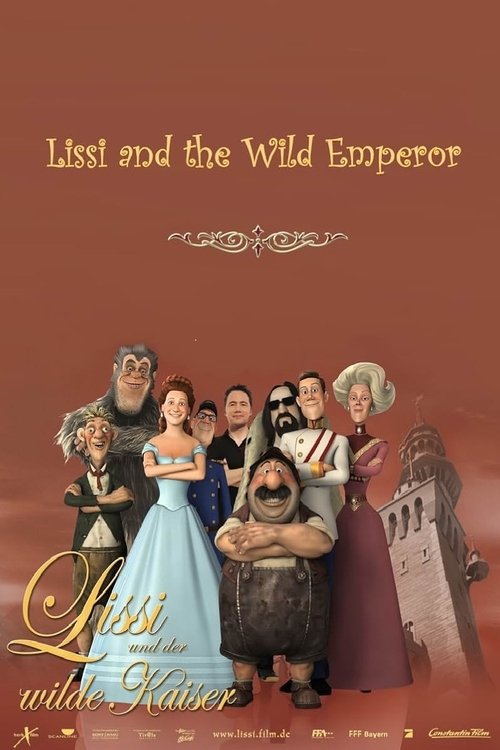
Lissi and the Wild Emperor
The plot concerns a yeti who makes a pact with the devil to kidnap the most beautiful girl in the world. This turns out to be the Princess Lissi, who is clearly the Austrian Princess and later Empress Elisabeth of Bavaria, and much of the film is taken up with subplots related to the court and to the romantic relationship between Elisabeth and her husband. The film is thus a comic parody of the Sissi films.
The film earned $29.7M at the global box office.
Plot Structure
Story beats plotted across runtime


Narrative Arc
Emotional journey through the story's key moments
Story Circle
Blueprint 15-beat structure
Arcplot Score Breakdown
Weighted: Precision (70%) + Arc (15%) + Theme (15%)
Lissi and the Wild Emperor (2007) exhibits carefully calibrated plot construction, characteristic of Michael Herbig's storytelling approach. This structural analysis examines how the film's 15-point plot structure maps to proven narrative frameworks across 1 hour and 25 minutes. With an Arcplot score of 7.2, the film balances conventional beats with creative variation.
Characters
Cast & narrative archetypes

Lissi
Emperor Franz
The Yeti Emperor
Ignaz
Archduchess Sophie
Main Cast & Characters
Lissi
Played by Michael Herbig
A naive and cheerful princess who becomes the target of a Yeti emperor's affection. She embarks on an adventure that challenges her sheltered worldview.
Emperor Franz
Played by Christian Tramitz
Lissi's husband, a well-meaning but bumbling emperor who struggles to rescue his wife from the Yeti emperor.
The Yeti Emperor
Played by Rick Kavanian
The wild and powerful ruler of the Yetis who becomes obsessed with Lissi and kidnaps her. Despite his fearsome nature, he has romantic intentions.
Ignaz
Played by Rick Kavanian
A loyal and practical companion who assists in the rescue mission with dry wit and common sense.
Archduchess Sophie
Played by Gerd Knebel
Emperor Franz's overbearing and controlling mother who disapproves of Lissi and meddles in imperial affairs.
Structural Analysis
The Status Quo at 1 minutes (1% through the runtime) establishes Lissi lives as a carefree countess in the Bavarian mountains, running a rustic yodeling tourism business with her father, content but longing for true love and adventure.. The analysis reveals that this early placement immediately immerses viewers in the story world.
The inciting incident occurs at 10 minutes when Emperor Franz visits the mountains and encounters Lissi. Despite their different worlds, they share an instant attraction, disrupting both of their ordinary lives.. At 12% through the film, this Disruption aligns precisely with traditional story structure. This beat shifts the emotional landscape, launching the protagonist into the central conflict.
The First Threshold at 21 minutes marks the transition into Act II, occurring at 25% of the runtime. This illustrates the protagonist's commitment to Lissi chooses to marry Franz and become Empress, fully committing to the imperial world despite her doubts and Sophie's opposition. The wedding marks her entry into Act 2., moving from reaction to action.
At 42 minutes, the Midpoint arrives at 49% of the runtime—precisely centered, creating perfect narrative symmetry. Of particular interest, this crucial beat Yung-Tse kidnaps Lissi to make her his bride, raising the stakes dramatically. What seemed like a fairy tale romance becomes a dangerous crisis. Franz must prove his worth to rescue her., fundamentally raising what's at risk. The emotional intensity shifts, dividing the narrative into clear before-and-after phases.
The Collapse moment at 63 minutes (74% through) represents the emotional nadir. Here, Franz's rescue attempt fails miserably, and he is captured as well. All hope seems lost as both Lissi and Franz face execution or forced marriage. The fairy tale has become a nightmare., reveals the protagonist at their lowest point. This beat's placement in the final quarter sets up the climactic reversal.
The Second Threshold at 68 minutes initiates the final act resolution at 80% of the runtime. Lissi discovers a way to escape by using her yodeling skills and mountain cunning combined with her newfound imperial resourcefulness. She takes action to save herself and Franz, synthesizing both worlds., demonstrating the transformation achieved throughout the journey.
Emotional Journey
Lissi and the Wild Emperor's emotional architecture traces a deliberate progression across 15 carefully calibrated beats.
Narrative Framework
This structural analysis employs structural analysis methodology used to understand storytelling architecture. By mapping Lissi and the Wild Emperor against these established plot points, we can identify how Michael Herbig utilizes or subverts traditional narrative conventions. The plot point approach reveals not only adherence to structural principles but also creative choices that distinguish Lissi and the Wild Emperor within the animation genre.
Michael Herbig's Structural Approach
Among the 3 Michael Herbig films analyzed on Arcplot, the average structural score is 7.1, reflecting strong command of classical structure. Lissi and the Wild Emperor represents one of the director's most structurally precise works. For comparative analysis, explore the complete Michael Herbig filmography.
Comparative Analysis
Additional animation films include The Bad Guys, Puss in Boots and Violet Evergarden: Eternity and the Auto Memory Doll. For more Michael Herbig analyses, see Balloon, Manitou's Shoe.
Plot Points by Act
Act I
SetupStatus Quo
Lissi lives as a carefree countess in the Bavarian mountains, running a rustic yodeling tourism business with her father, content but longing for true love and adventure.
Theme
Lissi's father mentions that "true love requires courage to be yourself," foreshadowing the film's theme about authenticity versus pretense.
Worldbuilding
Introduction to Lissi's simple mountain life, the pompous Emperor Franz, his controlling mother Sophie, and the political world of Vienna. The Wild Emperor Yung-Tse is introduced as a threat seeking a bride.
Disruption
Emperor Franz visits the mountains and encounters Lissi. Despite their different worlds, they share an instant attraction, disrupting both of their ordinary lives.
Resistance
Lissi is swept into the imperial world and must learn court etiquette. Franz's mother Sophie disapproves and schemes. Lissi debates whether she can truly fit into this artificial aristocratic world while staying true to herself.
Act II
ConfrontationFirst Threshold
Lissi chooses to marry Franz and become Empress, fully committing to the imperial world despite her doubts and Sophie's opposition. The wedding marks her entry into Act 2.
Mirror World
Lissi befriends the servants and common people of the palace who encourage her to maintain her authentic, spirited nature rather than conform to stuffy court expectations.
Premise
Lissi navigates her new role as Empress with comedic mishaps, clashing with Sophie's expectations. The threat of the Wild Emperor Yung-Tse grows as he demands tribute and a bride. Lissi explores the promise of her new position.
Midpoint
Yung-Tse kidnaps Lissi to make her his bride, raising the stakes dramatically. What seemed like a fairy tale romance becomes a dangerous crisis. Franz must prove his worth to rescue her.
Opposition
Lissi is held captive by Yung-Tse while Franz mounts an inept rescue mission. Obstacles intensify as Franz proves incompetent and cowardly. Lissi must fend for herself while maintaining hope.
Collapse
Franz's rescue attempt fails miserably, and he is captured as well. All hope seems lost as both Lissi and Franz face execution or forced marriage. The fairy tale has become a nightmare.
Crisis
In their darkest moment, Lissi and Franz must find inner strength and courage. Lissi realizes she must embrace her authentic self - her mountain skills and spirit - rather than play the helpless empress.
Act III
ResolutionSecond Threshold
Lissi discovers a way to escape by using her yodeling skills and mountain cunning combined with her newfound imperial resourcefulness. She takes action to save herself and Franz, synthesizing both worlds.
Synthesis
Lissi leads the escape and confrontation with Yung-Tse. Using both her authentic mountain spirit and her role as Empress, she defeats the villain. Franz finds his courage. They return to Vienna triumphant.
Transformation
Lissi and Franz rule together as Emperor and Empress, but now the court has changed to accept authenticity and joy. Lissi has transformed the stuffy imperial world rather than letting it transform her. True love and true self unite.