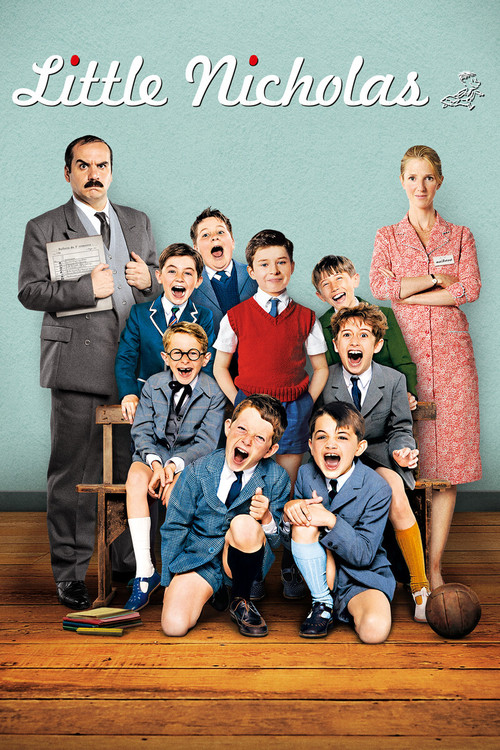
Little Nicholas
Nicolas has a happy existence, parents who love him, a great group of friends with whom he has great fun, and all he wants is that nothing changes. However, one day, he overhears a conversation that leads him to believe that his life might change forever, his mother is pregnant! He panics and envisions the worst.
Despite a respectable budget of $22.7M, Little Nicholas became a commercial success, earning $62.8M worldwide—a 177% return.
Plot Structure
Story beats plotted across runtime


Narrative Arc
Emotional journey through the story's key moments
Story Circle
Blueprint 15-beat structure
Arcplot Score Breakdown
Weighted: Precision (70%) + Arc (15%) + Theme (15%)
Little Nicholas (2009) reveals precise story structure, characteristic of Laurent Tirard's storytelling approach. This structural analysis examines how the film's 15-point plot structure maps to proven narrative frameworks across 1 hour and 31 minutes. With an Arcplot score of 7.8, the film showcases strong structural fundamentals.
Structural Analysis
The Status Quo at 1 minutes (1% through the runtime) establishes Nicolas introduces his perfect world: loving parents, loyal friends at school, and carefree days. His life is simple, happy, and exactly as he wants it.. Notably, this early placement immediately immerses viewers in the story world.
The inciting incident occurs at 10 minutes when Nicolas overhears his parents discussing something secretive and observes his mother knitting baby clothes. He becomes convinced they're having a new baby who will replace him.. At 11% through the film, this Disruption aligns precisely with traditional story structure. This beat shifts the emotional landscape, launching the protagonist into the central conflict.
The First Threshold at 22 minutes marks the transition into Act II, occurring at 24% of the runtime. This shows the protagonist's commitment to Nicolas and his friends actively decide to take action. They commit to a plan to either prevent the baby from arriving or make money so Nicolas can run away from home., moving from reaction to action.
At 46 minutes, the Midpoint arrives at 51% of the runtime—precisely centered, creating perfect narrative symmetry. Structural examination shows that this crucial beat False defeat: Nicolas's schemes fail spectacularly or he finds more "evidence" that the baby is definitely coming. The stakes raise as he becomes more desperate and the situation seems more real., fundamentally raising what's at risk. The emotional intensity shifts, dividing the narrative into clear before-and-after phases.
The Collapse moment at 68 minutes (75% through) represents the emotional nadir. Here, Nicolas's worst fear seems confirmed or his final scheme fails catastrophically. He faces the "death" of his old life and the certainty that everything will change. He may run away or have a major confrontation., indicates the protagonist at their lowest point. This beat's placement in the final quarter sets up the climactic reversal.
The Second Threshold at 72 minutes initiates the final act resolution at 79% of the runtime. Nicolas discovers the truth (either there is no baby, or he realizes his fear was unfounded) or has a conversation with his parents that helps him understand love doesn't divide, it multiplies., demonstrating the transformation achieved throughout the journey.
Emotional Journey
Little Nicholas's emotional architecture traces a deliberate progression across 15 carefully calibrated beats.
Narrative Framework
This structural analysis employs a 15-point narrative structure framework that maps key story moments. By mapping Little Nicholas against these established plot points, we can identify how Laurent Tirard utilizes or subverts traditional narrative conventions. The plot point approach reveals not only adherence to structural principles but also creative choices that distinguish Little Nicholas within the comedy genre.
Comparative Analysis
Additional comedy films include The Ministry of Ungentlemanly Warfare, The Bad Guys and Lake Placid.
Plot Points by Act
Act I
SetupStatus Quo
Nicolas introduces his perfect world: loving parents, loyal friends at school, and carefree days. His life is simple, happy, and exactly as he wants it.
Theme
A classmate or adult mentions how babies change everything in a family, planting the seed of Nicolas's central fear about being replaced or forgotten.
Worldbuilding
Establishment of Nicolas's world: his gang of friends (Alceste, Rufus, Clotaire, etc.), school dynamics with the Superintendent and teacher, and his comfortable home life with doting parents.
Disruption
Nicolas overhears his parents discussing something secretive and observes his mother knitting baby clothes. He becomes convinced they're having a new baby who will replace him.
Resistance
Nicolas debates what to do about the baby threat. He consults his friends who share horror stories about younger siblings. They debate various schemes to prevent or deal with the situation.
Act II
ConfrontationFirst Threshold
Nicolas and his friends actively decide to take action. They commit to a plan to either prevent the baby from arriving or make money so Nicolas can run away from home.
Mirror World
Introduction or deepening of Nicolas's relationship with his friends as a surrogate family, particularly moments with individual friends that show different perspectives on family and love.
Premise
The fun of watching Nicolas and friends execute increasingly absurd schemes: trying to make money, attempting to be so good their parents won't need another child, or plotting to stop the baby. Comic misadventures ensue.
Midpoint
False defeat: Nicolas's schemes fail spectacularly or he finds more "evidence" that the baby is definitely coming. The stakes raise as he becomes more desperate and the situation seems more real.
Opposition
Things get worse as Nicolas's increasingly frantic behavior causes problems at school and home. His parents are confused by his acting out. His schemes become more desperate and the consequences more serious.
Collapse
Nicolas's worst fear seems confirmed or his final scheme fails catastrophically. He faces the "death" of his old life and the certainty that everything will change. He may run away or have a major confrontation.
Crisis
Nicolas processes his despair, feeling alone and replaced. He reflects on what he's losing and confronts his deepest fear of not being loved anymore.
Act III
ResolutionSecond Threshold
Nicolas discovers the truth (either there is no baby, or he realizes his fear was unfounded) or has a conversation with his parents that helps him understand love doesn't divide, it multiplies.
Synthesis
Resolution of the situation. Nicolas reconciles with his parents, makes peace with whatever the truth is, and demonstrates his newfound maturity. Relationships are repaired and the family is closer than before.
Transformation
Final image mirrors the opening but shows growth: Nicolas still has his friends and loving parents, but now understands that family bonds aren't fragile. He's ready for whatever comes, having learned love expands rather than divides.