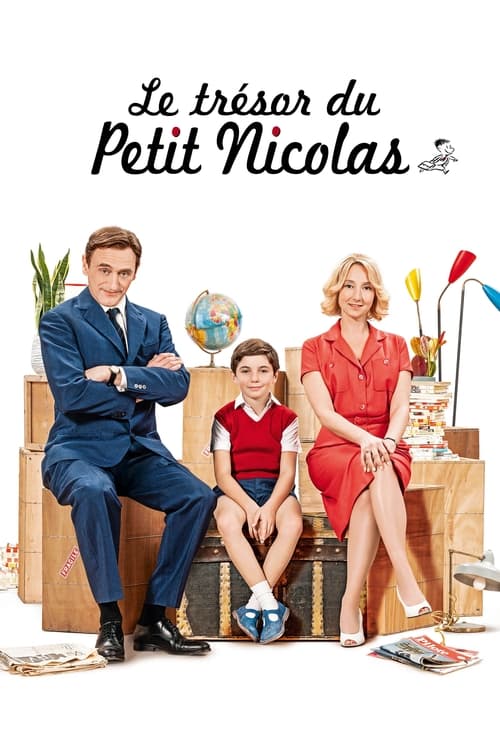
Little Nicholas' Treasure
In the peaceful world of Little Nicholas, there is Daddy, Mommy, the school, but above all, his band of friends. They are called The Invincibles, but above all they are inseparable. At least they think so. But when Dad gets a promotion and announces that the family is moving to the south of France, Nicolas' world falls apart. How can he imagine life without his best friends?
The film earned $5.8M at the global box office.
Plot Structure
Story beats plotted across runtime


Narrative Arc
Emotional journey through the story's key moments
Story Circle
Blueprint 15-beat structure
Arcplot Score Breakdown
Weighted: Precision (70%) + Arc (15%) + Theme (15%)
Little Nicholas' Treasure (2021) showcases deliberately positioned story structure, characteristic of Julien Rappeneau's storytelling approach. This structural analysis examines how the film's 15-point plot structure maps to proven narrative frameworks across 1 hour and 43 minutes. With an Arcplot score of 7.1, the film balances conventional beats with creative variation.
Structural Analysis
The Status Quo at 1 minutes (1% through the runtime) establishes Nicholas and his gang of friends play happily at school and at home, enjoying their carefree childhood in 1960s France.. The analysis reveals that this early placement immediately immerses viewers in the story world.
The inciting incident occurs at 12 minutes when Nicholas overhears his parents talking about financial troubles and discovers a mysterious treasure map in his grandfather's attic, offering a potential solution.. At 11% through the film, this Disruption aligns precisely with traditional story structure. This beat shifts the emotional landscape, launching the protagonist into the central conflict.
The First Threshold at 25 minutes marks the transition into Act II, occurring at 24% of the runtime. This shows the protagonist's commitment to Nicholas and his friends make the active decision to embark on the treasure hunt, sneaking away to follow the first clue on the map., moving from reaction to action.
At 51 minutes, the Midpoint arrives at 49% of the runtime—precisely centered, creating perfect narrative symmetry. Notably, this crucial beat The boys make a major breakthrough, discovering the treasure's location or finding a significant clue. They celebrate their apparent success, believing they've solved the mystery., fundamentally raising what's at risk. The emotional intensity shifts, dividing the narrative into clear before-and-after phases.
The Collapse moment at 76 minutes (73% through) represents the emotional nadir. Here, The treasure hunt fails catastrophically. The boys are caught, their friendship fractures over blame and disappointment, and Nicholas fears he's lost both the treasure and his friends., shows the protagonist at their lowest point. This beat's placement in the final quarter sets up the climactic reversal.
The Second Threshold at 82 minutes initiates the final act resolution at 80% of the runtime. Nicholas discovers the real meaning of the treasure (memories, friendship, family) or finds a way to reconcile with his friends and solve his family's problem through unity rather than riches., demonstrating the transformation achieved throughout the journey.
Emotional Journey
Little Nicholas' Treasure's emotional architecture traces a deliberate progression across 15 carefully calibrated beats.
Narrative Framework
This structural analysis employs proven narrative structure principles that track dramatic progression. By mapping Little Nicholas' Treasure against these established plot points, we can identify how Julien Rappeneau utilizes or subverts traditional narrative conventions. The plot point approach reveals not only adherence to structural principles but also creative choices that distinguish Little Nicholas' Treasure within the family genre.
Comparative Analysis
Additional family films include The Bad Guys, Like A Rolling Stone and Cats Don't Dance.
Plot Points by Act
Act I
SetupStatus Quo
Nicholas and his gang of friends play happily at school and at home, enjoying their carefree childhood in 1960s France.
Theme
An adult character mentions that the greatest treasures in life aren't what you find, but who you share them with.
Worldbuilding
Introduction to Nicholas' world: his loving parents, his school friends (Alceste, Geoffroy, Eudes, Rufus, Clotaire), their teacher, and the neighborhood dynamics.
Disruption
Nicholas overhears his parents talking about financial troubles and discovers a mysterious treasure map in his grandfather's attic, offering a potential solution.
Resistance
Nicholas debates whether to pursue the treasure hunt with his friends. They research the map, discuss the risks, and prepare for their adventure while keeping it secret from adults.
Act II
ConfrontationFirst Threshold
Nicholas and his friends make the active decision to embark on the treasure hunt, sneaking away to follow the first clue on the map.
Mirror World
The boys encounter a kind old man who shares stories about friendship and adventure, embodying the film's theme that relationships matter more than riches.
Premise
The treasure hunt adventure unfolds: solving riddles, exploring mysterious locations, comedic mishaps, close calls with adults, and the pure fun of childhood friendship and discovery.
Midpoint
The boys make a major breakthrough, discovering the treasure's location or finding a significant clue. They celebrate their apparent success, believing they've solved the mystery.
Opposition
Complications arise: rival treasure hunters appear, the boys' friendship strains under pressure, adults grow suspicious, and the treasure proves harder to reach than anticipated.
Collapse
The treasure hunt fails catastrophically. The boys are caught, their friendship fractures over blame and disappointment, and Nicholas fears he's lost both the treasure and his friends.
Crisis
Nicholas sits alone, reflecting on what truly matters. He realizes the adventure itself and his friendships are more valuable than any material treasure.
Act III
ResolutionSecond Threshold
Nicholas discovers the real meaning of the treasure (memories, friendship, family) or finds a way to reconcile with his friends and solve his family's problem through unity rather than riches.
Synthesis
Nicholas reunites the gang, they work together to resolve the central conflict, make amends with adults, and discover the true treasure was the bonds they strengthened along the way.
Transformation
The final image mirrors the opening but shows growth: the same group of friends playing together, but Nicholas now understands that these friendships are his greatest treasure.