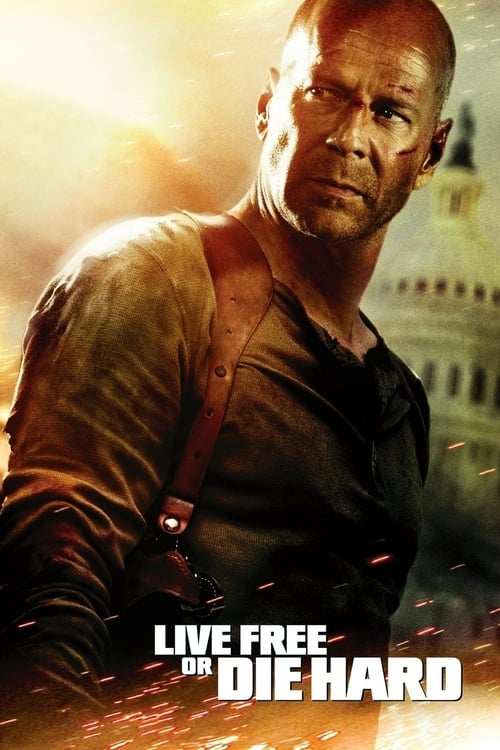
Live Free or Die Hard
John McClane is forced to team up with a young computer hacker, Matt Farrell, to stop a master cyber-terrorist called Thomas Gabriel, who wants to shut down the entire nations computer infrastructure in a mass cyber attack.
Despite a significant budget of $110.0M, Live Free or Die Hard became a solid performer, earning $383.5M worldwide—a 249% return.
3 wins & 16 nominations


Plot Structure
Story beats plotted across runtime


Narrative Arc
Emotional journey through the story's key moments
Story Circle
Blueprint 15-beat structure
Characters
Cast & narrative archetypes

John McClane
Matt Farrell
Thomas Gabriel
Lucy McClane
Mai Linh
Main Cast & Characters
John McClane
Played by Bruce Willis
Veteran NYPD detective thrust into stopping a cyber-terrorist attack on America's infrastructure
Matt Farrell
Played by Justin Long
Young hacker reluctantly helping McClane stop the cyber-terrorists he inadvertently aided
Thomas Gabriel
Played by Timothy Olyphant
Brilliant former government security expert turned cyber-terrorist seeking revenge against the system
Lucy McClane
Played by Mary Elizabeth Winstead
John McClane's estranged daughter taken hostage by Gabriel
Mai Linh
Played by Maggie Q
Gabriel's lethal and loyal enforcer, expert in martial arts
Structural Analysis
The Status Quo at 2 minutes (1% through the runtime) establishes John McClane is a divorced, aging cop in a rundown apartment, estranged from his daughter Lucy. He's stuck in his old-school ways, resistant to technology and change.. Significantly, this early placement immediately immerses viewers in the story world.
The inciting incident occurs at 16 minutes when Assassins attack Farrell's apartment while McClane is there to pick him up. What should have been a simple transport job becomes a deadly firefight, thrusting McClane into a conspiracy he doesn't understand.. At 13% through the film, this Disruption is delayed, allowing extended setup of the story world. This beat shifts the emotional landscape, launching the protagonist into the central conflict.
The First Threshold at 32 minutes marks the transition into Act II, occurring at 25% of the runtime. This reveals the protagonist's commitment to The terrorists execute a massive coordinated attack on transportation systems, causing chaos nationwide. McClane realizes this isn't just about protecting Farrell - he's now actively committed to stopping the entire operation. He chooses to stay in the fight., moving from reaction to action.
At 64 minutes, the Midpoint arrives at 50% of the runtime—precisely centered, creating perfect narrative symmetry. The analysis reveals that this crucial beat McClane discovers the terrorists have kidnapped his daughter Lucy to use as leverage against him. The mission becomes intensely personal. What seemed like a winnable fight against faceless terrorists now has devastating personal stakes. Thomas Gabriel reveals himself as the mastermind., fundamentally raising what's at risk. The emotional intensity shifts, dividing the narrative into clear before-and-after phases.
The Collapse moment at 96 minutes (75% through) represents the emotional nadir. Here, McClane is battered, seemingly defeated after the F-35 attack. Lucy is in the hands of the terrorists at their secure facility. Farrell is injured. Gabriel appears to have won - he has the money, the hostage, and McClane is broken down, weaponless, and isolated with no backup., indicates the protagonist at their lowest point. This beat's placement in the final quarter sets up the climactic reversal.
The Second Threshold at 102 minutes initiates the final act resolution at 80% of the runtime. Farrell provides McClane the location of the terrorist facility. McClane synthesizes old and new - using Farrell's hacking knowledge combined with his own direct action tactics. He embraces help from the younger generation while staying true to himself. He's ready for the final assault., demonstrating the transformation achieved throughout the journey.
Emotional Journey
Live Free or Die Hard's emotional architecture traces a deliberate progression across 15 carefully calibrated beats.
Narrative Framework
This structural analysis employs a 15-point narrative structure framework that maps key story moments. By mapping Live Free or Die Hard against these established plot points, we can identify how Len Wiseman utilizes or subverts traditional narrative conventions. The plot point approach reveals not only adherence to structural principles but also creative choices that distinguish Live Free or Die Hard within the action genre.
Len Wiseman's Structural Approach
Among the 4 Len Wiseman films analyzed on Arcplot, the average structural score is 6.5, demonstrating varied approaches to story architecture. Live Free or Die Hard exemplifies the director's characteristic narrative technique. For comparative analysis, explore the complete Len Wiseman filmography.
Comparative Analysis
Additional action films include The Bad Guys, Puss in Boots and Venom: The Last Dance. For more Len Wiseman analyses, see Total Recall, Underworld: Evolution and Underworld.
Plot Points by Act
Act I
SetupStatus Quo
John McClane is a divorced, aging cop in a rundown apartment, estranged from his daughter Lucy. He's stuck in his old-school ways, resistant to technology and change.
Theme
Matt Farrell tells McClane about the vulnerability of interconnected systems: "Everything's connected to everything." The theme explores analog vs. digital, old school vs. new threats, and the dangers of technology dependency.
Worldbuilding
Introduction to the cyber-terrorist plot as hackers are systematically eliminated. McClane is assigned a routine task to transport hacker Matt Farrell to FBI headquarters. We see the scale of the digital infrastructure and McClane's disconnection from modern technology.
Disruption
Assassins attack Farrell's apartment while McClane is there to pick him up. What should have been a simple transport job becomes a deadly firefight, thrusting McClane into a conspiracy he doesn't understand.
Resistance
McClane tries to deliver Farrell to the FBI while dodging attacks. He resists getting deeply involved, just wanting to complete his assignment. Farrell explains the "fire sale" concept - a coordinated cyber-attack on infrastructure. McClane is out of his depth with technology but his instincts keep them alive.
Act II
ConfrontationFirst Threshold
The terrorists execute a massive coordinated attack on transportation systems, causing chaos nationwide. McClane realizes this isn't just about protecting Farrell - he's now actively committed to stopping the entire operation. He chooses to stay in the fight.
Mirror World
McClane and Farrell form an unlikely partnership - the old-school cop and the young hacker. Farrell represents the modern world McClane doesn't understand, but their combined skills create something stronger. This mirrors McClane's relationship with his daughter and the generational divide.
Premise
Classic Die Hard action as McClane fights through increasingly elaborate set pieces - helicopter attack in the street, confrontation at Warlock's basement headquarters. The "analog hero in a digital war" premise plays out with McClane using physical action to counter cyber-terrorism. The scope of the fire sale becomes clear.
Midpoint
McClane discovers the terrorists have kidnapped his daughter Lucy to use as leverage against him. The mission becomes intensely personal. What seemed like a winnable fight against faceless terrorists now has devastating personal stakes. Thomas Gabriel reveals himself as the mastermind.
Opposition
The terrorists tighten their grip with Lucy as hostage. Gabriel's plan progresses - economic collapse through the financial sector attack. McClane and Farrell race to find the terrorist headquarters while being hunted. The F-35 jet attack escalates the danger to absurd levels. McClane's old-school methods are seemingly inadequate against Gabriel's technological superiority.
Collapse
McClane is battered, seemingly defeated after the F-35 attack. Lucy is in the hands of the terrorists at their secure facility. Farrell is injured. Gabriel appears to have won - he has the money, the hostage, and McClane is broken down, weaponless, and isolated with no backup.
Crisis
McClane faces his lowest point, but refuses to quit. He reconciles with who he is - not a tech expert, but a man who doesn't give up. He realizes his daughter needs him to be the hero he's always been, and that his old-school approach is actually his strength, not weakness.
Act III
ResolutionSecond Threshold
Farrell provides McClane the location of the terrorist facility. McClane synthesizes old and new - using Farrell's hacking knowledge combined with his own direct action tactics. He embraces help from the younger generation while staying true to himself. He's ready for the final assault.
Synthesis
McClane storms the terrorist facility in a massive action finale. He fights through Gabriel's forces, rescues Lucy, and confronts Gabriel directly. The final battle combines McClane's physical prowess with Farrell's technical support. McClane defeats Gabriel by shooting himself to get a clear shot through his own shoulder - the ultimate old-school solution.
Transformation
McClane reconnects with his daughter Lucy, who introduces Farrell as "John McClane" with pride in her father. McClane has bridged the generational gap, earned his daughter's respect, and proven that human courage and determination still matter in a digital age. The old hero remains relevant.