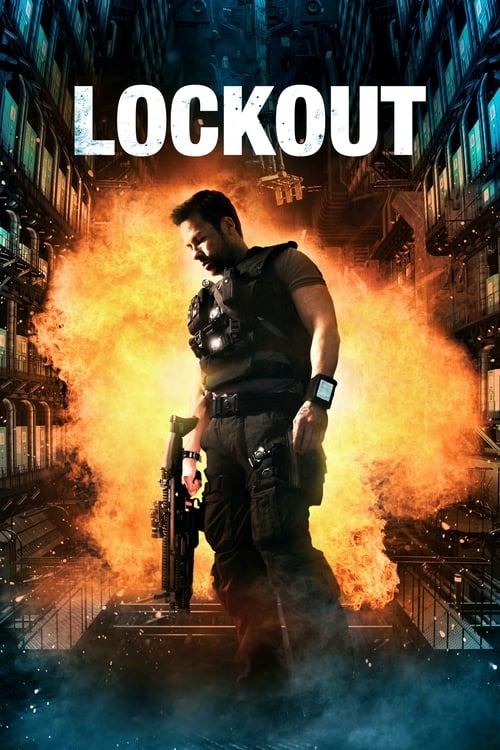
Lockout
Set in the near future, Lockout follows a falsely convicted ex-government agent , whose one chance at obtaining freedom lies in the dangerous mission of rescuing the President's daughter from rioting convicts at an outer space maximum security prison.
Working with a moderate budget of $20.0M, the film achieved a modest success with $32.9M in global revenue (+65% profit margin).


Plot Structure
Story beats plotted across runtime


Narrative Arc
Emotional journey through the story's key moments
Story Circle
Blueprint 15-beat structure
Arcplot Score Breakdown
Weighted: Precision (70%) + Arc (15%) + Theme (15%)
Lockout (2012) exemplifies precise narrative architecture, characteristic of Stephen St. Leger's storytelling approach. This structural analysis examines how the film's 15-point plot structure maps to proven narrative frameworks across 1 hour and 35 minutes. With an Arcplot score of 7.5, the film showcases strong structural fundamentals.
Characters
Cast & narrative archetypes

Snow
Emilie Warnock
Alex
Hydell
Scott Langral
Harry Shaw
Main Cast & Characters
Snow
Played by Guy Pearce
A wrongly convicted ex-CIA agent who must rescue the President's daughter from a maximum-security space prison to prove his innocence.
Emilie Warnock
Played by Maggie Grace
The idealistic First Daughter conducting a humanitarian investigation on MS One who becomes a hostage when inmates take over the prison.
Alex
Played by Vincent Regan
The violent and psychotic leader of the prison riot who takes personal interest in tormenting Emilie.
Hydell
Played by Joseph Gilgun
Alex's unhinged younger brother, equally dangerous and unpredictable, who helps lead the prison takeover.
Scott Langral
Played by Lennie James
The head of the Secret Service who coordinates the rescue operation and debates military options.
Harry Shaw
Played by Lennie James
Snow's friend and intelligence operative who works to clear Snow's name while the rescue unfolds.
Structural Analysis
The Status Quo at 1 minutes (1% through the runtime) establishes Snow is interrogated after being framed for murder. He's a wisecracking, cynical CIA agent who operates alone and trusts no one.. The analysis reveals that this early placement immediately immerses viewers in the story world.
The inciting incident occurs at 11 minutes when Prison riot erupts when Hydell is released from stasis for Emilie's interview. He attacks, takes weapons, and begins releasing all 500 dangerous prisoners.. At 11% through the film, this Disruption aligns precisely with traditional story structure. This beat shifts the emotional landscape, launching the protagonist into the central conflict.
The First Threshold at 23 minutes marks the transition into Act II, occurring at 24% of the runtime. This shows the protagonist's commitment to Snow agrees to the mission and is launched in a pod to infiltrate MS One. He chooses to enter the prison-turned-warzone to rescue someone he's never met., moving from reaction to action.
At 48 minutes, the Midpoint arrives at 50% of the runtime—precisely centered, creating perfect narrative symmetry. Notably, this crucial beat False defeat: Snow and Emilie are captured by Alex (the smarter brother). The rescue has failed. Alex threatens to execute hostages unless the President meets their demands. Stakes escalate - this is now about 500 prisoners and political crisis., fundamentally raising what's at risk. The emotional intensity shifts, dividing the narrative into clear before-and-after phases.
The Collapse moment at 70 minutes (73% through) represents the emotional nadir. Here, The government initiates lockdown protocol - MS One will crash into Earth, killing everyone aboard. Snow's friend Mace (who held evidence of his innocence) dies. All hope seems lost - they're trapped on a falling prison., indicates the protagonist at their lowest point. This beat's placement in the final quarter sets up the climactic reversal.
The Second Threshold at 76 minutes initiates the final act resolution at 80% of the runtime. Snow chooses to trust and sacrifice for others. He and Emilie work together as true partners. They devise a plan to use the escape pods to save the hostages and stop the station from crashing., demonstrating the transformation achieved throughout the journey.
Emotional Journey
Lockout's emotional architecture traces a deliberate progression across 15 carefully calibrated beats.
Narrative Framework
This structural analysis employs proven narrative structure principles that track dramatic progression. By mapping Lockout against these established plot points, we can identify how Stephen St. Leger utilizes or subverts traditional narrative conventions. The plot point approach reveals not only adherence to structural principles but also creative choices that distinguish Lockout within the action genre.
Comparative Analysis
Additional action films include The Bad Guys, Puss in Boots and Venom: The Last Dance.
Plot Points by Act
Act I
SetupStatus Quo
Snow is interrogated after being framed for murder. He's a wisecracking, cynical CIA agent who operates alone and trusts no one.
Theme
Snow's handler tells him "Sometimes you have to trust people" - establishing the theme of trust, connection, and sacrifice for others.
Worldbuilding
Establishing Snow's world: framed for killing a CIA operative, sentenced to MS One maximum security space prison. Meanwhile, President's daughter Emilie Warnock arrives at MS One for humanitarian investigation of prisoner treatment.
Disruption
Prison riot erupts when Hydell is released from stasis for Emilie's interview. He attacks, takes weapons, and begins releasing all 500 dangerous prisoners.
Resistance
Snow initially refuses the mission to rescue Emilie from MS One. Secret Service agent Langral offers him a deal: save the President's daughter, get his freedom. Snow resists but realizes he has no choice and that evidence clearing his name is on the station.
Act II
ConfrontationFirst Threshold
Snow agrees to the mission and is launched in a pod to infiltrate MS One. He chooses to enter the prison-turned-warzone to rescue someone he's never met.
Mirror World
Snow meets Emilie for the first time. She's idealistic and compassionate (investigating prisoner rights); he's cynical and sarcastic. She represents everything he's stopped believing in - hope, trust, caring about others.
Premise
The "promise of the premise" - Snow and Emilie navigate the prison together, arguing and clashing. Action set pieces as they evade prisoners, with Snow's sarcasm vs Emilie's compassion. She insists on trying to save others; he wants to complete the mission and leave.
Midpoint
False defeat: Snow and Emilie are captured by Alex (the smarter brother). The rescue has failed. Alex threatens to execute hostages unless the President meets their demands. Stakes escalate - this is now about 500 prisoners and political crisis.
Opposition
Pressure intensifies. Alex discovers Emilie's true identity. The government considers destroying MS One with everyone aboard. Snow and Emilie escape again but face increasing danger. Hydell becomes more unstable and violent. Snow's evidence may be destroyed.
Collapse
The government initiates lockdown protocol - MS One will crash into Earth, killing everyone aboard. Snow's friend Mace (who held evidence of his innocence) dies. All hope seems lost - they're trapped on a falling prison.
Crisis
Dark night moment. Snow must decide whether to save himself or risk everything for Emilie and the hostages. Emilie challenges his cynicism - won't he fight for something beyond himself?
Act III
ResolutionSecond Threshold
Snow chooses to trust and sacrifice for others. He and Emilie work together as true partners. They devise a plan to use the escape pods to save the hostages and stop the station from crashing.
Synthesis
Finale: Snow confronts both brothers. Emilie helps evacuate hostages. They fight to stabilize MS One's descent. Snow combines his skills with newfound willingness to trust and work with others. Final confrontation with Hydell and Alex.
Transformation
Snow and Emilie survive reentry together. The cynical loner has learned to trust and care for someone else. His sarcastic quip to Emilie shows affection rather than contempt - same man, transformed heart.