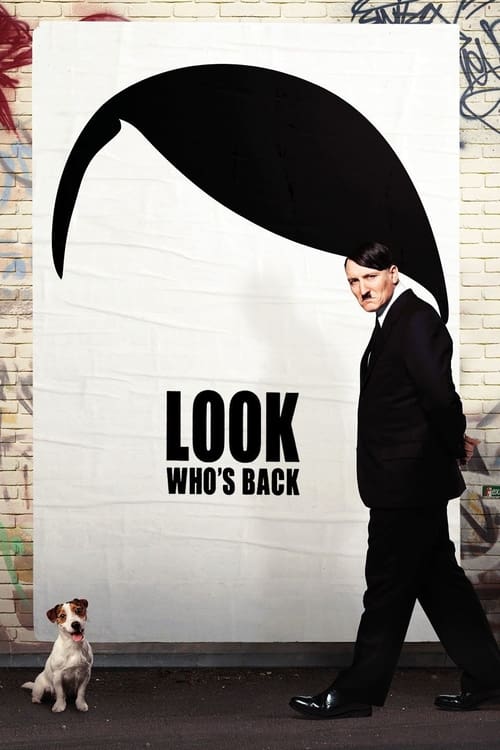
Look Who's Back
When Adolf Hitler reawakens at the site of his former bunker in present-day Berlin, he is mistaken for a comedian and quickly becomes a media phenomenon.
Despite its limited budget of $3.2M, Look Who's Back became a massive hit, earning $25.5M worldwide—a remarkable 698% return. The film's compelling narrative found its audience, showing that strong storytelling can transcend budget limitations.
Plot Structure
Story beats plotted across runtime


Narrative Arc
Emotional journey through the story's key moments
Story Circle
Blueprint 15-beat structure
Arcplot Score Breakdown
Weighted: Precision (70%) + Arc (15%) + Theme (15%)
Look Who's Back (2015) exemplifies meticulously timed narrative architecture, characteristic of David Wnendt's storytelling approach. This structural analysis examines how the film's 15-point plot structure maps to proven narrative frameworks across 1 hour and 56 minutes. With an Arcplot score of 6.7, the film balances conventional beats with creative variation.
Characters
Cast & narrative archetypes

Adolf Hitler
Fabian Sawatzki
Katja Bellini
Christoph Sensenbrink
Franziska Krön
Main Cast & Characters
Adolf Hitler
Played by Oliver Masucci
The resurrected Führer who wakes up in modern Berlin and becomes a viral sensation while being mistaken for a brilliant satirist.
Fabian Sawatzki
Played by Fabian Busch
A struggling TV producer who discovers Hitler and launches him to fame, initially unaware of the danger he's unleashing.
Katja Bellini
Played by Katja Riemann
A television executive who sees Hitler as entertainment gold and promotes him despite growing concerns about his authenticity.
Christoph Sensenbrink
Played by Christoph Maria Herbst
Network head who initially dismisses Hitler but later embraces him as a ratings phenomenon.
Franziska Krön
Played by Franziska Wulf
Fabian's girlfriend who works at the network and becomes increasingly alarmed by Hitler's rise to popularity.
Structural Analysis
The Status Quo at 1 minutes (1% through the runtime) establishes Hitler awakens in modern-day Berlin on the exact spot where his bunker once stood, confused and disoriented in 2014.. Structural examination shows that this early placement immediately immerses viewers in the story world.
The inciting incident occurs at 14 minutes when Struggling filmmaker Fabian Sawatzki discovers Hitler and assumes he's a method actor. He films Hitler's interactions with real Germans, capturing genuine reactions to "Hitler" on the streets.. At 12% through the film, this Disruption aligns precisely with traditional story structure. This beat shifts the emotional landscape, launching the protagonist into the central conflict.
The First Threshold at 28 minutes marks the transition into Act II, occurring at 25% of the runtime. This reveals the protagonist's commitment to Fabian actively chooses to pitch Hitler as a satirical comedian to television executives, believing this character could be his big break. Hitler agrees to enter the entertainment world., moving from reaction to action.
At 57 minutes, the Midpoint arrives at 49% of the runtime—precisely centered, creating perfect narrative symmetry. Structural examination shows that this crucial beat Hitler's TV show becomes the #1 program in Germany. False victory: He achieves massive influence and popularity, but the audience still believes it's satire. Hitler realizes modern media is the perfect tool for his ideology., fundamentally raising what's at risk. The emotional intensity shifts, dividing the narrative into clear before-and-after phases.
The Collapse moment at 85 minutes (74% through) represents the emotional nadir. Here, Fabian discovers evidence proving this actually IS Hitler. When he tries to expose the truth, he's institutionalized as insane. The dream of using Hitler for satire dies; Fabian loses everything while Hitler remains free., demonstrates the protagonist at their lowest point. This beat's placement in the final quarter sets up the climactic reversal.
The Second Threshold at 93 minutes initiates the final act resolution at 80% of the runtime. Hitler synthesizes his understanding: he doesn't need violence this time. Media, entertainment, and democratic systems will carry his message. He chooses to fully embrace his new platform with chilling clarity., demonstrating the transformation achieved throughout the journey.
Emotional Journey
Look Who's Back's emotional architecture traces a deliberate progression across 15 carefully calibrated beats.
Narrative Framework
This structural analysis employs structural analysis methodology used to understand storytelling architecture. By mapping Look Who's Back against these established plot points, we can identify how David Wnendt utilizes or subverts traditional narrative conventions. The plot point approach reveals not only adherence to structural principles but also creative choices that distinguish Look Who's Back within the comedy genre.
Comparative Analysis
Additional comedy films include The Bad Guys, Ella Enchanted and The Evening Star.
Plot Points by Act
Act I
SetupStatus Quo
Hitler awakens in modern-day Berlin on the exact spot where his bunker once stood, confused and disoriented in 2014.
Theme
Passerby comments that people will believe anything if it's presented convincingly enough, foreshadowing the film's exploration of media manipulation and the seductive nature of charismatic rhetoric.
Worldbuilding
Hitler wanders modern Berlin completely bewildered by technology, diversity, and contemporary society. He encounters a newspaper kiosk owner who lets him stay overnight, establishing his fish-out-of-water status.
Disruption
Struggling filmmaker Fabian Sawatzki discovers Hitler and assumes he's a method actor. He films Hitler's interactions with real Germans, capturing genuine reactions to "Hitler" on the streets.
Resistance
Fabian debates whether to exploit this "performer" for his career. Hitler learns about smartphones, YouTube, and modern media while Fabian films a documentary-style road trip across Germany, capturing Hitler's unscripted interactions with citizens.
Act II
ConfrontationFirst Threshold
Fabian actively chooses to pitch Hitler as a satirical comedian to television executives, believing this character could be his big break. Hitler agrees to enter the entertainment world.
Mirror World
Hitler meets TV producer Katja Bellini, who represents the media establishment. Their relationship becomes the thematic mirror showing how media platforms amplify dangerous voices in pursuit of ratings.
Premise
Hitler becomes a viral sensation and TV personality. The "promise of the premise" delivers: watching Hitler navigate talk shows, social media fame, and modern politics as entertainment. His inflammatory rhetoric is mistaken for brilliant satire.
Midpoint
Hitler's TV show becomes the #1 program in Germany. False victory: He achieves massive influence and popularity, but the audience still believes it's satire. Hitler realizes modern media is the perfect tool for his ideology.
Opposition
Hitler's influence grows as he publishes a bestselling book and gains political traction. Opposition mounts: Fabian begins suspecting Hitler might be real. Right-wing extremists embrace him genuinely while liberals dismiss him as comedy. The lines blur dangerously.
Collapse
Fabian discovers evidence proving this actually IS Hitler. When he tries to expose the truth, he's institutionalized as insane. The dream of using Hitler for satire dies; Fabian loses everything while Hitler remains free.
Crisis
Fabian sits in psychiatric care, helpless and defeated. Hitler reflects on his new position of power, processing how perfectly modern society has welcomed him back. Dark realization: democracy enabled his return.
Act III
ResolutionSecond Threshold
Hitler synthesizes his understanding: he doesn't need violence this time. Media, entertainment, and democratic systems will carry his message. He chooses to fully embrace his new platform with chilling clarity.
Synthesis
Hitler confronts and removes remaining opposition. Fabian escapes the institution and attempts to shoot Hitler but fails. Hitler delivers a chilling monologue directly to camera about how he represents the people's true desires. The finale resolves with Hitler fully integrated into society.
Transformation
Final image mirrors the opening: Hitler on the street, but now surrounded by cheering supporters with smartphones recording him. The innocent confusion has transformed into intentional manipulation. Society hasn't changed him; he's changed society.