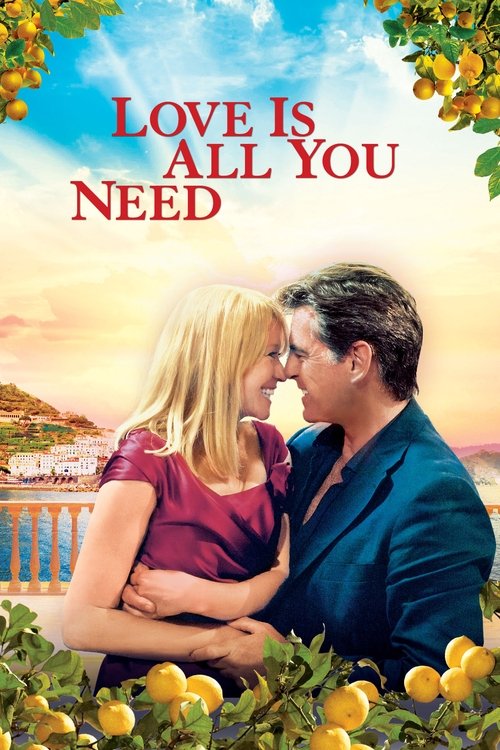
Love Is All You Need
Ida, a Danish hairdresser who has lost her hair to cancer, returns home from the hospital one day to find her husband is cheating on her. She decides to travel to Italy on her own for her daughter's wedding, but discovers on arriving that the wedding gathering will present its own challenges.
Despite its limited budget of $5.5M, Love Is All You Need became a box office success, earning $16.7M worldwide—a 204% return. The film's fresh perspective connected with viewers, proving that strong storytelling can transcend budget limitations.
5 wins & 14 nominations


Plot Structure
Story beats plotted across runtime


Narrative Arc
Emotional journey through the story's key moments
Story Circle
Blueprint 15-beat structure
Arcplot Score Breakdown
Weighted: Precision (70%) + Arc (15%) + Theme (15%)
Love Is All You Need (2012) exemplifies strategically placed plot construction, characteristic of Susanne Bier's storytelling approach. This structural analysis examines how the film's 15-point plot structure maps to proven narrative frameworks across 1 hour and 56 minutes. With an Arcplot score of 7.3, the film balances conventional beats with creative variation.
Characters
Cast & narrative archetypes

Ida
Philip
Astrid
Patrick
Leif
Benedikte
Main Cast & Characters
Ida
Played by Trine Dyrholm
A hairdresser recovering from breast cancer and her husband's infidelity, traveling to Italy for her daughter's wedding.
Philip
Played by Pierce Brosnan
A melancholic British widower and lemon grove owner in Sorrento who reconnects with life through an unexpected romance.
Astrid
Played by Molly Blixt Egelind
Ida's daughter, a bride-to-be who is getting married in Italy.
Patrick
Played by Sebastian Jessen
Philip's son, the groom who is marrying Astrid in Italy.
Leif
Played by Kim Bodnia
Ida's unfaithful husband who cheated on her during her cancer treatment.
Benedikte
Played by Paprika Steen
Philip's outspoken and meddlesome sister who helps organize the wedding.
Structural Analysis
The Status Quo at 1 minutes (1% through the runtime) establishes Ida, a hairdresser recovering from breast cancer, prepares for her final chemotherapy treatment. She adjusts her wig and tries to maintain normalcy while her husband Leif seems emotionally distant.. Of particular interest, this early placement immediately immerses viewers in the story world.
The inciting incident occurs at 14 minutes when Ida comes home early to find her husband Leif in bed with his young coworker Thilde. Her world shatters as the man who was supposed to support her through cancer has betrayed her.. At 12% through the film, this Disruption aligns precisely with traditional story structure. This beat shifts the emotional landscape, launching the protagonist into the central conflict.
The First Threshold at 29 minutes marks the transition into Act II, occurring at 25% of the runtime. This indicates the protagonist's commitment to Ida arrives at Philip's stunning lemon grove estate in Sorrento, Italy for the wedding, choosing to put aside her pain and be present for her daughter. She commits to the new world of the wedding festivities despite her crumbling personal life., moving from reaction to action.
At 58 minutes, the Midpoint arrives at 50% of the runtime—precisely centered, creating perfect narrative symmetry. The analysis reveals that this crucial beat Philip and Ida share an intimate moment during a boat trip. They kiss, and both allow themselves to feel genuine connection for the first time in years. False victory: it seems love may bloom, but complications await., fundamentally raising what's at risk. The emotional intensity shifts, dividing the narrative into clear before-and-after phases.
The Collapse moment at 87 minutes (75% through) represents the emotional nadir. Here, Philip withdraws completely from Ida after learning about her cancer, unable to face the possibility of loss again. Ida feels rejected for her illness. The wedding is in jeopardy. All hope for love seems lost - a metaphorical death of possibility., shows the protagonist at their lowest point. This beat's placement in the final quarter sets up the climactic reversal.
The Second Threshold at 94 minutes initiates the final act resolution at 81% of the runtime. Philip has a realization while looking at old photos of his late wife and seeing the lemon groves she loved. He understands that love is worth the risk of loss, that closing himself off has not protected him but only made him miss life., demonstrating the transformation achieved throughout the journey.
Emotional Journey
Love Is All You Need's emotional architecture traces a deliberate progression across 15 carefully calibrated beats.
Narrative Framework
This structural analysis employs proven narrative structure principles that track dramatic progression. By mapping Love Is All You Need against these established plot points, we can identify how Susanne Bier utilizes or subverts traditional narrative conventions. The plot point approach reveals not only adherence to structural principles but also creative choices that distinguish Love Is All You Need within the comedy genre.
Susanne Bier's Structural Approach
Among the 3 Susanne Bier films analyzed on Arcplot, the average structural score is 7.2, reflecting strong command of classical structure. Love Is All You Need represents one of the director's most structurally precise works. For comparative analysis, explore the complete Susanne Bier filmography.
Comparative Analysis
Additional comedy films include The Bad Guys, Ella Enchanted and The Evening Star. For more Susanne Bier analyses, see In a Better World, Serena.
Plot Points by Act
Act I
SetupStatus Quo
Ida, a hairdresser recovering from breast cancer, prepares for her final chemotherapy treatment. She adjusts her wig and tries to maintain normalcy while her husband Leif seems emotionally distant.
Theme
Ida's daughter Astrid discusses the upcoming wedding in Italy, mentioning that love is what matters most. The theme of whether love can survive life's harshest trials is introduced.
Worldbuilding
We see Ida's life in Copenhagen: her cancer recovery, her work as a hairdresser, her strained marriage to Leif, and the preparations for daughter Astrid's wedding to Patrick. Philip, a wealthy widower and Patrick's father, is introduced as emotionally closed off since his wife's death.
Disruption
Ida comes home early to find her husband Leif in bed with his young coworker Thilde. Her world shatters as the man who was supposed to support her through cancer has betrayed her.
Resistance
Ida must decide how to handle the betrayal while still attending her daughter's wedding. She accidentally rear-ends Philip's car at the airport, creating an awkward first encounter. Both are headed to the same destination in Italy but don't yet know they'll be connected through their children.
Act II
ConfrontationFirst Threshold
Ida arrives at Philip's stunning lemon grove estate in Sorrento, Italy for the wedding, choosing to put aside her pain and be present for her daughter. She commits to the new world of the wedding festivities despite her crumbling personal life.
Mirror World
Ida and Philip have their first real conversation. He shows her the lemon groves, and we see the first sparks of connection between two wounded people. The B-story romance that will teach both to open their hearts begins.
Premise
The wedding preparations unfold in the beautiful Italian setting. Ida tries to hide her marital troubles while growing closer to Philip. Romantic comedy elements emerge as the two reluctantly attracted people navigate family dynamics, cultural clashes, and the beauty of the Amalfi coast.
Midpoint
Philip and Ida share an intimate moment during a boat trip. They kiss, and both allow themselves to feel genuine connection for the first time in years. False victory: it seems love may bloom, but complications await.
Opposition
Complications intensify: Leif arrives at the wedding unexpectedly, wanting Ida back. Philip's sister-in-law Benedikte, who has romantic designs on him, creates tension. The wedding planning hits obstacles. Ida's cancer history is revealed to Philip, who fears losing someone to illness again.
Collapse
Philip withdraws completely from Ida after learning about her cancer, unable to face the possibility of loss again. Ida feels rejected for her illness. The wedding is in jeopardy. All hope for love seems lost - a metaphorical death of possibility.
Crisis
Ida contemplates leaving Italy. Philip isolates himself. The wedding party feels the tension. Both Ida and Philip must confront their deepest fears - her fear of being unlovable because of her illness, his fear of loving and losing again.
Act III
ResolutionSecond Threshold
Philip has a realization while looking at old photos of his late wife and seeing the lemon groves she loved. He understands that love is worth the risk of loss, that closing himself off has not protected him but only made him miss life.
Synthesis
The wedding ceremony takes place beautifully. Philip finds Ida and confesses his feelings, apologizing for his fear. Ida must decide whether to give love another chance after being hurt by Leif. Both choose vulnerability over safety.
Transformation
Ida and Philip stand together in the lemon grove, choosing each other. Unlike the opening where both were alone and closed off - Ida with her illness and failing marriage, Philip with his grief - they now embrace life and love despite uncertainty. Love is indeed all you need.