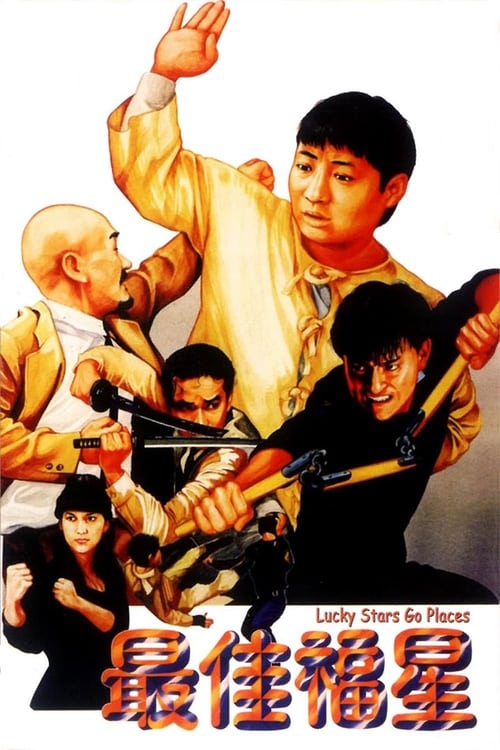
Lucky Stars Go Places
Lucky Stars Go Places, also known as The Luckiest Stars, is a 1986 Hong Kong action comedy film directed by Eric Tsang. It is the fourth film in the Lucky Stars series. It was an attempt to combine the original Lucky Stars troupe with the similar action comedy ensemble from the Aces Go Places series.
The film earned $23.1M at the global box office.


Plot Structure
Story beats plotted across runtime


Narrative Arc
Emotional journey through the story's key moments
Story Circle
Blueprint 15-beat structure
Arcplot Score Breakdown
Weighted: Precision (70%) + Arc (15%) + Theme (15%)
Lucky Stars Go Places (1986) showcases precise story structure, characteristic of Eric Tsang Chi-Wai's storytelling approach. This structural analysis examines how the film's 15-point plot structure maps to proven narrative frameworks across 1 hour and 35 minutes. With an Arcplot score of 7.6, the film showcases strong structural fundamentals.
Structural Analysis
The Status Quo at 1 minutes (1% through the runtime) establishes The Lucky Stars gang is introduced in their everyday lives - a group of bumbling friends who run a cleaning business but dream of excitement and romance. Their mundane existence is marked by comic bickering and failed attempts to impress women.. Structural examination shows that this early placement immediately immerses viewers in the story world.
The inciting incident occurs at 11 minutes when A dangerous international criminal organization targets Hong Kong, and a case of mistaken identity drags the Lucky Stars into the spy world. Their peaceful, if pathetic, existence is shattered when criminals mistake one of them for a key witness.. At 12% through the film, this Disruption aligns precisely with traditional story structure. This beat shifts the emotional landscape, launching the protagonist into the central conflict.
The First Threshold at 24 minutes marks the transition into Act II, occurring at 25% of the runtime. This reveals the protagonist's commitment to The Lucky Stars make the choice to help when they realize innocent people, including potential love interests, are in danger. Despite their fears, they agree to work with the authorities, crossing into the dangerous spy world., moving from reaction to action.
At 48 minutes, the Midpoint arrives at 50% of the runtime—precisely centered, creating perfect narrative symmetry. The analysis reveals that this crucial beat A false victory - the Lucky Stars successfully complete what they believe is their main mission, capturing a key piece of evidence. They celebrate, thinking the danger is over and they can return to normal life with enhanced reputations., fundamentally raising what's at risk. The emotional intensity shifts, dividing the narrative into clear before-and-after phases.
The Collapse moment at 71 minutes (75% through) represents the emotional nadir. Here, The team is captured or scattered, one member is seriously injured, and the female agent is taken hostage. All seems lost - their bumbling has led to disaster, and the villains appear to have won. The "whiff of death" comes as they face execution., illustrates the protagonist at their lowest point. This beat's placement in the final quarter sets up the climactic reversal.
The Second Threshold at 76 minutes initiates the final act resolution at 80% of the runtime. The Lucky Stars realize that their unique combination of skills - even their apparent weaknesses - can be used against the villains. They devise a plan that uses their cleaning business cover, their underestimated status, and their genuine teamwork to stage a rescue., demonstrating the transformation achieved throughout the journey.
Emotional Journey
Lucky Stars Go Places's emotional architecture traces a deliberate progression across 15 carefully calibrated beats.
Narrative Framework
This structural analysis employs structural analysis methodology used to understand storytelling architecture. By mapping Lucky Stars Go Places against these established plot points, we can identify how Eric Tsang Chi-Wai utilizes or subverts traditional narrative conventions. The plot point approach reveals not only adherence to structural principles but also creative choices that distinguish Lucky Stars Go Places within the comedy genre.
Comparative Analysis
Additional comedy films include The Ministry of Ungentlemanly Warfare, The Bad Guys and Lake Placid.
Plot Points by Act
Act I
SetupStatus Quo
The Lucky Stars gang is introduced in their everyday lives - a group of bumbling friends who run a cleaning business but dream of excitement and romance. Their mundane existence is marked by comic bickering and failed attempts to impress women.
Theme
A character remarks that real heroes are made when ordinary people step up in extraordinary circumstances - foreshadowing that these lovable losers will need to find courage within themselves.
Worldbuilding
The Lucky Stars' world is established - their cleaning business, their comedic dynamics, their obsession with women, and their cowardly nature. Meanwhile, the Aces Go Places characters are shown in their spy world, setting up the parallel universes that will collide.
Disruption
A dangerous international criminal organization targets Hong Kong, and a case of mistaken identity drags the Lucky Stars into the spy world. Their peaceful, if pathetic, existence is shattered when criminals mistake one of them for a key witness.
Resistance
The Lucky Stars resist involvement, wanting nothing to do with dangerous criminals. They debate whether to help the authorities or hide. Police and spy contacts try to recruit them, but their cowardice makes them reluctant heroes.
Act II
ConfrontationFirst Threshold
The Lucky Stars make the choice to help when they realize innocent people, including potential love interests, are in danger. Despite their fears, they agree to work with the authorities, crossing into the dangerous spy world.
Mirror World
The crossover element intensifies as characters from the Aces Go Places universe fully integrate with the Lucky Stars. A female agent becomes central to both the mission and the romantic subplot, embodying the theme that courage and love go hand in hand.
Premise
The "fun and games" section delivers what audiences of both franchises came for: slapstick comedy, elaborate gadgets, martial arts sequences, and the Lucky Stars' bumbling attempts at espionage. Comic setpieces include disguises gone wrong, failed surveillance attempts, and romantic mishaps.
Midpoint
A false victory - the Lucky Stars successfully complete what they believe is their main mission, capturing a key piece of evidence. They celebrate, thinking the danger is over and they can return to normal life with enhanced reputations.
Opposition
The criminal organization retaliates with full force. The villains reveal they were only playing along, and now the real threat emerges. The Lucky Stars find themselves hunted, their friends endangered, and their comic incompetence becoming a serious liability.
Collapse
The team is captured or scattered, one member is seriously injured, and the female agent is taken hostage. All seems lost - their bumbling has led to disaster, and the villains appear to have won. The "whiff of death" comes as they face execution.
Crisis
In their darkest moment, the Lucky Stars must confront their cowardice and inadequacy. Separated and defeated, each member experiences doubt about whether they can ever be heroes. The comic tone darkens as genuine stakes are felt.
Act III
ResolutionSecond Threshold
The Lucky Stars realize that their unique combination of skills - even their apparent weaknesses - can be used against the villains. They devise a plan that uses their cleaning business cover, their underestimated status, and their genuine teamwork to stage a rescue.
Synthesis
The elaborate finale combines martial arts action with slapstick comedy. The Lucky Stars infiltrate the villain's lair using their combined wits. Each member contributes their unique skills, proving that ordinary people can be heroes. Major action setpieces and comic payoffs resolve the spy plot.
Transformation
The Lucky Stars are hailed as heroes, but more importantly, they return to their ordinary lives transformed - still bumbling, still unlucky in love, but now knowing they have courage within them. The final image mirrors the opening but shows men who have proven themselves.