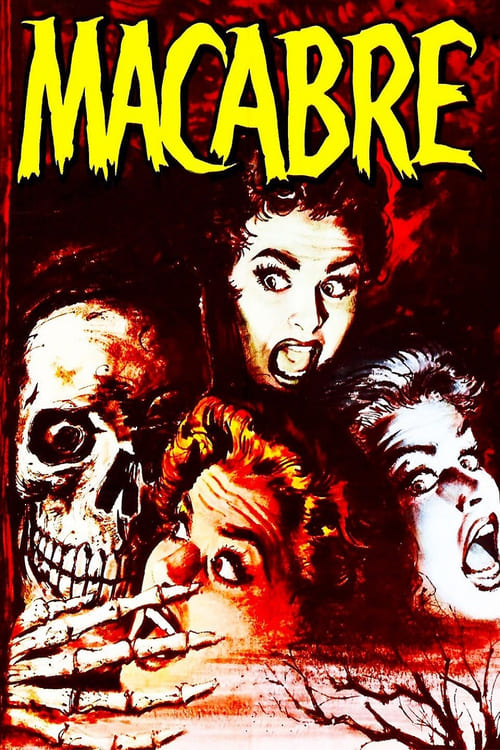
Macabre
After his wife and her blind sister have died under his care, a doctor's young daughter is kidnapped and reported as buried alive, leaving him with mere hours to find and rescue her.
Despite its extremely modest budget of $90K, Macabre became a runaway success, earning $5.0M worldwide—a remarkable 5456% return. The film's unique voice found its audience, proving that strong storytelling can transcend budget limitations.


Plot Structure
Story beats plotted across runtime


Narrative Arc
Emotional journey through the story's key moments
Story Circle
Blueprint 15-beat structure
Arcplot Score Breakdown
Weighted: Precision (70%) + Arc (15%) + Theme (15%)
Macabre (1958) demonstrates meticulously timed story structure, characteristic of William Castle's storytelling approach. This structural analysis examines how the film's 15-point plot structure maps to proven narrative frameworks across 1 hour and 12 minutes. With an Arcplot score of 7.6, the film showcases strong structural fundamentals.
Characters
Cast & narrative archetypes

Dr. Rodney Barrett
Nancy Barrett
Police Chief Jim Tyloe
Nurse Polly Baron
Main Cast & Characters
Dr. Rodney Barrett
Played by William Prince
A small-town doctor who receives a ransom note claiming his daughter has been buried alive and has five hours to find her.
Nancy Barrett
Played by Jacqueline Scott
Rodney's estranged wife, found dead under mysterious circumstances, complicating his desperate search.
Police Chief Jim Tyloe
Played by Jim Backus
Local police chief who assists Dr. Barrett while harboring suspicions about the doctor's involvement.
Nurse Polly Baron
Played by Susan Morrow
Dr. Barrett's nurse and confidante who becomes involved in the frantic search.
Structural Analysis
The Status Quo at 1 minutes (1% through the runtime) establishes Dr. Rodney Barrett in his office, establishing his life as a small-town physician with a troubled past involving a patient's death and rumors of an affair.. Notably, this early placement immediately immerses viewers in the story world.
The inciting incident occurs at 8 minutes when Dr. Barrett receives the horrifying phone call: his daughter Marge has been buried alive in the cemetery and has only hours of air remaining. Revenge has come for past sins.. At 11% through the film, this Disruption aligns precisely with traditional story structure. This beat shifts the emotional landscape, launching the protagonist into the central conflict.
The First Threshold at 18 minutes marks the transition into Act II, occurring at 25% of the runtime. This illustrates the protagonist's commitment to Barrett makes the active choice to search the cemetery himself, beginning a desperate race against time. He commits fully to the impossible task of finding one grave among hundreds., moving from reaction to action.
At 36 minutes, the Midpoint arrives at 50% of the runtime—precisely centered, creating perfect narrative symmetry. Notably, this crucial beat False victory turns to defeat: a grave is opened but contains the wrong body, revealing the complexity of the plot against him. Stakes raise as time runs critically short., fundamentally raising what's at risk. The emotional intensity shifts, dividing the narrative into clear before-and-after phases.
The Collapse moment at 53 minutes (74% through) represents the emotional nadir. Here, Barrett reaches his breaking point as another wrong grave is uncovered and time has virtually run out. The whiff of death - his daughter may already be dead, and it's his fault., indicates the protagonist at their lowest point. This beat's placement in the final quarter sets up the climactic reversal.
The Second Threshold at 57 minutes initiates the final act resolution at 79% of the runtime. A crucial piece of information or realization breaks through - Barrett synthesizes clues to understand the true nature of the plot against him and where to look., demonstrating the transformation achieved throughout the journey.
Emotional Journey
Macabre's emotional architecture traces a deliberate progression across 15 carefully calibrated beats.
Narrative Framework
This structural analysis employs structural analysis methodology used to understand storytelling architecture. By mapping Macabre against these established plot points, we can identify how William Castle utilizes or subverts traditional narrative conventions. The plot point approach reveals not only adherence to structural principles but also creative choices that distinguish Macabre within the horror genre.
Comparative Analysis
Additional horror films include Thinner, A Nightmare on Elm Street and Mary Reilly.
Plot Points by Act
Act I
SetupStatus Quo
Dr. Rodney Barrett in his office, establishing his life as a small-town physician with a troubled past involving a patient's death and rumors of an affair.
Theme
A character warns that "the past always catches up with you" - establishing the theme of guilt and consequences that will drive the narrative.
Worldbuilding
Establishing Dr. Barrett's relationships with his daughter Marge, the nurse Polly Baron, the Wetherby family, and the lingering suspicions about his involvement in a patient's death.
Disruption
Dr. Barrett receives the horrifying phone call: his daughter Marge has been buried alive in the cemetery and has only hours of air remaining. Revenge has come for past sins.
Resistance
Barrett struggles with whether to involve police, debates the credibility of the threat, and Police Chief Tyloe becomes involved. The ticking clock is established - limited time to find the grave.
Act II
ConfrontationFirst Threshold
Barrett makes the active choice to search the cemetery himself, beginning a desperate race against time. He commits fully to the impossible task of finding one grave among hundreds.
Mirror World
Interaction with Polly Baron deepens, revealing the relationship subplot that mirrors the theme - their past affair and its consequences parallel the current crisis of buried secrets.
Premise
The frantic cemetery search unfolds - digging up graves, investigating suspects (Jode Wetherby, Alice Wetherby), following false leads, racing against the depleting oxygen supply.
Midpoint
False victory turns to defeat: a grave is opened but contains the wrong body, revealing the complexity of the plot against him. Stakes raise as time runs critically short.
Opposition
Pressure intensifies as suspects emerge with motives for revenge. Barrett's own guilt and past mistakes haunt him. Multiple graves yield false leads. Time becomes the ultimate antagonist.
Collapse
Barrett reaches his breaking point as another wrong grave is uncovered and time has virtually run out. The whiff of death - his daughter may already be dead, and it's his fault.
Crisis
Barrett's dark night - confronting his guilt over the past death, the affair, and his failure to protect his daughter. Emotional devastation before the final revelation.
Act III
ResolutionSecond Threshold
A crucial piece of information or realization breaks through - Barrett synthesizes clues to understand the true nature of the plot against him and where to look.
Synthesis
The finale reveals the twist - the true mastermind and location are uncovered. The confrontation occurs and the elaborate revenge/extortion plot is exposed. Resolution of whether Marge survives.
Transformation
Barrett in the aftermath - transformed by the ordeal, forced to reckon with how past actions create present nightmares. The final image mirrors the opening but shows a man forever changed by confronting buried guilt.