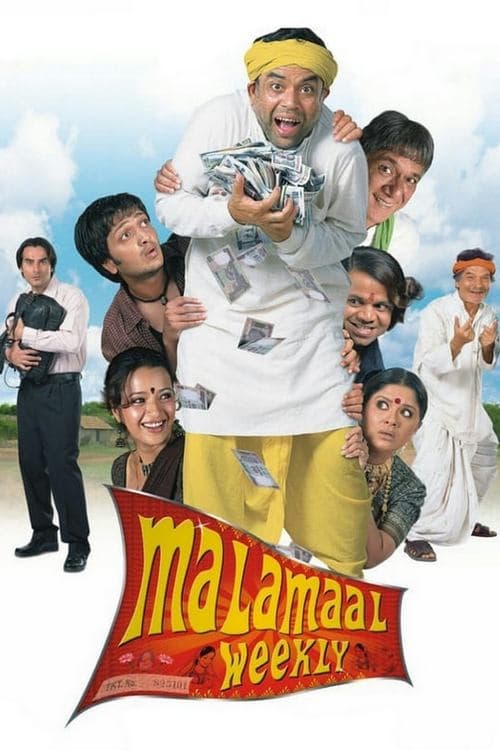
Malamaal Weekly
After one of his customers dies from the shock of winning a lottery, lottery ticket seller Lilaram hatches a plan to have that money all for himself. But others from the village have also got their eyes on the money.
Despite its extremely modest budget of $840K, Malamaal Weekly became a runaway success, earning $5.1M worldwide—a remarkable 510% return. The film's bold vision engaged audiences, demonstrating that strong storytelling can transcend budget limitations.
Plot Structure
Story beats plotted across runtime


Narrative Arc
Emotional journey through the story's key moments
Story Circle
Blueprint 15-beat structure
Arcplot Score Breakdown
Weighted: Precision (70%) + Arc (15%) + Theme (15%)
Malamaal Weekly (2006) demonstrates strategically placed plot construction, characteristic of Priyadarshan's storytelling approach. This structural analysis examines how the film's 15-point plot structure maps to proven narrative frameworks across 2 hours and 18 minutes. With an Arcplot score of 7.3, the film balances conventional beats with creative variation.
Structural Analysis
The Status Quo at 2 minutes (2% through the runtime) establishes Laholi village: a remote, impoverished village where residents struggle financially. Lilaram runs a struggling music instrument shop with no customers, establishing the desperate poverty that defines everyone's existence.. The analysis reveals that this early placement immediately immerses viewers in the story world.
The inciting incident occurs at 17 minutes when Lilaram discovers that the mentally challenged Kanhaiya has won the one crore lottery. This represents a life-changing opportunity for the village, disrupting the status quo of permanent poverty.. At 12% through the film, this Disruption aligns precisely with traditional story structure. This beat shifts the emotional landscape, launching the protagonist into the central conflict.
The First Threshold at 33 minutes marks the transition into Act II, occurring at 24% of the runtime. This indicates the protagonist's commitment to Kanhaiya suddenly dies (chokes to death), and the lottery ticket is still unclaimed. Lilaram makes the active choice to hide the death and pretend Kanhaiya is alive to claim the prize money., moving from reaction to action.
At 70 minutes, the Midpoint arrives at 50% of the runtime—precisely centered, creating perfect narrative symmetry. Notably, this crucial beat False victory: Lilaram and the conspirators successfully fool the lottery officials during their inspection. They believe they've succeeded and will soon receive the money, raising stakes as more people get involved in the scheme., fundamentally raising what's at risk. The emotional intensity shifts, dividing the narrative into clear before-and-after phases.
The Collapse moment at 103 minutes (74% through) represents the emotional nadir. Here, The scheme completely falls apart when Kanhaiya's corpse is discovered by authorities or the deception is exposed. The dream of easy money dies. The villagers face consequences for their greed and deception., reveals the protagonist at their lowest point. This beat's placement in the final quarter sets up the climactic reversal.
The Second Threshold at 112 minutes initiates the final act resolution at 81% of the runtime. Lilaram realizes that community and dignity matter more than wealth. He accepts responsibility and finds a way to resolve the situation, synthesizing the lesson that greed destroys what matters most., demonstrating the transformation achieved throughout the journey.
Emotional Journey
Malamaal Weekly's emotional architecture traces a deliberate progression across 15 carefully calibrated beats.
Narrative Framework
This structural analysis employs systematic plot point analysis that identifies crucial turning points. By mapping Malamaal Weekly against these established plot points, we can identify how Priyadarshan utilizes or subverts traditional narrative conventions. The plot point approach reveals not only adherence to structural principles but also creative choices that distinguish Malamaal Weekly within the comedy genre.
Comparative Analysis
Additional comedy films include The Ministry of Ungentlemanly Warfare, The Bad Guys and Lake Placid.
Plot Points by Act
Act I
SetupStatus Quo
Laholi village: a remote, impoverished village where residents struggle financially. Lilaram runs a struggling music instrument shop with no customers, establishing the desperate poverty that defines everyone's existence.
Theme
A villager remarks that "greed makes people do crazy things" during a discussion about money and lottery dreams, foreshadowing the moral descent to come when opportunity presents itself.
Worldbuilding
Introduction to Laholi's eccentric residents: Lilaram the shopkeeper, Balwant the wrestler, Anthony the drunkard, Kanhaiya the teacher. Everyone is desperate for money. Lilaram harbors dreams of wealth and plots to leave the village.
Disruption
Lilaram discovers that the mentally challenged Kanhaiya has won the one crore lottery. This represents a life-changing opportunity for the village, disrupting the status quo of permanent poverty.
Resistance
Lilaram debates how to handle the situation. The village learns of Kanhaiya's win. Discussions about splitting the money. Lilaram begins scheming to maximize his own benefit while appearing helpful to Kanhaiya.
Act II
ConfrontationFirst Threshold
Kanhaiya suddenly dies (chokes to death), and the lottery ticket is still unclaimed. Lilaram makes the active choice to hide the death and pretend Kanhaiya is alive to claim the prize money.
Mirror World
The village doctor becomes complicit in the scheme, representing the moral compromise subplot. He serves as both enabler and conscience, embodying the theme of how desperation corrupts good people.
Premise
The "fun and games" of weekend at Bernie's-style deception: hiding Kanhaiya's corpse, pretending he's alive, dealing with visiting officials, narrow escapes from discovery. Dark comedy ensues as the scheme grows more elaborate.
Midpoint
False victory: Lilaram and the conspirators successfully fool the lottery officials during their inspection. They believe they've succeeded and will soon receive the money, raising stakes as more people get involved in the scheme.
Opposition
Complications intensify: more villagers discover the truth and demand a share; the body begins to decompose; outside authorities become suspicious; internal conflicts emerge over how to split the money; greed turns neighbors against each other.
Collapse
The scheme completely falls apart when Kanhaiya's corpse is discovered by authorities or the deception is exposed. The dream of easy money dies. The villagers face consequences for their greed and deception.
Crisis
The villagers process their moral failure and face potential legal consequences. Dark night as they confront what their desperation made them do - desecrating a corpse, lying, turning on each other. The money was never worth it.
Act III
ResolutionSecond Threshold
Lilaram realizes that community and dignity matter more than wealth. He accepts responsibility and finds a way to resolve the situation, synthesizing the lesson that greed destroys what matters most.
Synthesis
Resolution of the lottery situation and legal consequences. The villagers work together to make amends. Lilaram uses his cunning for good rather than greed. The community reconciles and restores relationships damaged by their scheme.
Transformation
Final image: Laholi village is still poor, but the residents are together and at peace. Lilaram runs his shop with contentment rather than resentment, having learned that wealth without integrity is worthless. The community is intact.