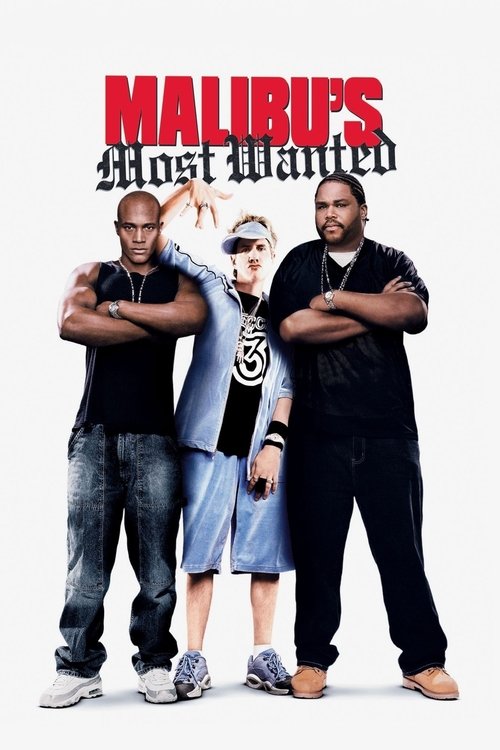
Malibu's Most Wanted
A senator arranges for his son, a rich white kid who fancies himself black, to be kidnapped by a couple of black actors pretending to be murderers to try and shock him out of his plans to become a rapper.
Despite a mid-range budget of $15.0M, Malibu's Most Wanted became a solid performer, earning $34.0M worldwide—a 127% return.


Plot Structure
Story beats plotted across runtime


Narrative Arc
Emotional journey through the story's key moments
Story Circle
Blueprint 15-beat structure
Arcplot Score Breakdown
Weighted: Precision (70%) + Arc (15%) + Theme (15%)
Malibu's Most Wanted (2003) exemplifies meticulously timed dramatic framework, characteristic of John Whitesell's storytelling approach. This structural analysis examines how the film's 15-point plot structure maps to proven narrative frameworks across 1 hour and 26 minutes. With an Arcplot score of 7.2, the film balances conventional beats with creative variation.
Structural Analysis
The Status Quo at 1 minutes (1% through the runtime) establishes Brad "B-Rad" Gluckman performs at a Malibu club as a wannabe gangster rapper, embarrassing his wealthy father Bill Gluckman who is running for governor of California. Brad lives in a mansion but acts like he's from the hood, completely oblivious to his privilege.. Of particular interest, this early placement immediately immerses viewers in the story world.
The inciting incident occurs at 10 minutes when Tom Gibbons convinces Bill Gluckman that Brad must be "scared straight" before the election. They devise a plan to hire actors to pose as gang members and kidnap Brad, taking him to the real hood to show him he's not actually gangster.. At 12% through the film, this Disruption aligns precisely with traditional story structure. This beat shifts the emotional landscape, launching the protagonist into the central conflict.
The First Threshold at 20 minutes marks the transition into Act II, occurring at 24% of the runtime. This demonstrates the protagonist's commitment to Sean and PJ, disguised as gangsters, successfully "kidnap" Brad at gunpoint from a Malibu traffic stop. Brad is taken against his will into South Central Los Angeles, entering the real urban world he's been appropriating., moving from reaction to action.
At 43 minutes, the Midpoint arrives at 50% of the runtime—precisely centered, creating perfect narrative symmetry. Significantly, this crucial beat Brad's rap performance at a South Central party is a surprising hit with the real gang members. He gains their respect and acceptance. This false victory makes him feel validated - but for the wrong reasons. He's still not being authentic, just finding a new audience for his act., fundamentally raising what's at risk. The emotional intensity shifts, dividing the narrative into clear before-and-after phases.
The Collapse moment at 61 minutes (71% through) represents the emotional nadir. Here, Brad is forced at gunpoint to participate in a real liquor store robbery. The fun and games are over - this is actual danger. His false identity has led him into a genuinely life-threatening situation where people could die., illustrates the protagonist at their lowest point. This beat's placement in the final quarter sets up the climactic reversal.
The Second Threshold at 70 minutes initiates the final act resolution at 81% of the runtime. Brad accepts the truth about himself. He admits he's from Malibu, that he's privileged, and that his gangster act was fake. This honest self-recognition gives him the clarity to be himself and help save his father's campaign by being authentic., demonstrating the transformation achieved throughout the journey.
Emotional Journey
Malibu's Most Wanted's emotional architecture traces a deliberate progression across 15 carefully calibrated beats.
Narrative Framework
This structural analysis employs proven narrative structure principles that track dramatic progression. By mapping Malibu's Most Wanted against these established plot points, we can identify how John Whitesell utilizes or subverts traditional narrative conventions. The plot point approach reveals not only adherence to structural principles but also creative choices that distinguish Malibu's Most Wanted within the comedy genre.
John Whitesell's Structural Approach
Among the 4 John Whitesell films analyzed on Arcplot, the average structural score is 7.3, reflecting strong command of classical structure. Malibu's Most Wanted takes a more unconventional approach compared to the director's typical style. For comparative analysis, explore the complete John Whitesell filmography.
Comparative Analysis
Additional comedy films include The Bad Guys, Ella Enchanted and The Evening Star. For more John Whitesell analyses, see Big Mommas: Like Father, Like Son, Big Momma's House 2 and Deck the Halls.
Plot Points by Act
Act I
SetupStatus Quo
Brad "B-Rad" Gluckman performs at a Malibu club as a wannabe gangster rapper, embarrassing his wealthy father Bill Gluckman who is running for governor of California. Brad lives in a mansion but acts like he's from the hood, completely oblivious to his privilege.
Theme
Bill Gluckman's campaign manager Tom Gibbons tells Brad's father: "Your son is destroying your campaign. He doesn't know who he really is." The theme of identity and authenticity is established.
Worldbuilding
Brad's delusional gangster lifestyle is established: he has a posse, speaks in affected slang, and genuinely believes he's street despite living in luxury. His father's gubernatorial campaign is being damaged by Brad's antics. Campaign advisors see Brad as a liability.
Disruption
Tom Gibbons convinces Bill Gluckman that Brad must be "scared straight" before the election. They devise a plan to hire actors to pose as gang members and kidnap Brad, taking him to the real hood to show him he's not actually gangster.
Resistance
Tom recruits Sean and PJ, two struggling black actors, to kidnap Brad and take him to South Central LA. They plan the fake kidnapping. Brad meanwhile continues his delusional behavior, completely unaware of the coming intervention.
Act II
ConfrontationFirst Threshold
Sean and PJ, disguised as gangsters, successfully "kidnap" Brad at gunpoint from a Malibu traffic stop. Brad is taken against his will into South Central Los Angeles, entering the real urban world he's been appropriating.
Mirror World
Brad meets Shondra, PJ's sister, who represents authentic urban culture. She's initially disgusted by Brad's act but will become the voice of truth, helping him see who he really is versus who he's pretending to be.
Premise
Brad experiences real hood life but completely misinterprets everything, thinking he's finally "home." Sean and PJ try to scare him but Brad embraces every dangerous situation. He charms real gang members with his obliviousness. The comedy of his fish-out-of-water situation plays out as he unknowingly impresses actual criminals.
Midpoint
Brad's rap performance at a South Central party is a surprising hit with the real gang members. He gains their respect and acceptance. This false victory makes him feel validated - but for the wrong reasons. He's still not being authentic, just finding a new audience for his act.
Opposition
Brad's popularity in the hood grows but attracts the attention of real dangerous gangsters. Sean and PJ lose control of the situation. Brad's father's campaign suffers as Brad remains missing. The actors realize they're in over their heads as actual criminals want to use Brad for a robbery.
Collapse
Brad is forced at gunpoint to participate in a real liquor store robbery. The fun and games are over - this is actual danger. His false identity has led him into a genuinely life-threatening situation where people could die.
Crisis
After the robbery goes wrong, Brad has his dark night moment. Shondra confronts him about his fake identity, telling him he needs to accept who he really is. Brad begins to see the truth - he's been living a lie and nearly got people killed.
Act III
ResolutionSecond Threshold
Brad accepts the truth about himself. He admits he's from Malibu, that he's privileged, and that his gangster act was fake. This honest self-recognition gives him the clarity to be himself and help save his father's campaign by being authentic.
Synthesis
Brad returns to Malibu as himself. He confronts his father and the campaign team. At the gubernatorial debate, Brad shows up authentically - still with hip-hop influences but honest about who he is. He helps his father by being genuine rather than trying to be someone he's not. His father accepts him.
Transformation
Brad performs a rap at his father's victory party, but this time it's authentic - mixing his Malibu privilege with hip-hop culture honestly. He's with Shondra, accepted by both worlds because he's finally being himself. The closing image shows Brad integrated, not appropriating.