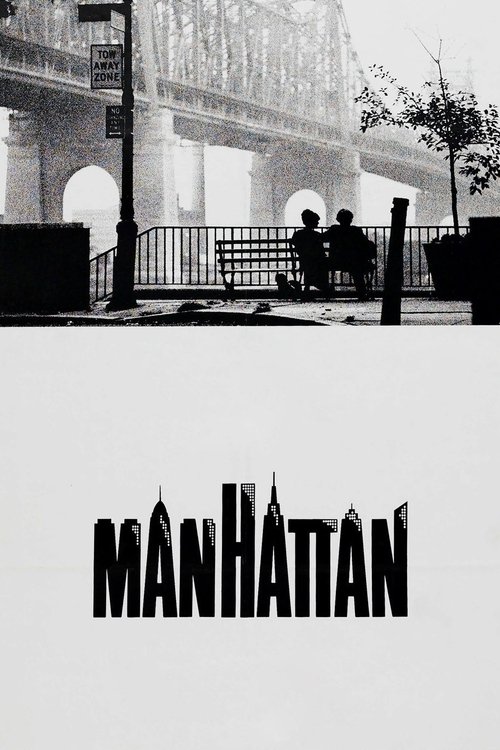
Manhattan
Manhattan explores how the life of a middle-aged television writer dating a teenage girl is further complicated when he falls in love with his best friend's mistress.
Despite its modest budget of $9.0M, Manhattan became a box office success, earning $40.2M worldwide—a 347% return. The film's innovative storytelling found its audience, demonstrating that strong storytelling can transcend budget limitations.
Nominated for 2 Oscars. 16 wins & 24 nominations


Plot Structure
Story beats plotted across runtime


Narrative Arc
Emotional journey through the story's key moments
Story Circle
Blueprint 15-beat structure
Arcplot Score Breakdown
Weighted: Precision (70%) + Arc (15%) + Theme (15%)
Manhattan (1979) exemplifies deliberately positioned dramatic framework, characteristic of Woody Allen's storytelling approach. This structural analysis examines how the film's 15-point plot structure maps to proven narrative frameworks across 1 hour and 36 minutes. With an Arcplot score of 7.3, the film balances conventional beats with creative variation.
Characters
Cast & narrative archetypes

Isaac Davis
Tracy
Mary Wilke
Yale
Jill Davis
Main Cast & Characters
Isaac Davis
Played by Woody Allen
A twice-divorced 42-year-old television writer who quits his job and pursues a relationship with a 17-year-old girl while navigating Manhattan's intellectual elite.
Tracy
Played by Mariel Hemingway
A 17-year-old high school student who is mature beyond her years and maintains a genuine, uncomplicated relationship with Isaac.
Mary Wilke
Played by Diane Keaton
A pretentious, neurotic intellectual who writes for art magazines and becomes romantically involved with Isaac while still connected to Yale.
Yale
Played by Michael Murphy
Isaac's married best friend, a college professor who has an affair with Mary and rationalizes his infidelity through intellectualization.
Jill Davis
Played by Meryl Streep
Isaac's ex-wife who left him for another woman and is writing a tell-all book about their marriage.
Structural Analysis
The Status Quo at 1 minutes (1% through the runtime) establishes Isaac narrates his romanticized vision of Manhattan over Gershwin's "Rhapsody in Blue" and gorgeous black-and-white cityscapes, establishing his self-deluding idealization of New York and his own life as a successful TV writer dating a 17-year-old girl.. Significantly, this early placement immediately immerses viewers in the story world.
The inciting incident occurs at 11 minutes when Isaac meets Mary Wilkie at a museum event. She is Yale's mistress and everything Isaac claims to despise: pretentious, name-dropping, opinionated. Their mutual antagonism disrupts Isaac's comfortable, controlled world and introduces the woman who will challenge his self-conception.. At 12% through the film, this Disruption aligns precisely with traditional story structure. This beat shifts the emotional landscape, launching the protagonist into the central conflict.
The First Threshold at 24 minutes marks the transition into Act II, occurring at 25% of the runtime. This reveals the protagonist's commitment to Isaac quits his lucrative TV writing job in a moment of supposed principle, declaring he wants to write something meaningful. This active choice forces him out of his comfortable status quo into financial uncertainty and forces him to confront what he really values., moving from reaction to action.
At 47 minutes, the Midpoint arrives at 49% of the runtime—precisely centered, creating perfect narrative symmetry. Of particular interest, this crucial beat Isaac breaks up with Tracy to fully commit to Mary. This false victory moment seems like growth—choosing the "appropriate" adult relationship over the inappropriate one—but it's actually Isaac repeating his pattern of running from genuine feeling toward intellectual compatibility., fundamentally raising what's at risk. The emotional intensity shifts, dividing the narrative into clear before-and-after phases.
The Collapse moment at 71 minutes (74% through) represents the emotional nadir. Here, Mary reveals she's leaving Isaac to return to Yale. Isaac discovers his best friend has betrayed him and the woman he chose over Tracy doesn't really love him. This devastation contains the "whiff of death"—the death of his idealized self-image and his romantic delusions about relationships., reveals the protagonist at their lowest point. This beat's placement in the final quarter sets up the climactic reversal.
The Second Threshold at 77 minutes initiates the final act resolution at 81% of the runtime. Recording "reasons to stay alive," Isaac lists things that make life worth living and realizes Tracy's face is among them. This synthesis moment: he finally sees that authentic feeling (what he had with Tracy) matters more than appropriate appearances (what he thought he wanted with Mary)., demonstrating the transformation achieved throughout the journey.
Emotional Journey
Manhattan's emotional architecture traces a deliberate progression across 15 carefully calibrated beats.
Narrative Framework
This structural analysis employs structural analysis methodology used to understand storytelling architecture. By mapping Manhattan against these established plot points, we can identify how Woody Allen utilizes or subverts traditional narrative conventions. The plot point approach reveals not only adherence to structural principles but also creative choices that distinguish Manhattan within the comedy genre.
Woody Allen's Structural Approach
Among the 42 Woody Allen films analyzed on Arcplot, the average structural score is 7.0, demonstrating varied approaches to story architecture. Manhattan represents one of the director's most structurally precise works. For comparative analysis, explore the complete Woody Allen filmography.
Comparative Analysis
Additional comedy films include The Bad Guys, Ella Enchanted and The Evening Star. For more Woody Allen analyses, see Everyone Says I Love You, Celebrity and Interiors.
Plot Points by Act
Act I
SetupStatus Quo
Isaac narrates his romanticized vision of Manhattan over Gershwin's "Rhapsody in Blue" and gorgeous black-and-white cityscapes, establishing his self-deluding idealization of New York and his own life as a successful TV writer dating a 17-year-old girl.
Theme
At the museum benefit, Yale tells Isaac: "You're too easy on yourself. Don't you see that?" This dialogue hints at the film's central theme: the gap between how Isaac sees himself (as a principled intellectual) versus who he actually is (someone avoiding real commitment and maturity).
Worldbuilding
Establishment of Isaac's world: his relationship with teenage Tracy, his friendship with Yale and Emily, his ex-wife Jill writing a tell-all book about their marriage, his job writing for a TV show he despises, and his intellectual pretensions masking emotional immaturity.
Disruption
Isaac meets Mary Wilkie at a museum event. She is Yale's mistress and everything Isaac claims to despise: pretentious, name-dropping, opinionated. Their mutual antagonism disrupts Isaac's comfortable, controlled world and introduces the woman who will challenge his self-conception.
Resistance
Isaac resists Mary but keeps encountering her through Yale. He debates whether to quit his TV writing job, struggles with Jill's book revelations, and avoids confronting his real feelings about Tracy. The section shows his resistance to change and authentic emotion.
Act II
ConfrontationFirst Threshold
Isaac quits his lucrative TV writing job in a moment of supposed principle, declaring he wants to write something meaningful. This active choice forces him out of his comfortable status quo into financial uncertainty and forces him to confront what he really values.
Mirror World
When Yale breaks up with Mary, Isaac takes her on a dawn walk through Manhattan, riding in a horse carriage and sitting on a bench at sunrise. Mary represents emotional authenticity and intellectual honesty that challenges Isaac's facade—she becomes the thematic mirror showing him who he could be.
Premise
Isaac and Mary develop a genuine relationship while he still dates Tracy. The "fun and games" of their romance: visiting museums, romantic walks, intellectual sparring, falling in love. This section delivers on the premise of a sophisticated Manhattan romance while Isaac juggles two relationships.
Midpoint
Isaac breaks up with Tracy to fully commit to Mary. This false victory moment seems like growth—choosing the "appropriate" adult relationship over the inappropriate one—but it's actually Isaac repeating his pattern of running from genuine feeling toward intellectual compatibility.
Opposition
Isaac and Mary's relationship deepens but cracks appear. Yale resumes his affair with Mary behind Isaac's back. Isaac's ex-wife's book is published, exposing his flaws. Financial pressures mount. The opposition comes from Isaac's own patterns catching up with him and his best friend's betrayal.
Collapse
Mary reveals she's leaving Isaac to return to Yale. Isaac discovers his best friend has betrayed him and the woman he chose over Tracy doesn't really love him. This devastation contains the "whiff of death"—the death of his idealized self-image and his romantic delusions about relationships.
Crisis
Isaac confronts Yale in the skeleton room at the museum, raging about the betrayal and the moral bankruptcy of their lives. He spirals into darkness, realizing he's lost everything and compromised his values. He sits alone, processing the collapse of his carefully constructed world.
Act III
ResolutionSecond Threshold
Recording "reasons to stay alive," Isaac lists things that make life worth living and realizes Tracy's face is among them. This synthesis moment: he finally sees that authentic feeling (what he had with Tracy) matters more than appropriate appearances (what he thought he wanted with Mary).
Synthesis
Isaac races across Manhattan in a taxi to stop Tracy from leaving for London. The finale is his desperate attempt to undo his mistake and choose genuine love over his intellectual pretensions. He must act quickly before she leaves.
Transformation
Tracy tells Isaac she has to go to London but says "not everybody gets corrupted—you have to have a little faith in people." Isaac's face shows dawning realization. The closing image mirrors the opening: Manhattan still stands, but Isaac now sees himself clearly, accepting uncertainty rather than his false certainties.