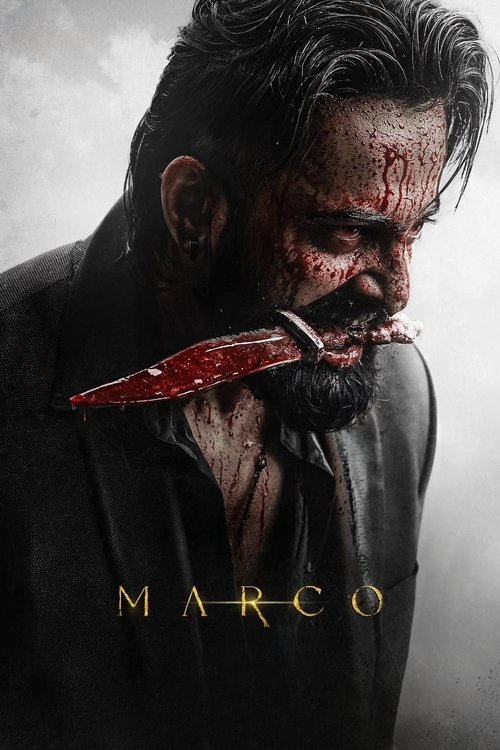
Marco
The adoptive son of the Adattu family, Marco, sets off on a ruthless quest for vengeance after his brother is brutally murdered, finding only betrayal, loss and unimaginable brutality at every step.
Despite its limited budget of $3.5M, Marco became a solid performer, earning $11.6M worldwide—a 233% return. The film's distinctive approach attracted moviegoers, proving that strong storytelling can transcend budget limitations.

Plot Structure
Story beats plotted across runtime


Narrative Arc
Emotional journey through the story's key moments
Story Circle
Blueprint 15-beat structure
Arcplot Score Breakdown
Weighted: Precision (70%) + Arc (15%) + Theme (15%)
Marco (2024) reveals precise story structure, characteristic of Haneef Adeni's storytelling approach. This structural analysis examines how the film's 15-point plot structure maps to proven narrative frameworks across 2 hours and 25 minutes. With an Arcplot score of 7.5, the film showcases strong structural fundamentals.
Structural Analysis
The Status Quo at 2 minutes (1% through the runtime) establishes Marco is introduced in his ordinary world, establishing his character and daily life before the central conflict begins.. Structural examination shows that this early placement immediately immerses viewers in the story world.
The inciting incident occurs at 18 minutes when A violent incident or personal tragedy disrupts Marco's status quo, forcing him to confront a dangerous situation.. At 12% through the film, this Disruption aligns precisely with traditional story structure. This beat shifts the emotional landscape, launching the protagonist into the central conflict.
The First Threshold at 36 minutes marks the transition into Act II, occurring at 25% of the runtime. This illustrates the protagonist's commitment to Marco makes the active choice to enter the dangerous world of conflict, crossing a point of no return in pursuit of justice or revenge., moving from reaction to action.
At 73 minutes, the Midpoint arrives at 50% of the runtime—precisely centered, creating perfect narrative symmetry. The analysis reveals that this crucial beat A false victory turns to defeat, or Marco uncovers a devastating truth that raises the stakes and changes his understanding of the conflict., fundamentally raising what's at risk. The emotional intensity shifts, dividing the narrative into clear before-and-after phases.
The Collapse moment at 109 minutes (75% through) represents the emotional nadir. Here, Marco reaches his lowest point with a major loss, betrayal, or defeat that contains the "whiff of death" - literal or metaphorical., demonstrates the protagonist at their lowest point. This beat's placement in the final quarter sets up the climactic reversal.
The Second Threshold at 116 minutes initiates the final act resolution at 80% of the runtime. Armed with new knowledge or synthesis of lessons learned, Marco commits to the final confrontation with renewed clarity and purpose., demonstrating the transformation achieved throughout the journey.
Emotional Journey
Marco's emotional architecture traces a deliberate progression across 15 carefully calibrated beats.
Narrative Framework
This structural analysis employs structural analysis methodology used to understand storytelling architecture. By mapping Marco against these established plot points, we can identify how Haneef Adeni utilizes or subverts traditional narrative conventions. The plot point approach reveals not only adherence to structural principles but also creative choices that distinguish Marco within the action genre.
Comparative Analysis
Additional action films include The Bad Guys, Puss in Boots and Venom: The Last Dance.
Plot Points by Act
Act I
SetupStatus Quo
Marco is introduced in his ordinary world, establishing his character and daily life before the central conflict begins.
Theme
A supporting character articulates the film's thematic premise about loyalty, family bonds, or the cost of violence.
Worldbuilding
The setup establishes Marco's world, relationships, occupation, and the underlying tensions that will drive the narrative forward.
Disruption
A violent incident or personal tragedy disrupts Marco's status quo, forcing him to confront a dangerous situation.
Resistance
Marco debates his course of action, gathers information, and prepares for the journey ahead despite resistance or internal conflict.
Act II
ConfrontationFirst Threshold
Marco makes the active choice to enter the dangerous world of conflict, crossing a point of no return in pursuit of justice or revenge.
Mirror World
Introduction of a key relationship or alliance that reflects the thematic core and will guide Marco's emotional journey.
Premise
Marco navigates the dangerous underworld, delivering on the action thriller premise with set pieces, confrontations, and escalating stakes.
Midpoint
A false victory turns to defeat, or Marco uncovers a devastating truth that raises the stakes and changes his understanding of the conflict.
Opposition
The antagonistic forces close in, pressure intensifies, allies may be lost, and Marco's flaws or past decisions catch up with him.
Collapse
Marco reaches his lowest point with a major loss, betrayal, or defeat that contains the "whiff of death" - literal or metaphorical.
Crisis
Marco processes the devastating loss, confronts his darkest emotions, and begins to find new resolve or understanding.
Act III
ResolutionSecond Threshold
Armed with new knowledge or synthesis of lessons learned, Marco commits to the final confrontation with renewed clarity and purpose.
Synthesis
The finale unfolds as Marco executes his plan, confronts the antagonist in climactic action sequences, and resolves the central conflict.
Transformation
The closing image shows Marco transformed by his journey, mirroring the opening but revealing how he has changed through the ordeal.