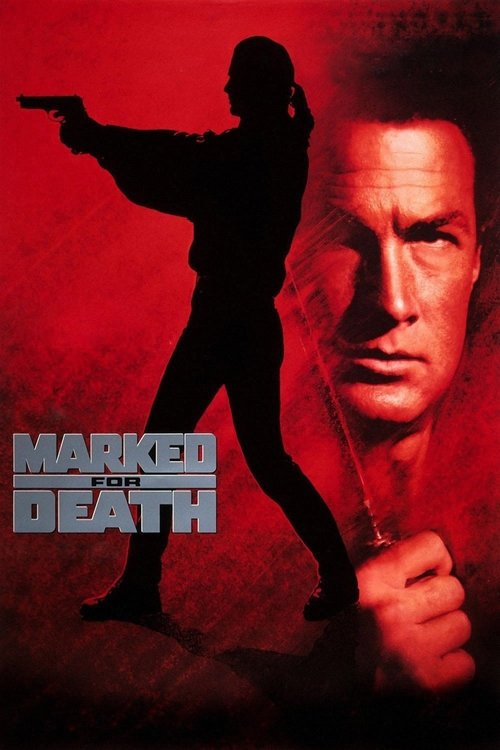
Marked for Death
Just retired from the Drug Enforcement Agency, John Hatcher returns to his hometown and quickly discovers that drugs have infiltrated his old neighborhood. Determined to drive the dealers out, Hatcher crosses paths with a ferocious Jamaican drug lord who vows that Hatcher and his family are now marked for death.
Despite its modest budget of $12.0M, Marked for Death became a financial success, earning $46.0M worldwide—a 284% return. The film's unique voice attracted moviegoers, demonstrating that strong storytelling can transcend budget limitations.


Plot Structure
Story beats plotted across runtime


Narrative Arc
Emotional journey through the story's key moments
Story Circle
Blueprint 15-beat structure
Arcplot Score Breakdown
Weighted: Precision (70%) + Arc (15%) + Theme (15%)
Marked for Death (1990) showcases strategically placed narrative architecture, characteristic of Dwight H. Little's storytelling approach. This structural analysis examines how the film's 15-point plot structure maps to proven narrative frameworks across 1 hour and 33 minutes. With an Arcplot score of 6.8, the film balances conventional beats with creative variation.
Characters
Cast & narrative archetypes

John Hatcher
Screwface
Max
Charles
Melissa
Kate Hatcher
Main Cast & Characters
John Hatcher
Played by Steven Seagal
Retired DEA agent who returns home to Chicago only to face off against Jamaican drug lord Screwface. A weary warrior forced back into action to protect his family.
Screwface
Played by Basil Wallace
Ruthless Jamaican drug kingpin who uses voodoo imagery and twin deception to terrorize communities. The primary antagonist with mystical overtones.
Max
Played by Keith David
John Hatcher's longtime friend and fellow former soldier who joins him in the fight against Screwface's drug empire.
Charles
Played by Tom Wright
John's old Army buddy and Chicago police detective who provides law enforcement support and assists in the investigation.
Melissa
Played by Elizabeth Gracen
John Hatcher's younger sister who runs a local school and becomes a target of Screwface's intimidation tactics.
Kate Hatcher
Played by Gracen Lee
John's mother and Melissa's mother, representing the innocent family that John is fighting to protect.
Structural Analysis
The Status Quo at 1 minutes (1% through the runtime) establishes John Hatcher operates in a violent DEA raid in Colombia, his world defined by brutal drug war operations and constant danger.. Notably, this early placement immediately immerses viewers in the story world.
The inciting incident occurs at 11 minutes when Hatcher and Max witness a brutal Jamaican posse shootout at a local bar, bringing the drug war violence directly into his hometown sanctuary.. At 12% through the film, this Disruption aligns precisely with traditional story structure. This beat shifts the emotional landscape, launching the protagonist into the central conflict.
The First Threshold at 24 minutes marks the transition into Act II, occurring at 26% of the runtime. This demonstrates the protagonist's commitment to Screwface's gang invades Hatcher's home and shoots his niece, forcing Hatcher to actively declare war on the Jamaican posse., moving from reaction to action.
At 47 minutes, the Midpoint arrives at 50% of the runtime—precisely centered, creating perfect narrative symmetry. Significantly, this crucial beat Hatcher confronts and seemingly defeats Screwface in a vicious fight at a nightclub, believing he has won - a false victory as Screwface survives., fundamentally raising what's at risk. The emotional intensity shifts, dividing the narrative into clear before-and-after phases.
The Collapse moment at 70 minutes (75% through) represents the emotional nadir. Here, The team is ambushed in Jamaica, nearly killed in Screwface's compound, facing overwhelming odds and the revelation that their enemy may be supernatural or has a twin., reveals the protagonist at their lowest point. This beat's placement in the final quarter sets up the climactic reversal.
The Second Threshold at 74 minutes initiates the final act resolution at 80% of the runtime. Hatcher realizes the truth about the twin brothers and formulates a plan to end Screwface permanently by exposing the deception and killing both., demonstrating the transformation achieved throughout the journey.
Emotional Journey
Marked for Death's emotional architecture traces a deliberate progression across 15 carefully calibrated beats.
Narrative Framework
This structural analysis employs systematic plot point analysis that identifies crucial turning points. By mapping Marked for Death against these established plot points, we can identify how Dwight H. Little utilizes or subverts traditional narrative conventions. The plot point approach reveals not only adherence to structural principles but also creative choices that distinguish Marked for Death within the action genre.
Dwight H. Little's Structural Approach
Among the 6 Dwight H. Little films analyzed on Arcplot, the average structural score is 7.2, reflecting strong command of classical structure. Marked for Death takes a more unconventional approach compared to the director's typical style. For comparative analysis, explore the complete Dwight H. Little filmography.
Comparative Analysis
Additional action films include The Bad Guys, Puss in Boots and Venom: The Last Dance. For more Dwight H. Little analyses, see Free Willy 2: The Adventure Home, Halloween 4: The Return of Michael Myers and Rapid Fire.
Plot Points by Act
Act I
SetupStatus Quo
John Hatcher operates in a violent DEA raid in Colombia, his world defined by brutal drug war operations and constant danger.
Theme
Hatcher's partner tells him "You can't save the whole world," establishing the theme of when violence is justified and whether one man can make a difference.
Worldbuilding
Hatcher returns home to suburban Chicago, burned out and retiring from the DEA. We meet his family - sister, niece, and old friend Max - and see the peaceful life he hopes to reclaim.
Disruption
Hatcher and Max witness a brutal Jamaican posse shootout at a local bar, bringing the drug war violence directly into his hometown sanctuary.
Resistance
Hatcher resists involvement despite escalating posse violence. He consults with local police, learns about Screwface's organization, and debates whether to fight or maintain his retirement.
Act II
ConfrontationFirst Threshold
Screwface's gang invades Hatcher's home and shoots his niece, forcing Hatcher to actively declare war on the Jamaican posse.
Mirror World
Hatcher recruits Charles, a Jamaican-American expert who understands the culture and becomes his guide into this world, representing a different approach than pure violence.
Premise
Hatcher, Max, and Charles wage an aggressive street war against Screwface's operation, raiding drug houses, interrogating dealers, and systematically dismantling the posse infrastructure.
Midpoint
Hatcher confronts and seemingly defeats Screwface in a vicious fight at a nightclub, believing he has won - a false victory as Screwface survives.
Opposition
Screwface escalates with mystical intimidation and supernatural threats. The team traces him to Jamaica, facing increasing danger and discovering Screwface's twin brother secret.
Collapse
The team is ambushed in Jamaica, nearly killed in Screwface's compound, facing overwhelming odds and the revelation that their enemy may be supernatural or has a twin.
Crisis
Hatcher processes the near-death experience and must decide whether to continue despite the mystical elements and apparent immortality of his enemy.
Act III
ResolutionSecond Threshold
Hatcher realizes the truth about the twin brothers and formulates a plan to end Screwface permanently by exposing the deception and killing both.
Synthesis
Hatcher launches a final assault on Screwface's compound, fighting through his army, killing both twin brothers, and decapitating Screwface to prove his mortality to the posse.
Transformation
Hatcher displays Screwface's head to the scattered posse members, ending their reign of terror. He stands victorious with his family safe, having found purpose through justified violence.