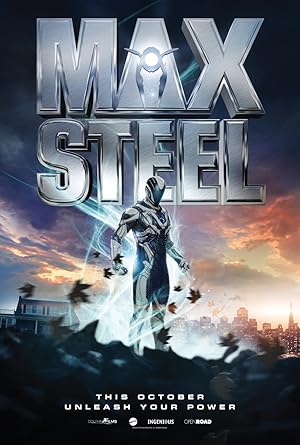
Max Steel
When teenage Max McGrath discovers his body can generate the universe's most powerful energy, he must bond with the only being able to contain it - a mysterious techno-organic extraterrestrial named Steel. United as the superhero Max Steel, the two friends must combat an alien menace and unlock the secrets of their past.
The film disappointed at the box office against its modest budget of $10.0M, earning $6.3M globally (-37% loss). While initial box office returns were modest, the film has gained appreciation for its distinctive approach within the action genre.


Plot Structure
Story beats plotted across runtime


Narrative Arc
Emotional journey through the story's key moments
Story Circle
Blueprint 15-beat structure
Arcplot Score Breakdown
Weighted: Precision (70%) + Arc (15%) + Theme (15%)
Max Steel (2016) showcases carefully calibrated narrative architecture, characteristic of Stewart Hendler's storytelling approach. This structural analysis examines how the film's 15-point plot structure maps to proven narrative frameworks across 1 hour and 32 minutes. With an Arcplot score of 7.7, the film showcases strong structural fundamentals.
Characters
Cast & narrative archetypes

Max McGrath
Steel
Molly McGrath
Dr. Miles Edwards
Sofia Martinez
Main Cast & Characters
Max McGrath
Played by Ben Winchell
A teenager who discovers he can generate turbo energy and must bond with an alien named Steel to control his powers.
Steel
Played by Josh Brener
An alien creature who bonds with Max to form Max Steel, serving as both partner and mentor.
Molly McGrath
Played by Maria Bello
Max's supportive mother who relocates with him and harbors secrets about his father's past.
Dr. Miles Edwards
Played by Andy Garcia
A scientist who worked with Max's father and becomes the film's antagonist seeking to harness turbo energy.
Sofia Martinez
Played by Ana Villafañe
Max's love interest and classmate who becomes involved in his superhero activities.
Structural Analysis
The Status Quo at 1 minutes (1% through the runtime) establishes Max McGrath is a seemingly ordinary teenager moving back to his hometown with his mother Molly. He's isolated, troubled by nightmares, and disconnected from his past.. The analysis reveals that this early placement immediately immerses viewers in the story world.
The inciting incident occurs at 11 minutes when Max's powers violently manifest, causing a massive energy surge that attracts the attention of N-Tek. His body is producing uncontrollable turbophase energy that could kill him.. At 12% through the film, this Disruption aligns precisely with traditional story structure. This beat shifts the emotional landscape, launching the protagonist into the central conflict.
The First Threshold at 24 minutes marks the transition into Act II, occurring at 26% of the runtime. This demonstrates the protagonist's commitment to Max chooses to bond with Steel and "go turbo" for the first time, combining their powers. He actively decides to explore what they can do together rather than hide from his abilities., moving from reaction to action.
At 47 minutes, the Midpoint arrives at 51% of the runtime—precisely centered, creating perfect narrative symmetry. Structural examination shows that this crucial beat Max discovers that Miles Dread, his father's former partner at N-Tek, is not only alive but has been using ultralink technology for sinister purposes. The true antagonist is revealed, raising the stakes significantly., fundamentally raising what's at risk. The emotional intensity shifts, dividing the narrative into clear before-and-after phases.
The Collapse moment at 69 minutes (75% through) represents the emotional nadir. Here, Dread captures Max and Steel, separating them. Max learns the devastating truth: Dread was responsible for his father's death. Steel is taken, and Max faces the possibility of losing his partner and dying from uncontrolled energy., shows the protagonist at their lowest point. This beat's placement in the final quarter sets up the climactic reversal.
The Second Threshold at 74 minutes initiates the final act resolution at 81% of the runtime. Max realizes his power comes from within himself, not just from Steel. He chooses to embrace his father's legacy while forging his own path. He breaks free and goes to rescue Steel and stop Dread's plan., demonstrating the transformation achieved throughout the journey.
Emotional Journey
Max Steel's emotional architecture traces a deliberate progression across 15 carefully calibrated beats.
Narrative Framework
This structural analysis employs systematic plot point analysis that identifies crucial turning points. By mapping Max Steel against these established plot points, we can identify how Stewart Hendler utilizes or subverts traditional narrative conventions. The plot point approach reveals not only adherence to structural principles but also creative choices that distinguish Max Steel within the action genre.
Stewart Hendler's Structural Approach
Among the 3 Stewart Hendler films analyzed on Arcplot, the average structural score is 7.5, reflecting strong command of classical structure. Max Steel represents one of the director's most structurally precise works. For comparative analysis, explore the complete Stewart Hendler filmography.
Comparative Analysis
Additional action films include The Bad Guys, Puss in Boots and Venom: The Last Dance. For more Stewart Hendler analyses, see Sorority Row, Whisper.
Plot Points by Act
Act I
SetupStatus Quo
Max McGrath is a seemingly ordinary teenager moving back to his hometown with his mother Molly. He's isolated, troubled by nightmares, and disconnected from his past.
Theme
Molly tells Max that his father believed in making the world better and that "the greatest power is the power to choose who you become." Theme of identity and legacy stated.
Worldbuilding
Max starts at a new high school, meets Sofia, and struggles with strange energy surges he can't control. We learn his father worked for N-Tek and died in an accident. Max experiences unexplained blackouts and electrical disturbances.
Disruption
Max's powers violently manifest, causing a massive energy surge that attracts the attention of N-Tek. His body is producing uncontrollable turbophase energy that could kill him.
Resistance
Steel, an alien ultralink, arrives to absorb Max's excess energy and save his life. Max learns about his father's connection to N-Tek and resists trusting Steel or accepting his new reality. He debates whether to embrace or reject these powers.
Act II
ConfrontationFirst Threshold
Max chooses to bond with Steel and "go turbo" for the first time, combining their powers. He actively decides to explore what they can do together rather than hide from his abilities.
Mirror World
Max deepens his connection with Sofia, who represents a normal life and grounds his humanity. She becomes the relationship that reminds him who he is beyond the powers, carrying the theme of choosing one's identity.
Premise
Max and Steel learn to work together, testing their combined abilities. Max explores N-Tek, trains as Max Steel, and begins to uncover the truth about his father's work and death. The "fun and games" of being a superhero duo.
Midpoint
Max discovers that Miles Dread, his father's former partner at N-Tek, is not only alive but has been using ultralink technology for sinister purposes. The true antagonist is revealed, raising the stakes significantly.
Opposition
Dread's forces close in on Max and Steel. Max struggles with the truth about his father's death and Dread's betrayal. His inexperience shows as Dread outmaneuvers him. Trust issues with N-Tek emerge.
Collapse
Dread captures Max and Steel, separating them. Max learns the devastating truth: Dread was responsible for his father's death. Steel is taken, and Max faces the possibility of losing his partner and dying from uncontrolled energy.
Crisis
Max is at his lowest point, powerless and alone. He must process his father's death, his own identity crisis, and decide if he's willing to sacrifice everything to stop Dread and save Steel.
Act III
ResolutionSecond Threshold
Max realizes his power comes from within himself, not just from Steel. He chooses to embrace his father's legacy while forging his own path. He breaks free and goes to rescue Steel and stop Dread's plan.
Synthesis
Max and Steel reunite and achieve their full potential as Max Steel. They storm Dread's facility, battle his forces, and confront Dread in a final showdown. Max defeats Dread by combining everything he's learned about his powers, his father's legacy, and his own identity.
Transformation
Max, now fully accepting his role as Max Steel, stands confident with Steel as his partner. He's no longer the isolated, conflicted teenager but a hero who has chosen his own identity—honoring his father while becoming his own person.