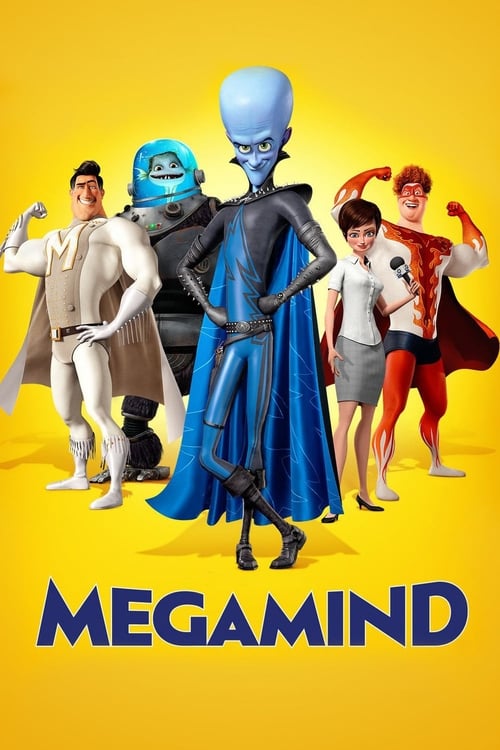
Megamind
After Megamind, a highly intelligent alien supervillain, defeats his long-time nemesis Metro Man, Megamind creates a new hero to fight, but must act to save the city when his "creation" becomes an even worse villain than he was.
Despite a significant budget of $130.0M, Megamind became a financial success, earning $321.9M worldwide—a 148% return.
2 wins & 16 nominations


Plot Structure
Story beats plotted across runtime


Narrative Arc
Emotional journey through the story's key moments
Story Circle
Blueprint 15-beat structure
Arcplot Score Breakdown
Weighted: Precision (70%) + Arc (15%) + Theme (15%)
Megamind (2010) demonstrates strategically placed dramatic framework, characteristic of Tom McGrath's storytelling approach. This structural analysis examines how the film's 15-point plot structure maps to proven narrative frameworks across 1 hour and 36 minutes. With an Arcplot score of 7.0, the film balances conventional beats with creative variation.
Characters
Cast & narrative archetypes

Megamind
Roxanne Ritchi
Metro Man
Hal Stewart / Titan
Minion
Main Cast & Characters
Megamind
Played by Will Ferrell
A blue-skinned alien supervillain who becomes Metro City's unlikely hero after accidentally killing his nemesis.
Roxanne Ritchi
Played by Tina Fey
An ambitious television reporter who becomes caught in the conflict between Megamind and Metro Man.
Metro Man
Played by Brad Pitt
The beloved superhero of Metro City who appears to be killed by Megamind but has secretly retired.
Hal Stewart / Titan
Played by Jonah Hill
Roxanne's nerdy cameraman who gains superpowers and becomes a dangerous villain named Titan.
Minion
Played by David Cross
Megamind's loyal fish-in-a-robotic-suit sidekick and best friend since childhood.
Structural Analysis
The Status Quo at 1 minutes (1% through the runtime) establishes Megamind falls to his apparent doom, narrating his lifelong pattern of losing to Metro Man. Establishes him as the perpetual villain and loser.. Significantly, this early placement immediately immerses viewers in the story world.
The inciting incident occurs at 11 minutes when Megamind accidentally kills Metro Man with a death ray during their latest battle. The impossible happens - the villain wins.. At 11% through the film, this Disruption aligns precisely with traditional story structure. This beat shifts the emotional landscape, launching the protagonist into the central conflict.
The First Threshold at 22 minutes marks the transition into Act II, occurring at 23% of the runtime. This indicates the protagonist's commitment to Megamind actively chooses to inject Hal the cameraman with Metro Man's powers, creating a new hero to fight. He disguises himself as "Bernard" to get close to Roxanne., moving from reaction to action.
At 48 minutes, the Midpoint arrives at 49% of the runtime—precisely centered, creating perfect narrative symmetry. Structural examination shows that this crucial beat False victory: Megamind and Roxanne share a romantic moment at the Metro Man museum. He feels truly happy for the first time, but it's built on a lie., fundamentally raising what's at risk. The emotional intensity shifts, dividing the narrative into clear before-and-after phases.
The Collapse moment at 71 minutes (74% through) represents the emotional nadir. Here, Megamind is rejected by Roxanne and faces Titan's destruction of Metro City. He retreats in despair, his identity as villain and his hope of being good both shattered. Metro Man appears to be truly dead., shows the protagonist at their lowest point. This beat's placement in the final quarter sets up the climactic reversal.
The Second Threshold at 76 minutes initiates the final act resolution at 79% of the runtime. Roxanne finds Megamind and convinces him that he's the only one who can stop Titan. He realizes he can choose to be a hero, synthesizing his villain skills with heroic purpose., demonstrating the transformation achieved throughout the journey.
Emotional Journey
Megamind's emotional architecture traces a deliberate progression across 15 carefully calibrated beats.
Narrative Framework
This structural analysis employs proven narrative structure principles that track dramatic progression. By mapping Megamind against these established plot points, we can identify how Tom McGrath utilizes or subverts traditional narrative conventions. The plot point approach reveals not only adherence to structural principles but also creative choices that distinguish Megamind within the animation genre.
Tom McGrath's Structural Approach
Among the 3 Tom McGrath films analyzed on Arcplot, the average structural score is 7.3, reflecting strong command of classical structure. Megamind takes a more unconventional approach compared to the director's typical style. For comparative analysis, explore the complete Tom McGrath filmography.
Comparative Analysis
Additional animation films include The Bad Guys, Puss in Boots and Violet Evergarden: Eternity and the Auto Memory Doll. For more Tom McGrath analyses, see The Boss Baby, The Boss Baby: Family Business.
Plot Points by Act
Act I
SetupStatus Quo
Megamind falls to his apparent doom, narrating his lifelong pattern of losing to Metro Man. Establishes him as the perpetual villain and loser.
Theme
Young Megamind's origin story shows how circumstances and choices shape destiny. The implicit question: "Can you choose to be good, or does your past define you?"
Worldbuilding
Flashback establishes Megamind and Metro Man's origins as alien babies, their divergent upbringings (privilege vs. prison), and their decades-long hero-villain rivalry in Metro City.
Disruption
Megamind accidentally kills Metro Man with a death ray during their latest battle. The impossible happens - the villain wins.
Resistance
Megamind conquers Metro City but discovers victory is hollow without a hero to fight. He debates what to do with his newfound purposelessness, then decides to create a new hero.
Act II
ConfrontationFirst Threshold
Megamind actively chooses to inject Hal the cameraman with Metro Man's powers, creating a new hero to fight. He disguises himself as "Bernard" to get close to Roxanne.
Mirror World
As "Bernard," Megamind connects genuinely with Roxanne for the first time. She represents acceptance, authenticity, and the possibility of being valued for who you really are.
Premise
The fun of the premise: Megamind trains Hal to be a hero while simultaneously romancing Roxanne as "Bernard." Comedy from juggling double life and Hal's incompetence.
Midpoint
False victory: Megamind and Roxanne share a romantic moment at the Metro Man museum. He feels truly happy for the first time, but it's built on a lie.
Opposition
Everything unravels: Roxanne discovers "Bernard" is Megamind and rejects him. Hal becomes Titan (later Tighten), a villain instead of hero, and threatens the city with genuine malice.
Collapse
Megamind is rejected by Roxanne and faces Titan's destruction of Metro City. He retreats in despair, his identity as villain and his hope of being good both shattered. Metro Man appears to be truly dead.
Crisis
Megamind wallows in his old lair, returning to villain habits. He processes his losses and contemplates giving up entirely.
Act III
ResolutionSecond Threshold
Roxanne finds Megamind and convinces him that he's the only one who can stop Titan. He realizes he can choose to be a hero, synthesizing his villain skills with heroic purpose.
Synthesis
Megamind confronts Titan using his intelligence and gadgets. He tricks Titan, retrieves the power-draining gun, and defeats him. Metro City accepts Megamind as their new hero.
Transformation
Megamind is celebrated as Metro City's defender. Mirrors the opening - but instead of falling as a villain, he stands as a hero. He's found his true identity through choice, not circumstance.