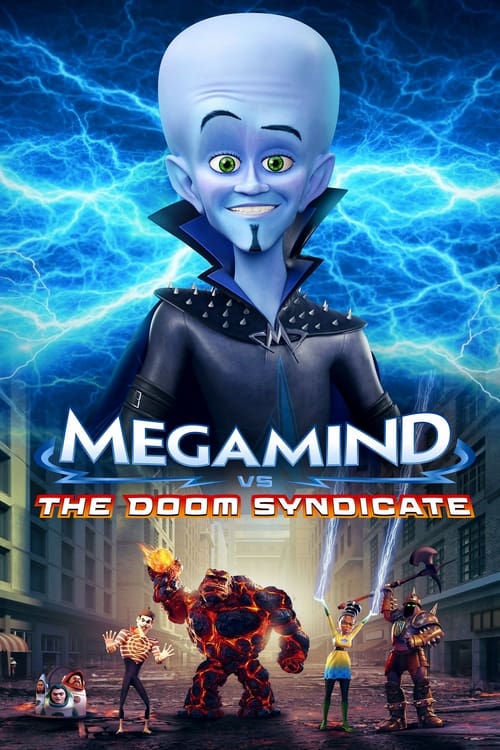
Megamind vs. the Doom Syndicate
Megamind's former villain team, The Doom Syndicate, has returned. Newly crowned hero Megamind's must now keep up evil appearances until he can assemble his friends to stop his former evil teammates from launching Metro City to the...


Plot Structure
Story beats plotted across runtime


Narrative Arc
Emotional journey through the story's key moments
Story Circle
Blueprint 15-beat structure
Characters
Cast & narrative archetypes

Megamind
Roxanne Ritchi
Minion
Chum
Lady Doppler
Pierre Pressure
Behemoth
Lord Nighty-Knight
Main Cast & Characters
Megamind
Played by Keith Ferguson
Former supervillain turned hero of Metro City, struggling to balance his new heroic identity with his villainous past.
Roxanne Ritchi
Played by Laura Post
Intrepid reporter and Megamind's girlfriend who supports his transformation into a hero.
Minion
Played by Josh Brener
Megamind's loyal fish-in-a-robotic-suit sidekick and best friend who helps him navigate heroism.
Chum
Played by Chris Sullivan
A former villain and member of the Doom Syndicate who becomes Megamind's reluctant ally.
Lady Doppler
Played by Emily Tuñon
Weather-controlling member of the Doom Syndicate with atmospheric powers.
Pierre Pressure
Played by Talon Warburton
Mime-powered member of the Doom Syndicate who can create invisible force fields and constructs.
Behemoth
Played by Scott Adsit
Super-strong member of the Doom Syndicate with immense physical power.
Lord Nighty-Knight
Played by Michael Beattie
Medieval-themed leader of the Doom Syndicate who believes Megamind will rejoin their villainous group.
Structural Analysis
The Status Quo at 1 minutes (1% through the runtime) establishes Megamind is celebrated as Metro City's new hero, having reformed from supervillain to protector. He patrols the city with Ol' Chum, enjoying his new heroic identity.. Significantly, this early placement immediately immerses viewers in the story world.
The inciting incident occurs at 11 minutes when The Doom Syndicate—Lady Doppler, Behemoth, and Lord Nighty-Knight—escape from prison. They're furious that Megamind abandoned them and turned hero, and they vow revenge on their former leader.. At 13% through the film, this Disruption is delayed, allowing extended setup of the story world. This beat shifts the emotional landscape, launching the protagonist into the central conflict.
The First Threshold at 21 minutes marks the transition into Act II, occurring at 26% of the runtime. This demonstrates the protagonist's commitment to Megamind actively chooses to confront the Doom Syndicate rather than hide or flee. He accepts that he must face his past directly and commits to protecting Metro City no matter the personal cost., moving from reaction to action.
At 42 minutes, the Midpoint arrives at 50% of the runtime—precisely centered, creating perfect narrative symmetry. Significantly, this crucial beat The Doom Syndicate reveals their master plan: they've been manipulating Megamind to gather components for a city-destroying device. Megamind realizes his battles inadvertently helped them, a false defeat that raises the stakes dramatically., fundamentally raising what's at risk. The emotional intensity shifts, dividing the narrative into clear before-and-after phases.
The Collapse moment at 63 minutes (76% through) represents the emotional nadir. Here, Ol' Chum is captured by the Doom Syndicate. Megamind's oldest friend and the one person who believed in him from the start is used as bait. The city turns against Megamind completely, and he stands alone facing his greatest failure., demonstrates the protagonist at their lowest point. This beat's placement in the final quarter sets up the climactic reversal.
The Second Threshold at 67 minutes initiates the final act resolution at 81% of the runtime. Megamind synthesizes his lesson: true heroism means accepting help and fighting for others, not proving himself. He devises a plan that requires trusting Keiko completely and reaches out to the citizens for help rather than going it alone., demonstrating the transformation achieved throughout the journey.
Emotional Journey
Megamind vs. the Doom Syndicate's emotional architecture traces a deliberate progression across 15 carefully calibrated beats.
Narrative Framework
This structural analysis employs systematic plot point analysis that identifies crucial turning points. By mapping Megamind vs. the Doom Syndicate against these established plot points, we can identify how Eric Fogel utilizes or subverts traditional narrative conventions. The plot point approach reveals not only adherence to structural principles but also creative choices that distinguish Megamind vs. the Doom Syndicate within the animation genre.
Comparative Analysis
Additional animation films include The Bad Guys, Puss in Boots and Violet Evergarden: Eternity and the Auto Memory Doll.
Plot Points by Act
Act I
SetupStatus Quo
Megamind is celebrated as Metro City's new hero, having reformed from supervillain to protector. He patrols the city with Ol' Chum, enjoying his new heroic identity.
Theme
Ol' Chum questions whether people can truly change or if they're destined to repeat their past mistakes, establishing the theme of redemption and whether former villains deserve second chances.
Worldbuilding
Metro City's new status quo is established with Megamind as its protector. We see his relationship with Ol' Chum, his hero headquarters, and hints of his villainous past including his former associates the Doom Syndicate.
Disruption
The Doom Syndicate—Lady Doppler, Behemoth, and Lord Nighty-Knight—escape from prison. They're furious that Megamind abandoned them and turned hero, and they vow revenge on their former leader.
Resistance
Megamind debates how to handle his former teammates. Ol' Chum advises caution while Megamind struggles with guilt over his past. He meets Keiko, a tech expert who offers to help, but Megamind initially resists accepting aid.
Act II
ConfrontationFirst Threshold
Megamind actively chooses to confront the Doom Syndicate rather than hide or flee. He accepts that he must face his past directly and commits to protecting Metro City no matter the personal cost.
Mirror World
Keiko becomes Megamind's ally and confidant, representing what genuine friendship looks like versus the toxic loyalty of his villain days. Her belief in his redemption mirrors the theme of earned second chances.
Premise
Megamind battles the Doom Syndicate in various encounters across Metro City. He uses his inventions and intellect to counter each villain's unique powers—weather control, super strength, and shadow manipulation—while learning to work as part of a team.
Midpoint
The Doom Syndicate reveals their master plan: they've been manipulating Megamind to gather components for a city-destroying device. Megamind realizes his battles inadvertently helped them, a false defeat that raises the stakes dramatically.
Opposition
The Doom Syndicate gains the upper hand. Lady Doppler creates chaos with storms, citizens begin doubting Megamind's reformation, and the Syndicate publicly exposes his past crimes. Megamind's flaws—his ego and inability to fully trust others—undermine his efforts.
Collapse
Ol' Chum is captured by the Doom Syndicate. Megamind's oldest friend and the one person who believed in him from the start is used as bait. The city turns against Megamind completely, and he stands alone facing his greatest failure.
Crisis
Megamind retreats to his lair in despair, questioning whether he was ever truly meant to be a hero. Keiko finds him and reminds him that redemption isn't about being perfect—it's about making the choice to do good despite past mistakes.
Act III
ResolutionSecond Threshold
Megamind synthesizes his lesson: true heroism means accepting help and fighting for others, not proving himself. He devises a plan that requires trusting Keiko completely and reaches out to the citizens for help rather than going it alone.
Synthesis
Megamind confronts the Doom Syndicate in a climactic battle. Working with Keiko and rallied citizens, he defeats each villain by exploiting their weaknesses. He rescues Ol' Chum and dismantles their doomsday device, proving his transformation through action.
Transformation
Megamind stands with Ol' Chum and Keiko, now fully accepted by Metro City not as a reformed villain but as a true hero. The closing image mirrors the opening but shows him surrounded by genuine friends and community—his transformation complete.