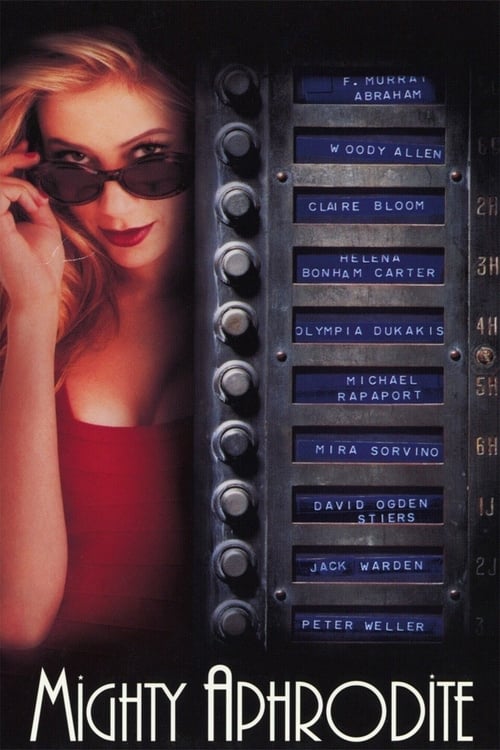
Mighty Aphrodite
When Lenny and his wife, Amanda, adopt a baby, Lenny realizes that his son is a genius and becomes obsessed with finding the boy's biological mother in hopes that she will be brilliant too. But when he learns that Max's mother is Linda Ash, a kindhearted prostitute and porn star, Lenny is determined to reform her immoral lifestyle. A Greek chorus chimes in to relate the plot to Greek mythology in this quirky comedy.
Working with a moderate budget of $15.0M, the film achieved a steady performer with $26.0M in global revenue (+73% profit margin).
1 Oscar. 12 wins & 13 nominations


Plot Structure
Story beats plotted across runtime


Narrative Arc
Emotional journey through the story's key moments
Story Circle
Blueprint 15-beat structure
Arcplot Score Breakdown
Weighted: Precision (70%) + Arc (15%) + Theme (15%)
Mighty Aphrodite (1995) demonstrates carefully calibrated narrative architecture, characteristic of Woody Allen's storytelling approach. This structural analysis examines how the film's 15-point plot structure maps to proven narrative frameworks across 1 hour and 35 minutes. With an Arcplot score of 6.7, the film balances conventional beats with creative variation.
Characters
Cast & narrative archetypes

Lenny Weinrib
Linda Ash
Amanda Weinrib
Kevin
Greek Chorus Leader
Main Cast & Characters
Lenny Weinrib
Played by Woody Allen
A neurotic sportswriter who becomes obsessed with finding his adopted son's biological mother.
Linda Ash
Played by Mira Sorvino
A sweet but dim-witted porn actress and prostitute who is revealed to be Max's biological mother.
Amanda Weinrib
Played by Helena Bonham Carter
Lenny's ambitious art gallery curator wife who pushes for adoption and pursues her career.
Kevin
Played by Michael Rapaport
Linda's dim-witted boyfriend and aspiring boxer whom Lenny tries to mentor.
Greek Chorus Leader
Played by F. Murray Abraham
The leader of the Greek Chorus who comments on and warns about Lenny's actions throughout the film.
Structural Analysis
The Status Quo at 1 minutes (1% through the runtime) establishes Lenny and Amanda are a successful Manhattan couple. He's a sportswriter, she's building a gallery career. They have a comfortable but childless marriage.. Significantly, this early placement immediately immerses viewers in the story world.
The inciting incident occurs at 11 minutes when They adopt baby Max. Lenny is overjoyed and becomes obsessed with his son's intelligence and potential, marveling at his gifts. This sparks his curiosity about Max's biological mother.. At 12% through the film, this Disruption aligns precisely with traditional story structure. This beat shifts the emotional landscape, launching the protagonist into the central conflict.
The First Threshold at 23 minutes marks the transition into Act II, occurring at 25% of the runtime. This shows the protagonist's commitment to Lenny actively chooses to track down Max's biological mother through private investigation, crossing the line from curiosity to action despite knowing Amanda would disapprove., moving from reaction to action.
At 47 minutes, the Midpoint arrives at 50% of the runtime—precisely centered, creating perfect narrative symmetry. Notably, this crucial beat False victory: Lenny successfully sets Linda up with Kevin, a seemingly perfect match. Linda is falling for Kevin and leaving her old life behind. Lenny feels he's "saved" her and can walk away clean., fundamentally raising what's at risk. The emotional intensity shifts, dividing the narrative into clear before-and-after phases.
The Collapse moment at 71 minutes (74% through) represents the emotional nadir. Here, Linda discovers the truth - that Lenny is Max's adoptive father and has been manipulating her. She's devastated by the betrayal. Lenny's web of deception collapses entirely, and he faces losing everyone., demonstrates the protagonist at their lowest point. This beat's placement in the final quarter sets up the climactic reversal.
The Second Threshold at 76 minutes initiates the final act resolution at 80% of the runtime. Lenny learns Linda has found happiness with a simple, kind helicopter pilot and is pregnant. He realizes he must let go of control and accept that people find their own paths. He seeks reconciliation., demonstrating the transformation achieved throughout the journey.
Emotional Journey
Mighty Aphrodite's emotional architecture traces a deliberate progression across 15 carefully calibrated beats.
Narrative Framework
This structural analysis employs systematic plot point analysis that identifies crucial turning points. By mapping Mighty Aphrodite against these established plot points, we can identify how Woody Allen utilizes or subverts traditional narrative conventions. The plot point approach reveals not only adherence to structural principles but also creative choices that distinguish Mighty Aphrodite within the comedy genre.
Woody Allen's Structural Approach
Among the 42 Woody Allen films analyzed on Arcplot, the average structural score is 7.0, demonstrating varied approaches to story architecture. Mighty Aphrodite takes a more unconventional approach compared to the director's typical style. For comparative analysis, explore the complete Woody Allen filmography.
Comparative Analysis
Additional comedy films include The Bad Guys, Ella Enchanted and The Evening Star. For more Woody Allen analyses, see Everyone Says I Love You, Celebrity and Interiors.
Plot Points by Act
Act I
SetupStatus Quo
Lenny and Amanda are a successful Manhattan couple. He's a sportswriter, she's building a gallery career. They have a comfortable but childless marriage.
Theme
The Greek Chorus warns about the dangers of curiosity and trying to control fate, foreshadowing Lenny's journey: "When you think you know something, you pay dearly for it."
Worldbuilding
Establishing Lenny and Amanda's world: their marriage dynamics, Amanda's ambition, their decision to adopt a baby, and introduction of the Greek Chorus device that will comment on Lenny's fate throughout.
Disruption
They adopt baby Max. Lenny is overjoyed and becomes obsessed with his son's intelligence and potential, marveling at his gifts. This sparks his curiosity about Max's biological mother.
Resistance
Lenny debates whether to investigate Max's origins despite Amanda's warnings. He wrestles with his curiosity, consulting friends. The Chorus warns him to stop, but his obsession grows as Max develops.
Act II
ConfrontationFirst Threshold
Lenny actively chooses to track down Max's biological mother through private investigation, crossing the line from curiosity to action despite knowing Amanda would disapprove.
Mirror World
Lenny meets Linda Ash, Max's biological mother - a sweet but dim-witted prostitute and porn actress. She represents everything opposite to his intellectual Manhattan world, becoming the mirror that reflects the theme.
Premise
The "fun and games" of Lenny trying to reform Linda, setting her up with respectable men, teaching her to better herself - all while hiding his true identity and motivation. His double life escalates.
Midpoint
False victory: Lenny successfully sets Linda up with Kevin, a seemingly perfect match. Linda is falling for Kevin and leaving her old life behind. Lenny feels he's "saved" her and can walk away clean.
Opposition
Things unravel: Kevin turns out to be married, Linda is heartbroken, Lenny's marriage to Amanda deteriorates as she senses his distance, Linda becomes attached to Lenny, and his lies compound.
Collapse
Linda discovers the truth - that Lenny is Max's adoptive father and has been manipulating her. She's devastated by the betrayal. Lenny's web of deception collapses entirely, and he faces losing everyone.
Crisis
Lenny wallows in guilt and consequence. Amanda is disgusted by his interference. Linda won't speak to him. The Chorus laments his hubris. He must face what his meddling has cost.
Act III
ResolutionSecond Threshold
Lenny learns Linda has found happiness with a simple, kind helicopter pilot and is pregnant. He realizes he must let go of control and accept that people find their own paths. He seeks reconciliation.
Synthesis
Lenny makes peace with Linda, who forgives him. He reconnects with Amanda, accepting their life as it is. Linda marries the pilot in a joyful ceremony that Lenny and Amanda attend, bringing closure.
Transformation
Lenny and Amanda watch Max play, no longer obsessed with his origins or potential. Lenny has learned to accept life's mysteries without trying to control them. The Chorus celebrates his wisdom gained through suffering.