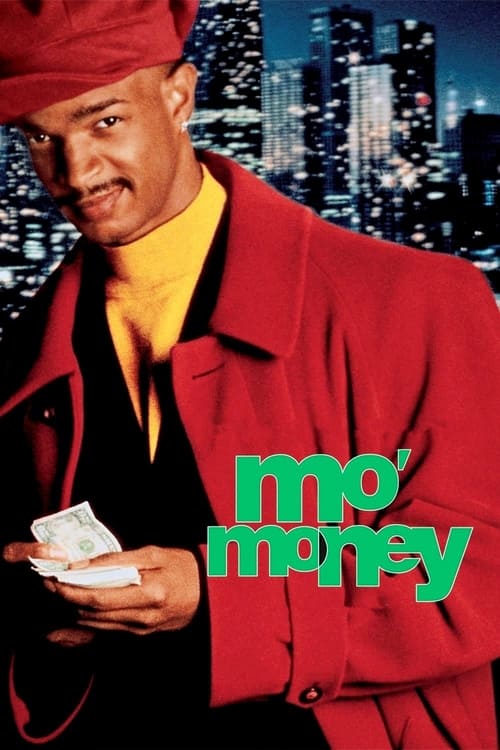
Mo' Money
Trying to get his act together, a con artist gets a job in a credit card company. He falls in love with a fellow employee, he steals a couple of cards, everything is going great. But soon, the chief of security drags him into the big leagues of criminals...
Despite a respectable budget of $17.0M, Mo' Money became a box office success, earning $40.2M worldwide—a 137% return.


Plot Structure
Story beats plotted across runtime


Narrative Arc
Emotional journey through the story's key moments
Story Circle
Blueprint 15-beat structure
Arcplot Score Breakdown
Weighted: Precision (70%) + Arc (15%) + Theme (15%)
Mo' Money (1992) showcases carefully calibrated narrative architecture, characteristic of Peter MacDonald's storytelling approach. This structural analysis examines how the film's 15-point plot structure maps to proven narrative frameworks across 1 hour and 37 minutes. With an Arcplot score of 7.4, the film balances conventional beats with creative variation.
Characters
Cast & narrative archetypes

Johnny Stewart
Amber Evans
Seymour Stewart
Keith Heading
Tom Dillen
Lt. Raymond Walsh
Main Cast & Characters
Johnny Stewart
Played by Damon Wayans
A small-time con artist who reforms his ways after falling for a credit card company employee and getting caught up in a criminal conspiracy.
Amber Evans
Played by Stacey Dash
An honest credit card fraud investigator who becomes Johnny's love interest and motivation to change his ways.
Seymour Stewart
Played by Marlon Wayans
Johnny's younger brother and reluctant accomplice in various cons, more cautious and risk-averse than Johnny.
Keith Heading
Played by John Diehl
The main antagonist, a corrupt security executive running a credit card fraud operation from within the company.
Tom Dillen
Played by Harry Lennix
A company executive who becomes suspicious of the fraud operation and aids in exposing the conspiracy.
Lt. Raymond Walsh
Played by Joe Santos
A detective investigating the credit card fraud case who initially suspects Johnny but later works with him.
Structural Analysis
The Status Quo at 1 minutes (1% through the runtime) establishes Johnny Stewart is a small-time con artist running street hustles and scams with his brother Seymour, living a dishonest but carefree life on the streets.. The analysis reveals that this early placement immediately immerses viewers in the story world.
The inciting incident occurs at 11 minutes when Johnny encounters Amber again and becomes determined to get a legitimate job at her credit card company to win her over, disrupting his comfortable con-artist lifestyle.. At 11% through the film, this Disruption aligns precisely with traditional story structure. This beat shifts the emotional landscape, launching the protagonist into the central conflict.
The First Threshold at 23 minutes marks the transition into Act II, occurring at 24% of the runtime. This indicates the protagonist's commitment to Johnny makes the active choice to take a mailroom job at the credit card company, leaving behind his con-artist life to pursue Amber and prove he can go straight., moving from reaction to action.
At 48 minutes, the Midpoint arrives at 50% of the runtime—precisely centered, creating perfect narrative symmetry. Structural examination shows that this crucial beat Johnny and Seymour get pulled into the credit card fraud scheme, thinking they can make easy money. This false victory of "having it all" actually compromises Johnny's integrity and relationship with Amber., fundamentally raising what's at risk. The emotional intensity shifts, dividing the narrative into clear before-and-after phases.
The Collapse moment at 72 minutes (75% through) represents the emotional nadir. Here, Johnny loses Amber when she realizes he's been lying and involved in fraud. His dream of going straight and winning her love dies, and he's trapped in the criminal conspiracy with dangerous people., demonstrates the protagonist at their lowest point. This beat's placement in the final quarter sets up the climactic reversal.
The Second Threshold at 77 minutes initiates the final act resolution at 79% of the runtime. Johnny realizes he must use his con-artist skills for good—to expose the fraud ring and save Amber. He synthesizes his street smarts with his newfound desire for legitimacy., demonstrating the transformation achieved throughout the journey.
Emotional Journey
Mo' Money's emotional architecture traces a deliberate progression across 15 carefully calibrated beats.
Narrative Framework
This structural analysis employs structural analysis methodology used to understand storytelling architecture. By mapping Mo' Money against these established plot points, we can identify how Peter MacDonald utilizes or subverts traditional narrative conventions. The plot point approach reveals not only adherence to structural principles but also creative choices that distinguish Mo' Money within the action genre.
Peter MacDonald's Structural Approach
Among the 2 Peter MacDonald films analyzed on Arcplot, the average structural score is 7.4, reflecting strong command of classical structure. Mo' Money exemplifies the director's characteristic narrative technique. For comparative analysis, explore the complete Peter MacDonald filmography.
Comparative Analysis
Additional action films include The Bad Guys, Puss in Boots and Venom: The Last Dance. For more Peter MacDonald analyses, see Rambo III.
Plot Points by Act
Act I
SetupStatus Quo
Johnny Stewart is a small-time con artist running street hustles and scams with his brother Seymour, living a dishonest but carefree life on the streets.
Theme
A conversation about going legitimate and getting a real job hints at the central theme: the choice between easy dishonest money and harder honest work, and what that choice costs you.
Worldbuilding
Establishes Johnny and Seymour's world of cons and scams, Johnny's infatuation with Amber Evans who works at a credit card company, and his desire to impress her by going straight.
Disruption
Johnny encounters Amber again and becomes determined to get a legitimate job at her credit card company to win her over, disrupting his comfortable con-artist lifestyle.
Resistance
Johnny debates whether he can actually hold down a straight job, gets advice from Seymour, and prepares to enter the legitimate world despite his lack of qualifications and skills.
Act II
ConfrontationFirst Threshold
Johnny makes the active choice to take a mailroom job at the credit card company, leaving behind his con-artist life to pursue Amber and prove he can go straight.
Mirror World
Johnny and Amber begin developing a relationship as she becomes his connection to the legitimate world, representing the honest life he's trying to build.
Premise
Johnny navigates the corporate world, trying to impress Amber while fighting his instincts to run scams. He discovers a credit card fraud operation within the company led by Keith Heading.
Midpoint
Johnny and Seymour get pulled into the credit card fraud scheme, thinking they can make easy money. This false victory of "having it all" actually compromises Johnny's integrity and relationship with Amber.
Opposition
The fraud scheme escalates dangerously as Keith Heading becomes increasingly threatening. Johnny's lies catch up with him, Amber discovers his involvement in illegal activities, and the criminals close in.
Collapse
Johnny loses Amber when she realizes he's been lying and involved in fraud. His dream of going straight and winning her love dies, and he's trapped in the criminal conspiracy with dangerous people.
Crisis
Johnny hits rock bottom, facing the consequences of choosing easy money over integrity. He must decide who he really wants to be and whether he can truly change.
Act III
ResolutionSecond Threshold
Johnny realizes he must use his con-artist skills for good—to expose the fraud ring and save Amber. He synthesizes his street smarts with his newfound desire for legitimacy.
Synthesis
Johnny and Seymour execute an elaborate plan to take down Keith Heading and the fraud operation, using their con skills to outwit the criminals and clear their names while protecting Amber.
Transformation
Johnny has earned legitimate respect and Amber's trust, having proven he can use his talents honestly. He's transformed from a con artist running from responsibility into a man of integrity.