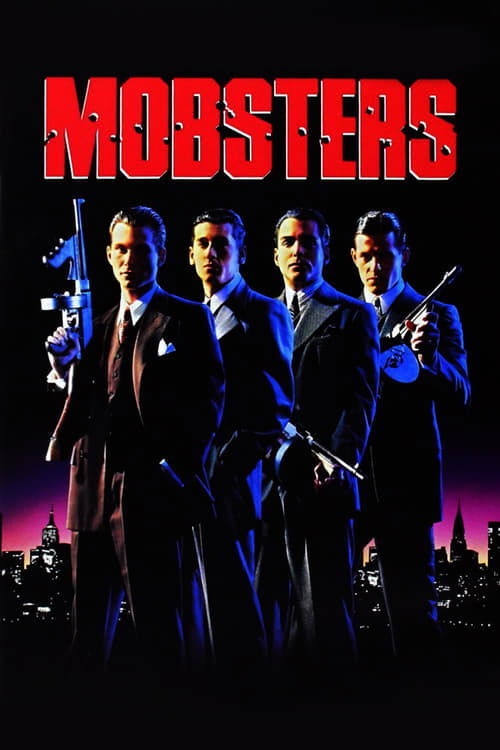
Mobsters
The story of a group of friends in turn of the century New York, from their early days as street hoods to their rise in the world of organized crime...
The film struggled financially against its moderate budget of $23.0M, earning $20.2M globally (-12% loss).


Plot Structure
Story beats plotted across runtime


Narrative Arc
Emotional journey through the story's key moments
Story Circle
Blueprint 15-beat structure
Arcplot Score Breakdown
Weighted: Precision (70%) + Arc (15%) + Theme (15%)
Mobsters (1991) exhibits precise story structure, characteristic of Michael Karbelnikoff's storytelling approach. This structural analysis examines how the film's 15-point plot structure maps to proven narrative frameworks across 1 hour and 44 minutes. With an Arcplot score of 6.7, the film balances conventional beats with creative variation.
Characters
Cast & narrative archetypes

Charles "Lucky" Luciano
Meyer Lansky
Bugsy Siegel
Frank Costello
Don Giuseppe "Joe the Boss" Masseria
Salvatore Maranzano
Arnold Rothstein
Main Cast & Characters
Charles "Lucky" Luciano
Played by Christian Slater
Ambitious young gangster who rises to become the architect of organized crime in America
Meyer Lansky
Played by Patrick Dempsey
Brilliant strategist and accountant who becomes Lucky's closest partner and financial mastermind
Bugsy Siegel
Played by Richard Grieco
Volatile and violent enforcer with a hair-trigger temper and ambitious dreams
Frank Costello
Played by Costas Mandylor
Smooth diplomat and negotiator of the group who prefers politics to violence
Don Giuseppe "Joe the Boss" Masseria
Played by Anthony Quinn
Traditional old-world Mafia boss who opposes modernization and multi-ethnic cooperation
Salvatore Maranzano
Played by Michael Gambon
Calculating rival crime boss who styles himself as the "Boss of Bosses"
Arnold Rothstein
Played by F. Murray Abraham
Sophisticated mentor figure who introduces the young mobsters to high-level criminal operations
Structural Analysis
The Status Quo at 1 minutes (1% through the runtime) establishes Young Lucky Luciano, Meyer Lansky, Frank Costello, and Bugsy Siegel run numbers and petty crimes on the Lower East Side in 1917, scraping by under the thumb of old-world crime bosses.. Notably, this early placement immediately immerses viewers in the story world.
The inciting incident occurs at 12 minutes when Masseria humiliates and threatens Lucky and his crew, forcing them to pay tribute. Lucky realizes they'll never rise under the old bosses' system—they need to break free or be crushed.. At 12% through the film, this Disruption aligns precisely with traditional story structure. This beat shifts the emotional landscape, launching the protagonist into the central conflict.
The First Threshold at 26 minutes marks the transition into Act II, occurring at 25% of the runtime. This indicates the protagonist's commitment to Lucky makes the active choice to ally with Faranzano to eliminate Masseria. They execute the hit themselves, crossing the line into major organized crime. There's no going back to being street hustlers., moving from reaction to action.
At 51 minutes, the Midpoint arrives at 50% of the runtime—precisely centered, creating perfect narrative symmetry. Of particular interest, this crucial beat False victory: Lucky and the crew successfully eliminate Faranzano and consolidate power. They're now the dominant force in New York organized crime. They celebrate their triumph, but the seeds of paranoia and internal conflict are planted., fundamentally raising what's at risk. The emotional intensity shifts, dividing the narrative into clear before-and-after phases.
The Collapse moment at 77 minutes (74% through) represents the emotional nadir. Here, All is lost: Bugsy's recklessness leads to catastrophic consequences. A friend is killed, and the crew faces potential destruction from both law enforcement and rival mobsters. Lucky realizes the violence and paranoia are consuming everything they built., demonstrates the protagonist at their lowest point. This beat's placement in the final quarter sets up the climactic reversal.
The Second Threshold at 82 minutes initiates the final act resolution at 79% of the runtime. Synthesis: Lucky realizes they must organize all the families into a commission to prevent endless war. He combines Meyer's business acumen with his own street ruthlessness to propose a new structure—the modern mafia., demonstrating the transformation achieved throughout the journey.
Emotional Journey
Mobsters's emotional architecture traces a deliberate progression across 15 carefully calibrated beats.
Narrative Framework
This structural analysis employs structural analysis methodology used to understand storytelling architecture. By mapping Mobsters against these established plot points, we can identify how Michael Karbelnikoff utilizes or subverts traditional narrative conventions. The plot point approach reveals not only adherence to structural principles but also creative choices that distinguish Mobsters within the action genre.
Comparative Analysis
Additional action films include The Bad Guys, Puss in Boots and Venom: The Last Dance.
Plot Points by Act
Act I
SetupStatus Quo
Young Lucky Luciano, Meyer Lansky, Frank Costello, and Bugsy Siegel run numbers and petty crimes on the Lower East Side in 1917, scraping by under the thumb of old-world crime bosses.
Theme
Meyer tells Lucky: "We're gonna be partners. We're gonna build something nobody can touch." The theme of building a criminal empire through partnership versus betrayal and greed is established.
Worldbuilding
The four friends hustle in the streets, dealing with rival gangs and old-world mob bosses like Masseria and Faranzano. We see their loyalty to each other, their ambition, and the violent, territorial nature of 1920s organized crime.
Disruption
Masseria humiliates and threatens Lucky and his crew, forcing them to pay tribute. Lucky realizes they'll never rise under the old bosses' system—they need to break free or be crushed.
Resistance
The crew debates how to respond. Meyer counsels patience and business over violence. Arnold Rothstein becomes an informal mentor, showing them the sophisticated side of crime. They begin working bootlegging during Prohibition, building their operation.
Act II
ConfrontationFirst Threshold
Lucky makes the active choice to ally with Faranzano to eliminate Masseria. They execute the hit themselves, crossing the line into major organized crime. There's no going back to being street hustlers.
Mirror World
Lucky becomes romantically involved with Mara Motes, a society woman who represents the legitimate world and respectability he craves. She embodies the film's central question: can you build an empire on blood and remain human?
Premise
The promise of the premise: building a criminal empire. The crew expands their bootlegging operation, makes alliances across ethnic lines, accumulates wealth and power. The fun of watching them outsmart rivals and rise to prominence.
Midpoint
False victory: Lucky and the crew successfully eliminate Faranzano and consolidate power. They're now the dominant force in New York organized crime. They celebrate their triumph, but the seeds of paranoia and internal conflict are planted.
Opposition
The pressure intensifies: law enforcement closes in, rival factions challenge them, and internal tensions grow. Bugsy becomes increasingly unstable and violent. Lucky's ambition conflicts with Meyer's desire for order. The empire they built starts cracking from within.
Collapse
All is lost: Bugsy's recklessness leads to catastrophic consequences. A friend is killed, and the crew faces potential destruction from both law enforcement and rival mobsters. Lucky realizes the violence and paranoia are consuming everything they built.
Crisis
Dark night of the soul: Lucky confronts the cost of their choices. Friends are dead or corrupted, his relationship with Mara is strained, and the brotherhood that started everything is fractured. He must decide what he's willing to sacrifice.
Act III
ResolutionSecond Threshold
Synthesis: Lucky realizes they must organize all the families into a commission to prevent endless war. He combines Meyer's business acumen with his own street ruthlessness to propose a new structure—the modern mafia.
Synthesis
The finale: Lucky negotiates the creation of the Commission, bringing together rival families. Final confrontations play out—with law enforcement, with Bugsy's instability, and with the moral costs of their empire. The new order is established through violence and negotiation.
Transformation
Closing image: Lucky sits in power, having created the National Crime Syndicate, but at tremendous cost. Friends are dead, innocence is lost, and he's become the very thing they fought against. The empire stands, but the brotherhood is gone. Success tastes like ashes.