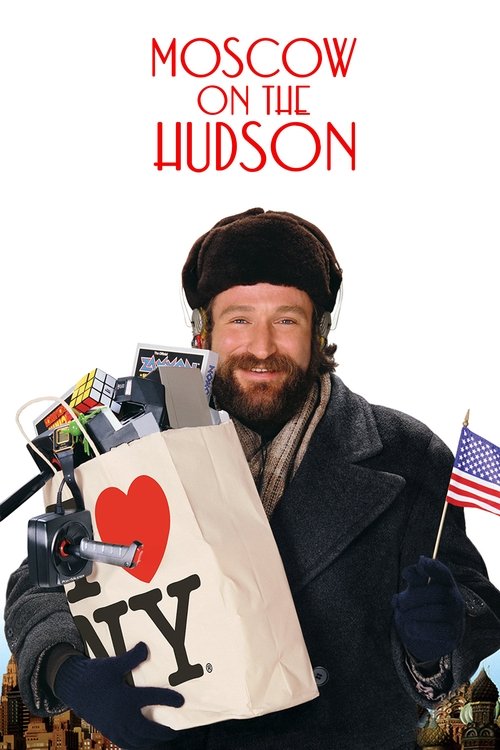
Moscow on the Hudson
A Russian circus visits the US. A clown wants to defect, but doesn't have the nerve. His saxophone playing friend however comes to the decision to defect in the middle of Bloomingdales. He is befriended by the black security guard and falls in love with the Italian immigrant from behind the perfume counter. We follow his life as he works his way through the American dream and tries to find work as a musician.
The film earned $25.1M at the global box office.


Plot Structure
Story beats plotted across runtime


Narrative Arc
Emotional journey through the story's key moments
Story Circle
Blueprint 15-beat structure
Arcplot Score Breakdown
Weighted: Precision (70%) + Arc (15%) + Theme (15%)
Moscow on the Hudson (1984) demonstrates meticulously timed dramatic framework, characteristic of Paul Mazursky's storytelling approach. This structural analysis examines how the film's 15-point plot structure maps to proven narrative frameworks across 1 hour and 55 minutes. With an Arcplot score of 6.1, the film takes an unconventional approach to traditional narrative frameworks.
Characters
Cast & narrative archetypes

Vladimir Ivanoff
Lionel Witherspoon
Lucia Lombardo
Orlando Ramirez
Anatoly
Main Cast & Characters
Vladimir Ivanoff
Played by Robin Williams
A Russian saxophonist who defects to the United States in a New York City department store, seeking freedom and a new life.
Lionel Witherspoon
Played by Cleavant Derricks
An African American security guard at Bloomingdale's who becomes Vladimir's first American friend and helps him navigate his new life.
Lucia Lombardo
Played by María Conchita Alonso
An Italian immigrant saleswoman at Bloomingdale's who becomes Vladimir's love interest and helps him adjust to American life.
Orlando Ramirez
Played by Alejandro Rey
Lionel's friend and Vladimir's eventual roommate, a Cuban immigrant taxi driver who shares the struggles of adapting to America.
Anatoly
Played by Savely Kramarov
Vladimir's friend and fellow musician in the Moscow circus band, representing the life Vladimir leaves behind.
Structural Analysis
The Status Quo at 1 minutes (1% through the runtime) establishes Vladimir Ivanoff waits in a long Moscow breadline in the freezing cold, playing saxophone to pass the time. The dreary Soviet routine establishes his constrained existence under the communist system.. Significantly, this early placement immediately immerses viewers in the story world.
The inciting incident occurs at 14 minutes when Vladimir learns the Moscow Circus has been selected to tour the United States. The announcement disrupts his settled Soviet life and presents an unprecedented opportunity that will change everything.. At 12% through the film, this Disruption aligns precisely with traditional story structure. This beat shifts the emotional landscape, launching the protagonist into the central conflict.
The First Threshold at 29 minutes marks the transition into Act II, occurring at 25% of the runtime. This reveals the protagonist's commitment to In Bloomingdale's department store, Vladimir makes his fateful choice. As KGB agents close in, he loudly declares "I defect!" to the stunned shoppers. His irreversible decision crosses him into a new world as an American immigrant., moving from reaction to action.
At 58 minutes, the Midpoint arrives at 50% of the runtime—precisely centered, creating perfect narrative symmetry. Structural examination shows that this crucial beat Vladimir becomes a naturalized American citizen in a moving ceremony. This false victory marks the high point - he has officially achieved his dream of freedom, but the harder realities of immigrant life are about to surface., fundamentally raising what's at risk. The emotional intensity shifts, dividing the narrative into clear before-and-after phases.
The Collapse moment at 86 minutes (75% through) represents the emotional nadir. Here, Vladimir suffers a panic attack on the streets of New York, overwhelmed by culture shock, isolation, and grief over losing his homeland and family forever. He collapses emotionally, questioning whether defection was worth the profound losses he has suffered., shows the protagonist at their lowest point. This beat's placement in the final quarter sets up the climactic reversal.
The Second Threshold at 92 minutes initiates the final act resolution at 80% of the runtime. Vladimir reconnects with the diverse community of immigrants who have become his new family. He realizes that America is not a destination but a process, and that freedom includes the freedom to struggle, fail, and rebuild. He chooses to embrace his hybrid identity., demonstrating the transformation achieved throughout the journey.
Emotional Journey
Moscow on the Hudson's emotional architecture traces a deliberate progression across 15 carefully calibrated beats.
Narrative Framework
This structural analysis employs a 15-point narrative structure framework that maps key story moments. By mapping Moscow on the Hudson against these established plot points, we can identify how Paul Mazursky utilizes or subverts traditional narrative conventions. The plot point approach reveals not only adherence to structural principles but also creative choices that distinguish Moscow on the Hudson within the comedy genre.
Paul Mazursky's Structural Approach
Among the 5 Paul Mazursky films analyzed on Arcplot, the average structural score is 7.3, reflecting strong command of classical structure. Moscow on the Hudson takes a more unconventional approach compared to the director's typical style. For comparative analysis, explore the complete Paul Mazursky filmography.
Comparative Analysis
Additional comedy films include The Bad Guys, Ella Enchanted and The Evening Star. For more Paul Mazursky analyses, see Enemies, a Love Story, Down and Out in Beverly Hills and Scenes from a Mall.
Plot Points by Act
Act I
SetupStatus Quo
Vladimir Ivanoff waits in a long Moscow breadline in the freezing cold, playing saxophone to pass the time. The dreary Soviet routine establishes his constrained existence under the communist system.
Theme
Vladimir's friend Anatoly speaks wistfully about freedom and the dream of America, stating that true happiness comes from being free to make your own choices. The theme of freedom versus security is planted.
Worldbuilding
Life in Soviet Moscow is established: Vladimir performs with the circus, navigates shortages and long lines, lives with his family in cramped quarters, and deals with the ever-present KGB surveillance. His love of jazz and American culture hints at his inner conflict.
Disruption
Vladimir learns the Moscow Circus has been selected to tour the United States. The announcement disrupts his settled Soviet life and presents an unprecedented opportunity that will change everything.
Resistance
The circus prepares for and embarks on the American tour. Vladimir and Anatoly debate the risks and rewards of defection. KGB handlers watch closely. Vladimir experiences culture shock in New York, marveling at the abundance and freedom while wrestling with fear of leaving everything behind.
Act II
ConfrontationFirst Threshold
In Bloomingdale's department store, Vladimir makes his fateful choice. As KGB agents close in, he loudly declares "I defect!" to the stunned shoppers. His irreversible decision crosses him into a new world as an American immigrant.
Mirror World
Vladimir meets Lucia, the Italian immigrant Bloomingdale's saleswoman who witnessed his defection. Their budding romance represents the melting pot promise of America and introduces the emotional subplot that will teach him about love and belonging.
Premise
Vladimir embraces his new American life: he moves in with Lucia's family in Harlem, finds work, experiences the joys and absurdities of consumer culture, plays jazz in clubs, and begins building a new identity. The "fun and games" of immigrant life unfold with humor and warmth.
Midpoint
Vladimir becomes a naturalized American citizen in a moving ceremony. This false victory marks the high point - he has officially achieved his dream of freedom, but the harder realities of immigrant life are about to surface.
Opposition
The American dream proves more complicated than expected. Vladimir struggles with low-wage jobs, faces discrimination, experiences the breakdown of his relationship with Lucia, feels isolated from his family back in Russia, and confronts the loneliness of immigrant life. The land of opportunity has its own hardships.
Collapse
Vladimir suffers a panic attack on the streets of New York, overwhelmed by culture shock, isolation, and grief over losing his homeland and family forever. He collapses emotionally, questioning whether defection was worth the profound losses he has suffered.
Crisis
Vladimir spirals into depression and disconnection. He wanders New York feeling like a stranger in both worlds - no longer Soviet, not yet truly American. The dark night forces him to confront what freedom really means and costs.
Act III
ResolutionSecond Threshold
Vladimir reconnects with the diverse community of immigrants who have become his new family. He realizes that America is not a destination but a process, and that freedom includes the freedom to struggle, fail, and rebuild. He chooses to embrace his hybrid identity.
Synthesis
Vladimir rebuilds his life with renewed purpose. He pursues his music career, forms meaningful connections across cultures, and finds peace with his choice. He creates a new American life that honors both his Russian roots and his immigrant journey.
Transformation
Vladimir plays saxophone on a New York street corner, free and joyful. Unlike the Moscow breadline opening, he plays by choice, surrounded by the diverse faces of America. He has transformed from a constrained Soviet citizen into a free man who has earned his place in the American mosaic.