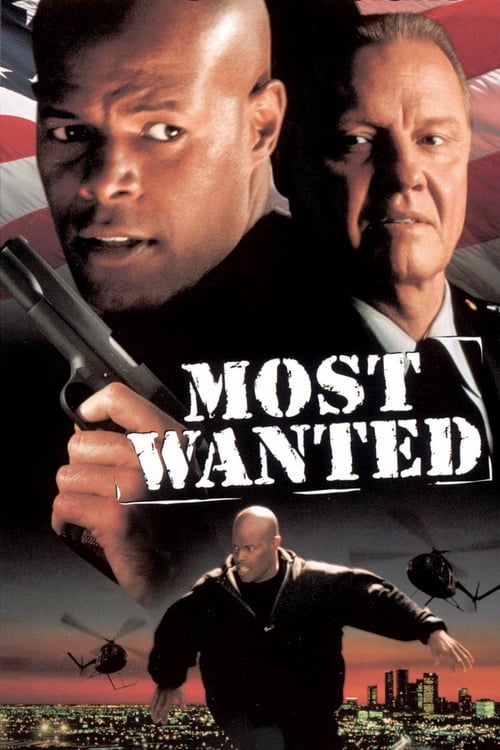
Most Wanted
A Marine on death row is recruited by a shadowy U.S. military officer as part of a top-secret ops team, then gets framed for murder when the team and its officer set him up as the fall guy for the assassination of the First Lady.
The film financial setback against its mid-range budget of $25.0M, earning $11.8M globally (-53% loss). While initial box office returns were modest, the film has gained appreciation for its innovative storytelling within the action genre.


Plot Structure
Story beats plotted across runtime


Narrative Arc
Emotional journey through the story's key moments
Story Circle
Blueprint 15-beat structure
Arcplot Score Breakdown
Weighted: Precision (70%) + Arc (15%) + Theme (15%)
Most Wanted (1997) demonstrates deliberately positioned plot construction, characteristic of David Hogan's storytelling approach. This structural analysis examines how the film's 15-point plot structure maps to proven narrative frameworks across 1 hour and 39 minutes. With an Arcplot score of 6.8, the film balances conventional beats with creative variation.
Structural Analysis
The Status Quo at 1 minutes (1% through the runtime) establishes Sgt. James Dunn is on death row in military prison for accidentally killing his commanding officer during a botched Marine operation. His world is one of confinement and disgrace.. Notably, this early placement immediately immerses viewers in the story world.
The inciting incident occurs at 12 minutes when Dunn is recruited by Casey for a black ops mission, told he'll be given a new identity and freedom if he completes it. His execution is faked, disrupting his status quo of awaiting death.. At 12% through the film, this Disruption aligns precisely with traditional story structure. This beat shifts the emotional landscape, launching the protagonist into the central conflict.
The First Threshold at 25 minutes marks the transition into Act II, occurring at 25% of the runtime. This illustrates the protagonist's commitment to Dunn actively chooses to participate in the assassination mission at a charity event, taking position as a sniper. He commits to the operation, crossing into the world of black ops conspiracy., moving from reaction to action.
At 50 minutes, the Midpoint arrives at 50% of the runtime—precisely centered, creating perfect narrative symmetry. Notably, this crucial beat Dunn discovers the full scope of the conspiracy—Casey and his team orchestrated everything to assassinate the First Lady and frame Dunn. The stakes raise as Dunn realizes powerful forces are hunting him and no one will believe him., fundamentally raising what's at risk. The emotional intensity shifts, dividing the narrative into clear before-and-after phases.
The Collapse moment at 74 minutes (75% through) represents the emotional nadir. Here, Dunn is captured by Casey's forces and faces certain death. His hope of exposing the conspiracy seems lost. Dr. Constantini is in danger, and the truth appears buried forever. All seems lost., shows the protagonist at their lowest point. This beat's placement in the final quarter sets up the climactic reversal.
The Second Threshold at 79 minutes initiates the final act resolution at 80% of the runtime. Dunn escapes and realizes he must use his elite Marine training—the very skills Casey exploited—to turn the tables. He synthesizes his combat expertise with the evidence he's gathered to mount a final offensive., demonstrating the transformation achieved throughout the journey.
Emotional Journey
Most Wanted's emotional architecture traces a deliberate progression across 15 carefully calibrated beats.
Narrative Framework
This structural analysis employs systematic plot point analysis that identifies crucial turning points. By mapping Most Wanted against these established plot points, we can identify how David Hogan utilizes or subverts traditional narrative conventions. The plot point approach reveals not only adherence to structural principles but also creative choices that distinguish Most Wanted within the action genre.
Comparative Analysis
Additional action films include The Bad Guys, Puss in Boots and Venom: The Last Dance.
Plot Points by Act
Act I
SetupStatus Quo
Sgt. James Dunn is on death row in military prison for accidentally killing his commanding officer during a botched Marine operation. His world is one of confinement and disgrace.
Theme
Lt. Col. Grant Casey tells Dunn that everyone deserves a second chance, and that he can redeem himself. This establishes the theme of redemption versus exploitation.
Worldbuilding
Dunn's background as a skilled Marine sniper is established, along with the circumstances of his imprisonment. Casey approaches him with a shadowy government operation, claiming to offer him freedom in exchange for covert work.
Disruption
Dunn is recruited by Casey for a black ops mission, told he'll be given a new identity and freedom if he completes it. His execution is faked, disrupting his status quo of awaiting death.
Resistance
Dunn undergoes training and preparation for the mission. He's hesitant about trusting Casey and the operation, debating whether this is truly a path to freedom or another trap. He meets his handler and learns the mission parameters.
Act II
ConfrontationFirst Threshold
Dunn actively chooses to participate in the assassination mission at a charity event, taking position as a sniper. He commits to the operation, crossing into the world of black ops conspiracy.
Mirror World
Dr. Victoria Constantini, a witness who saw Dunn at the scene, represents the moral mirror. She believes in truth and justice, contrasting with the world of deception Dunn has entered.
Premise
Dunn realizes he's been set up as a patsy for the First Lady's assassination. He becomes America's most wanted fugitive, on the run while trying to prove his innocence and expose the conspiracy. The premise delivers: wrongly accused man fighting the system.
Midpoint
Dunn discovers the full scope of the conspiracy—Casey and his team orchestrated everything to assassinate the First Lady and frame Dunn. The stakes raise as Dunn realizes powerful forces are hunting him and no one will believe him.
Opposition
Casey's team closes in on Dunn from all sides. Every attempt Dunn makes to prove his innocence is blocked. Dr. Constantini becomes a target. The conspiracy tightens its grip, and Dunn's options narrow as the nation's resources hunt him.
Collapse
Dunn is captured by Casey's forces and faces certain death. His hope of exposing the conspiracy seems lost. Dr. Constantini is in danger, and the truth appears buried forever. All seems lost.
Crisis
Dunn faces his darkest moment, contemplating his failures and the impossibility of his situation. He must find the will to fight back against overwhelming odds despite having seemingly no resources or allies.
Act III
ResolutionSecond Threshold
Dunn escapes and realizes he must use his elite Marine training—the very skills Casey exploited—to turn the tables. He synthesizes his combat expertise with the evidence he's gathered to mount a final offensive.
Synthesis
Dunn launches his counterattack, systematically taking down Casey's operatives and exposing the conspiracy. He protects Dr. Constantini, confronts Casey in a final showdown, and ensures the truth reaches the authorities who can act on it.
Transformation
Dunn is exonerated and truly free for the first time. Unlike the false freedom Casey offered, this is real redemption earned through his own courage and moral choice. He stands vindicated, transformed from patsy to hero.