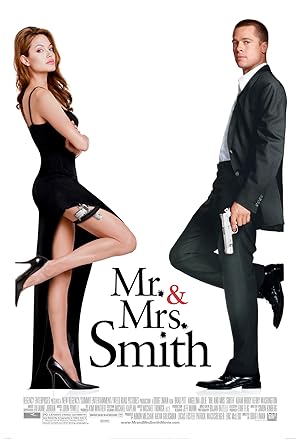
Mr. & Mrs. Smith
John and Jane Smith are a normal married couple, living a normal life in a normal suburb, working normal jobs...well, if you can call secretly being assassins "normal". But neither Jane nor John knows about their spouse's secret, until they are surprised to find each other as targets! But on their quest to kill each other, they learn a lot more about each other than they ever did in five (or six) years of marriage.
Despite a significant budget of $110.0M, Mr. & Mrs. Smith became a solid performer, earning $487.3M worldwide—a 343% return.
9 wins & 18 nominations


Plot Structure
Story beats plotted across runtime


Narrative Arc
Emotional journey through the story's key moments
Story Circle
Blueprint 15-beat structure
Arcplot Score Breakdown
Weighted: Precision (70%) + Arc (15%) + Theme (15%)
Mr. & Mrs. Smith (2005) exemplifies strategically placed story structure, characteristic of Doug Liman's storytelling approach. This structural analysis examines how the film's 15-point plot structure maps to proven narrative frameworks across 2 hours. With an Arcplot score of 6.7, the film balances conventional beats with creative variation.
Characters
Cast & narrative archetypes

John Smith
Jane Smith
Eddie
Main Cast & Characters
John Smith
Played by Brad Pitt
A bored construction company executive who is secretly an elite assassin, hiding his true profession from his wife.
Jane Smith
Played by Angelina Jolie
A tech support worker who is actually a deadly assassin, maintaining a double life hidden from her husband.
Eddie
Played by Vince Vaughn
John's best friend and work associate who provides tech support and comic relief.
Structural Analysis
The Status Quo at 1 minutes (1% through the runtime) establishes John and Jane Smith sit in marriage counseling, answering questions with rehearsed detachment. Their body language reveals a couple going through the motions of a stale, disconnected marriage—the perfect suburban facade hiding emotional distance.. The analysis reveals that this early placement immediately immerses viewers in the story world.
The inciting incident occurs at 14 minutes when Both John and Jane are independently assigned to eliminate the same target—Benjamin Danz. At the desert hit, they encounter each other unexpectedly, each recognizing the other as a competing assassin but not yet realizing the truth. Their parallel worlds are about to collide.. At 12% through the film, this Disruption aligns precisely with traditional story structure. This beat shifts the emotional landscape, launching the protagonist into the central conflict.
The First Threshold at 30 minutes marks the transition into Act II, occurring at 25% of the runtime. This shows the protagonist's commitment to Both receive simultaneous orders from their respective agencies: eliminate your spouse within 48 hours or be eliminated yourself. The Smiths' choice to accept the contracts—rather than run or confess—launches them into a deadly game where marriage becomes warfare., moving from reaction to action.
At 60 minutes, the Midpoint arrives at 50% of the runtime—precisely centered, creating perfect narrative symmetry. The analysis reveals that this crucial beat After destroying their home in brutal combat, John and Jane's fight transforms into passionate reconciliation. They have sex amidst the rubble—a false victory. They believe they've found honesty through violence, but haven't addressed the real issues. Both agencies now consider them compromised., fundamentally raising what's at risk. The emotional intensity shifts, dividing the narrative into clear before-and-after phases.
The Collapse moment at 90 minutes (75% through) represents the emotional nadir. Here, Cornered by dozens of assassins, with no backup and dwindling ammunition, John and Jane face certain death. Their professional identities—the lies that defined them—have brought them here. The "whiff of death" is literal: this is where their old selves, their old marriage, must die., indicates the protagonist at their lowest point. This beat's placement in the final quarter sets up the climactic reversal.
The Second Threshold at 96 minutes initiates the final act resolution at 80% of the runtime. John and Jane make the active choice to trust completely and fight back-to-back. "We're going to have to redo every conversation we've ever had." This synthesis—combining their individual skills with genuine partnership—transforms them from competing operatives into an unstoppable team., demonstrating the transformation achieved throughout the journey.
Emotional Journey
Mr. & Mrs. Smith's emotional architecture traces a deliberate progression across 15 carefully calibrated beats.
Narrative Framework
This structural analysis employs a 15-point narrative structure framework that maps key story moments. By mapping Mr. & Mrs. Smith against these established plot points, we can identify how Doug Liman utilizes or subverts traditional narrative conventions. The plot point approach reveals not only adherence to structural principles but also creative choices that distinguish Mr. & Mrs. Smith within the action genre.
Doug Liman's Structural Approach
Among the 11 Doug Liman films analyzed on Arcplot, the average structural score is 7.0, demonstrating varied approaches to story architecture. Mr. & Mrs. Smith takes a more unconventional approach compared to the director's typical style. For comparative analysis, explore the complete Doug Liman filmography.
Comparative Analysis
Additional action films include The Bad Guys, Puss in Boots and Venom: The Last Dance. For more Doug Liman analyses, see Swingers, The Bourne Identity and Chaos Walking.
Plot Points by Act
Act I
SetupStatus Quo
John and Jane Smith sit in marriage counseling, answering questions with rehearsed detachment. Their body language reveals a couple going through the motions of a stale, disconnected marriage—the perfect suburban facade hiding emotional distance.
Theme
The marriage counselor asks probing questions about intimacy and honesty: "How often do you have sex?" The Smiths' evasive, contradictory answers reveal the film's central theme—you cannot truly love someone you don't truly know. Real intimacy requires vulnerability.
Worldbuilding
Parallel sequences establish the Smiths' double lives. Jane runs a high-tech assassination firm disguised as a tech company. John operates from a construction front with his partner Eddie. Both maintain elaborate cover stories, weapons caches, and the mundane suburban existence that masks their deadly careers.
Disruption
Both John and Jane are independently assigned to eliminate the same target—Benjamin Danz. At the desert hit, they encounter each other unexpectedly, each recognizing the other as a competing assassin but not yet realizing the truth. Their parallel worlds are about to collide.
Resistance
Suspicion mounts as both Smiths investigate each other. Jane hacks databases while John interrogates contacts. The tension builds through loaded dinner conversations and near-discoveries. Each debates whether to confront the other, trapped between professional duty and marital denial.
Act II
ConfrontationFirst Threshold
Both receive simultaneous orders from their respective agencies: eliminate your spouse within 48 hours or be eliminated yourself. The Smiths' choice to accept the contracts—rather than run or confess—launches them into a deadly game where marriage becomes warfare.
Mirror World
Their marriage itself becomes the mirror world—the domestic battlefield where the theme plays out. Every marital ritual transforms: dinner becomes interrogation, the bedroom becomes a sniper's perch. Their relationship, stripped of pretense, finally becomes honest through attempted murder.
Premise
The promise of the premise delivers: married assassins trying to kill each other. Jane ambushes John at his office. John retaliates. A spectacular car chase ensues with both vehicles as weapons. The suburban home becomes a war zone as they reveal hidden arsenals and finally face off in their destroyed living room.
Midpoint
After destroying their home in brutal combat, John and Jane's fight transforms into passionate reconciliation. They have sex amidst the rubble—a false victory. They believe they've found honesty through violence, but haven't addressed the real issues. Both agencies now consider them compromised.
Opposition
United but hunted, the Smiths face escalating threats. Both agencies deploy kill squads. John's partner Eddie betrays them. Their temporary safe houses are compromised one by one. Trust remains fragile as old lies surface—how many kills? Who was that target? The external pressure exposes internal fractures.
Collapse
Cornered by dozens of assassins, with no backup and dwindling ammunition, John and Jane face certain death. Their professional identities—the lies that defined them—have brought them here. The "whiff of death" is literal: this is where their old selves, their old marriage, must die.
Crisis
In what may be their final moments, John and Jane achieve genuine intimacy. They confess the secrets they've held—real body counts, the depth of their deceptions, their fears. Facing death strips away the last pretenses. They choose each other not as cover identities but as true partners.
Act III
ResolutionSecond Threshold
John and Jane make the active choice to trust completely and fight back-to-back. "We're going to have to redo every conversation we've ever had." This synthesis—combining their individual skills with genuine partnership—transforms them from competing operatives into an unstoppable team.
Synthesis
The department store finale unleashes the Smiths as a unified force. Fighting in perfect synchronization, they eliminate waves of assassins. The battle showcases their complementary skills merged through trust. They defeat both agencies, destroying the systems that kept them apart and dishonest.
Transformation
Return to the marriage counselor's office. Unlike the opening, John and Jane sit close, touch naturally, and answer with playful honesty. "On a scale of one to ten, how happy are you?" Both answer enthusiastically—"Ten." Their marriage, rebuilt on truth and shared danger, is finally alive.