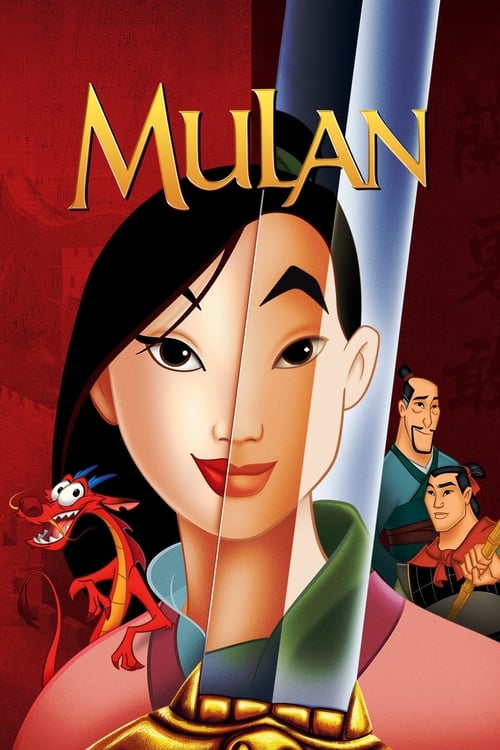
Mulan
To save her father from certain death in the army, a young woman secretly enlists in his place and becomes one of China's greatest heroines in the process.
Despite a significant budget of $90.0M, Mulan became a box office success, earning $304.3M worldwide—a 238% return.
Nominated for 1 Oscar. 17 wins & 21 nominations


Plot Structure
Story beats plotted across runtime


Narrative Arc
Emotional journey through the story's key moments
Story Circle
Blueprint 15-beat structure
Arcplot Score Breakdown
Weighted: Precision (70%) + Arc (15%) + Theme (15%)
Mulan (1998) exemplifies deliberately positioned story structure, characteristic of Tony Bancroft's storytelling approach. This structural analysis examines how the film's 15-point plot structure maps to proven narrative frameworks across 1 hour and 28 minutes. With an Arcplot score of 6.8, the film balances conventional beats with creative variation.
Characters
Cast & narrative archetypes

Fa Mulan
Mushu
Li Shang
Shan Yu
Fa Zhou
The Emperor of China
Main Cast & Characters
Fa Mulan
Played by Ming-Na Wen
A young woman who disguises herself as a man to take her elderly father's place in the army and defend China from the Huns.
Mushu
Played by Eddie Murphy
A disgraced dragon guardian who helps Mulan on her journey to restore his own honor.
Li Shang
Played by BD Wong
The army captain who trains Mulan and the other soldiers, eventually developing feelings for her.
Shan Yu
Played by Miguel Ferrer
The ruthless leader of the Hun army who invades China.
Fa Zhou
Played by Soon-Tek Oh
Mulan's elderly father and war veteran who is called to serve in the army despite his frail condition.
The Emperor of China
Played by Pat Morita
The wise and honorable ruler of China who recognizes Mulan's heroism.
Structural Analysis
The Status Quo at 1 minutes (1% through the runtime) establishes Mulan struggles to meet traditional expectations, failing disastrously at the matchmaker's. She feels she cannot bring honor to her family by being the perfect bride, revealing her internal conflict between duty and identity.. Notably, this early placement immediately immerses viewers in the story world.
The inciting incident occurs at 11 minutes when The Emperor's conscription order arrives: one man from every family must serve in the Imperial Army to fight the Hun invasion. Mulan's elderly, injured father is called despite his inability to fight, putting his life in certain danger.. At 13% through the film, this Disruption is delayed, allowing extended setup of the story world. This beat shifts the emotional landscape, launching the protagonist into the central conflict.
The First Threshold at 23 minutes marks the transition into Act II, occurring at 26% of the runtime. This indicates the protagonist's commitment to Mulan makes the active choice to cut her hair, take her father's armor and sword, and ride off to join the army in his place. She crosses into the masculine world, leaving behind her identity as a daughter and potential bride., moving from reaction to action.
At 45 minutes, the Midpoint arrives at 51% of the runtime—precisely centered, creating perfect narrative symmetry. Significantly, this crucial beat False victory: Mulan retrieves the arrow from the pole, proving herself worthy. Shang decides not to send her home. She has earned acceptance in the army, but the stakes raise—now she must face real combat, and her secret becomes more dangerous., fundamentally raising what's at risk. The emotional intensity shifts, dividing the narrative into clear before-and-after phases.
The Collapse moment at 64 minutes (73% through) represents the emotional nadir. Here, Shang discovers Mulan's true identity. Though he spares her life (repaying the debt of her saving him), he leaves her behind in the mountains, dishonored and alone. She has lost everything: her place in the army, Shang's respect, and her chance to bring honor to her family., illustrates the protagonist at their lowest point. This beat's placement in the final quarter sets up the climactic reversal.
The Second Threshold at 71 minutes initiates the final act resolution at 80% of the runtime. Mulan realizes the Huns are alive and headed for the Emperor. She races to the Imperial City to warn Shang and the army. She synthesizes her two worlds: using her intelligence and creativity (feminine skills) with her combat training (masculine skills) to save China., demonstrating the transformation achieved throughout the journey.
Emotional Journey
Mulan's emotional architecture traces a deliberate progression across 15 carefully calibrated beats.
Narrative Framework
This structural analysis employs a 15-point narrative structure framework that maps key story moments. By mapping Mulan against these established plot points, we can identify how Tony Bancroft utilizes or subverts traditional narrative conventions. The plot point approach reveals not only adherence to structural principles but also creative choices that distinguish Mulan within the animation genre.
Tony Bancroft's Structural Approach
Among the 2 Tony Bancroft films analyzed on Arcplot, the average structural score is 7.0, reflecting strong command of classical structure. Mulan takes a more unconventional approach compared to the director's typical style. For comparative analysis, explore the complete Tony Bancroft filmography.
Comparative Analysis
Additional animation films include The Bad Guys, Puss in Boots and Violet Evergarden: Eternity and the Auto Memory Doll. For more Tony Bancroft analyses, see Animal Crackers.
Plot Points by Act
Act I
SetupStatus Quo
Mulan struggles to meet traditional expectations, failing disastrously at the matchmaker's. She feels she cannot bring honor to her family by being the perfect bride, revealing her internal conflict between duty and identity.
Theme
Fa Zhou tells Mulan: "My, how beautiful you'll look. You'll bring honor to us all." Later, "The flower that blooms in adversity is the most rare and beautiful of all." The theme of finding honor through being true to oneself is planted.
Worldbuilding
We see Mulan's world: ancient China, family expectations, gender roles, and the looming threat of the Huns. Mulan's father is a war hero, and she feels immense pressure to honor her family despite her unconventional nature.
Disruption
The Emperor's conscription order arrives: one man from every family must serve in the Imperial Army to fight the Hun invasion. Mulan's elderly, injured father is called despite his inability to fight, putting his life in certain danger.
Resistance
Mulan debates whether to intervene. She argues with her father about his going to war, but he insists on fulfilling his duty. She prays to the ancestors for guidance, wrestling with her decision to break tradition.
Act II
ConfrontationFirst Threshold
Mulan makes the active choice to cut her hair, take her father's armor and sword, and ride off to join the army in his place. She crosses into the masculine world, leaving behind her identity as a daughter and potential bride.
Mirror World
Mulan meets Captain Li Shang at the training camp. He represents both a potential love interest and the thematic mirror—someone who must also reconcile duty with personal truth. Their relationship will teach Mulan about honor and authenticity.
Premise
The "fun and games" of Mulan's training montage. She struggles as "Ping," learns to fight, bonds with fellow soldiers (Yao, Ling, Chien-Po), and gradually becomes a skilled warrior. The promise of the premise: watching a woman succeed in a man's world.
Midpoint
False victory: Mulan retrieves the arrow from the pole, proving herself worthy. Shang decides not to send her home. She has earned acceptance in the army, but the stakes raise—now she must face real combat, and her secret becomes more dangerous.
Opposition
The troops march to war. They discover a destroyed village, raising the stakes emotionally. Mulan faces the Hun army and uses her intelligence to cause an avalanche, saving the army but getting wounded. Her secret is discovered when she's treated for injuries.
Collapse
Shang discovers Mulan's true identity. Though he spares her life (repaying the debt of her saving him), he leaves her behind in the mountains, dishonored and alone. She has lost everything: her place in the army, Shang's respect, and her chance to bring honor to her family.
Crisis
Mulan's dark night: "My duty is to my heart." She decides she cannot go home in shame. Mushu tries to console her. Then she sees that Shan Yu and the Huns survived the avalanche—new information that will propel her into Act 3.
Act III
ResolutionSecond Threshold
Mulan realizes the Huns are alive and headed for the Emperor. She races to the Imperial City to warn Shang and the army. She synthesizes her two worlds: using her intelligence and creativity (feminine skills) with her combat training (masculine skills) to save China.
Synthesis
The finale battle at the Imperial Palace. Mulan convinces her soldier friends to dress as concubines, uses unconventional tactics to rescue the Emperor, and defeats Shan Yu. She reveals her true identity and is accepted for who she really is, bringing honor to China and her family.
Transformation
Mulan returns home to her father, offering him the Emperor's crest and Shan Yu's sword. Fa Zhou tosses them aside and embraces her: "The greatest gift and honor is having you for a daughter." She has brought honor by being herself, not by conforming. Shang arrives, indicating a future relationship.