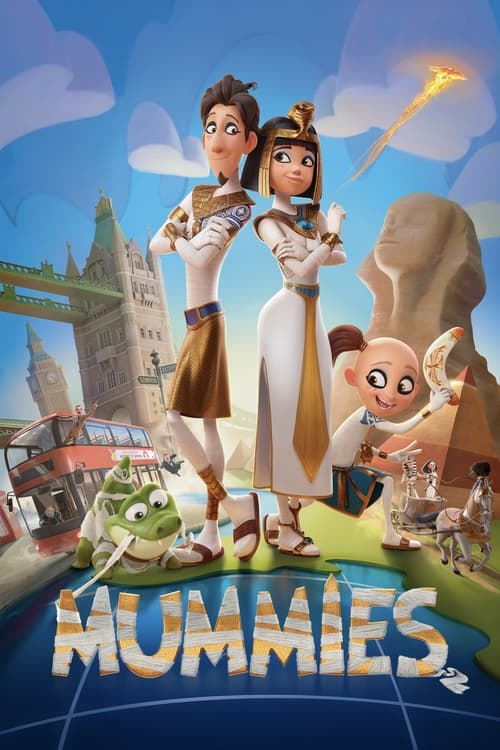
Mummies
Through a series of unfortunate events, three mummies end up in present-day London and embark on a wacky and hilarious journey in search of an old ring belonging to the Royal Family, stolen by ambitious archaeologist Lord Carnaby.
Despite its tight budget of $12.0M, Mummies became a box office success, earning $53.4M worldwide—a 345% return. The film's unconventional structure found its audience, illustrating how strong storytelling can transcend budget limitations.






Plot Structure
Story beats plotted across runtime


Narrative Arc
Emotional journey through the story's key moments
Story Circle
Blueprint 15-beat structure
Arcplot Score Breakdown
Weighted: Precision (70%) + Arc (15%) + Theme (15%)
Mummies (2023) reveals precise dramatic framework, characteristic of Juan Jesús García Galocha's storytelling approach. This structural analysis examines how the film's 15-point plot structure maps to proven narrative frameworks across 1 hour and 28 minutes. With an Arcplot score of 7.3, the film balances conventional beats with creative variation.
Structural Analysis
The Status Quo at 1 minutes (1% through the runtime) establishes Ancient Egypt: Thut, a chariot-racing champion and pampered prince, lives a life of luxury and glory, beloved by crowds but shallow in character, avoiding his royal responsibilities.. Notably, this early placement immediately immerses viewers in the story world.
The inciting incident occurs at 11 minutes when Thut is accidentally mummified alive during a ceremony after a mishap, awakening 3,000 years later in modern-day London, separated from everything he knew and his sacred duty.. At 12% through the film, this Disruption aligns precisely with traditional story structure. This beat shifts the emotional landscape, launching the protagonist into the central conflict.
The First Threshold at 22 minutes marks the transition into Act II, occurring at 25% of the runtime. This illustrates the protagonist's commitment to Thut makes the active choice to help protect modern-day Nefer and recover the ring, committing to become the hero he never was in ancient Egypt, entering the adventure in contemporary London., moving from reaction to action.
At 45 minutes, the Midpoint arrives at 51% of the runtime—precisely centered, creating perfect narrative symmetry. Notably, this crucial beat False victory: Thut and his team successfully recover the ring and believe they've won, celebrating their achievement, but this draws the antagonist's full attention and escalates the danger., fundamentally raising what's at risk. The emotional intensity shifts, dividing the narrative into clear before-and-after phases.
The Collapse moment at 66 minutes (75% through) represents the emotional nadir. Here, The antagonist captures Nefer and her family, taking the ring. Thut's cowardice causes him to fail those he loves, just as he failed in ancient Egypt. His worst fear is realized - he's still not a true hero., demonstrates the protagonist at their lowest point. This beat's placement in the final quarter sets up the climactic reversal.
The Second Threshold at 70 minutes initiates the final act resolution at 79% of the runtime. Thut realizes that true heroism means sacrificing glory for those you love - synthesizing his brother's ancient wisdom with what Nefer taught him. He chooses to face the enemy, not for fame, but for family., demonstrating the transformation achieved throughout the journey.
Emotional Journey
Mummies's emotional architecture traces a deliberate progression across 15 carefully calibrated beats.
Narrative Framework
This structural analysis employs proven narrative structure principles that track dramatic progression. By mapping Mummies against these established plot points, we can identify how Juan Jesús García Galocha utilizes or subverts traditional narrative conventions. The plot point approach reveals not only adherence to structural principles but also creative choices that distinguish Mummies within the animation genre.
Comparative Analysis
Additional animation films include The Bad Guys, The Quintessential Quintuplets Movie and Fate/stay night: Heaven's Feel I. Presage Flower.
Plot Points by Act
Act I
SetupStatus Quo
Ancient Egypt: Thut, a chariot-racing champion and pampered prince, lives a life of luxury and glory, beloved by crowds but shallow in character, avoiding his royal responsibilities.
Theme
Thut's brother Sekhem tells him that true greatness comes from protecting those you love, not from fame and glory - a lesson Thut dismisses as he prioritizes his racing career.
Worldbuilding
Introduction to ancient Egyptian world, Thut's royal family, his rivalry with his responsible brother Sekhem, his engagement to princess Nefer, and the sacred ring that must be protected from falling into the wrong hands.
Disruption
Thut is accidentally mummified alive during a ceremony after a mishap, awakening 3,000 years later in modern-day London, separated from everything he knew and his sacred duty.
Resistance
Thut struggles to adapt to the modern world, meets young girl Nefer (descendant of his fiancée) and her archaeologist father, learns that an evil treasure hunter seeks the ring, and debates whether to face this new reality or retreat.
Act II
ConfrontationFirst Threshold
Thut makes the active choice to help protect modern-day Nefer and recover the ring, committing to become the hero he never was in ancient Egypt, entering the adventure in contemporary London.
Mirror World
Thut bonds with young Nefer, who shows him that real heroism isn't about glory but about protecting family - she becomes his thematic mirror, embodying the lesson his brother tried to teach him.
Premise
The "fish out of water" fun: Thut navigates modern London with his mummy companions, experiences contemporary culture, engages in comedic mishaps, and pursues the ring while bonding with the family and learning what真正的 courage means.
Midpoint
False victory: Thut and his team successfully recover the ring and believe they've won, celebrating their achievement, but this draws the antagonist's full attention and escalates the danger.
Opposition
The treasure hunter intensifies his pursuit, Thut's old weaknesses resurface as pressure mounts, the family is put in increasing danger, and Thut faces the reality that he might not be the hero they need.
Collapse
The antagonist captures Nefer and her family, taking the ring. Thut's cowardice causes him to fail those he loves, just as he failed in ancient Egypt. His worst fear is realized - he's still not a true hero.
Crisis
Thut faces his deepest shame and regret, processing his failure and the cost of his selfishness. In his dark night, he must confront who he really is versus who he needs to become.
Act III
ResolutionSecond Threshold
Thut realizes that true heroism means sacrificing glory for those you love - synthesizing his brother's ancient wisdom with what Nefer taught him. He chooses to face the enemy, not for fame, but for family.
Synthesis
The finale: Thut leads the rescue mission, uses both ancient skills and modern lessons, confronts the villain, saves the family through genuine selfless courage, and proves his transformation into a true protector.
Transformation
Closing image mirrors the opening: Thut with Nefer and her family, but now he's a humble guardian who values love over glory, having become the hero his brother always knew he could be.