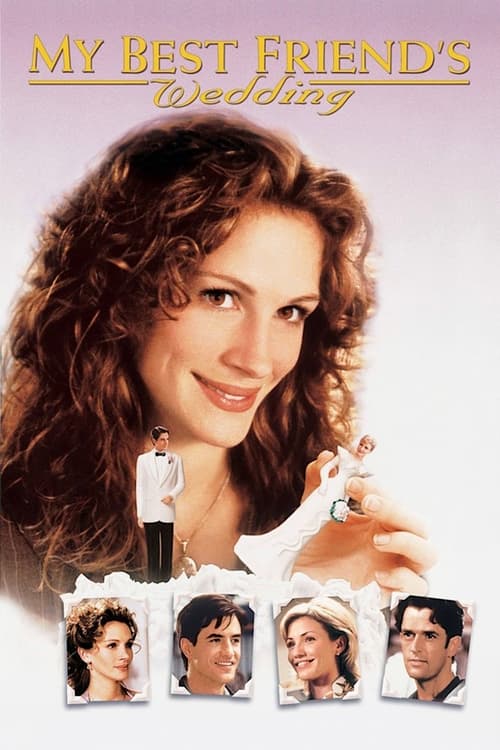
My Best Friend's Wedding
When she receives word that her longtime platonic pal Michael O'Neal is getting married to debutante Kimberly Wallace, food critic Julianne Potter realizes her true feelings for Michael -- and sets out to sabotage the wedding.
Despite a moderate budget of $38.0M, My Best Friend's Wedding became a runaway success, earning $299.3M worldwide—a remarkable 688% return.
Nominated for 1 Oscar. 12 wins & 24 nominations


Plot Structure
Story beats plotted across runtime


Narrative Arc
Emotional journey through the story's key moments
Story Circle
Blueprint 15-beat structure
Arcplot Score Breakdown
Weighted: Precision (70%) + Arc (15%) + Theme (15%)
My Best Friend's Wedding (1997) showcases strategically placed plot construction, characteristic of P.J. Hogan's storytelling approach. This structural analysis examines how the film's 15-point plot structure maps to proven narrative frameworks across 1 hour and 45 minutes. With an Arcplot score of 6.0, the film takes an unconventional approach to traditional narrative frameworks.
Characters
Cast & narrative archetypes

Julianne Potter
Michael O'Neal
Kimmy Wallace
George Downes
Main Cast & Characters
Julianne Potter
Played by Julia Roberts
A food critic who realizes she's in love with her best friend days before his wedding and schemes to break it up.
Michael O'Neal
Played by Dermot Mulroney
A charming sportswriter who is Julianne's best friend since college, now engaged to Kimmy.
Kimmy Wallace
Played by Cameron Diaz
A sweet, wealthy college student who is engaged to Michael and unknowingly becomes Julianne's rival.
George Downes
Played by Rupert Everett
Julianne's gay best friend and confidant who provides comic relief and moral support throughout her scheming.
Structural Analysis
The Status Quo at 1 minutes (1% through the runtime) establishes Julianne Potter is a successful food critic in New York, confident and independent, but emotionally guarded. A flashback establishes her college pact with Michael: if neither is married by 28, they'll marry each other.. Significantly, this early placement immediately immerses viewers in the story world.
The inciting incident occurs at 13 minutes when Michael calls Julianne to announce he's marrying Kimmy Wallace in four days. Julianne realizes with shock that she's in love with him. The pact is void, and her comfortable status quo is shattered.. At 12% through the film, this Disruption aligns precisely with traditional story structure. This beat shifts the emotional landscape, launching the protagonist into the central conflict.
The First Threshold at 26 minutes marks the transition into Act II, occurring at 25% of the runtime. This reveals the protagonist's commitment to Julianne commits to her scheme to break up Michael and Kimmy rather than confessing her feelings honestly. She chooses manipulation over truth, crossing into morally dubious territory as she begins actively sabotaging the wedding., moving from reaction to action.
At 53 minutes, the Midpoint arrives at 50% of the runtime—precisely centered, creating perfect narrative symmetry. Notably, this crucial beat The iconic karaoke scene where Kimmy sings "I Just Don't Know What to Do with Myself" badly, but the crowd rallies behind her. Julianne's attempt to humiliate Kimmy becomes a moment of triumph for her rival. False victory turns to defeat as Kimmy wins everyone over., fundamentally raising what's at risk. The emotional intensity shifts, dividing the narrative into clear before-and-after phases.
The Collapse moment at 79 minutes (75% through) represents the emotional nadir. Here, Julianne's deceptions are fully exposed. Kimmy discovers her betrayal, and Michael learns the extent of her manipulation. Julianne has destroyed her friendship with Michael and any moral high ground. She's lost everything and everyone's trust., illustrates the protagonist at their lowest point. This beat's placement in the final quarter sets up the climactic reversal.
The Second Threshold at 84 minutes initiates the final act resolution at 80% of the runtime. Julianne finally chooses selflessness. She goes to Kimmy, apologizes sincerely, and tells her that Michael truly loves her. She lets go of her schemes and accepts that Michael's happiness matters more than winning him., demonstrating the transformation achieved throughout the journey.
Emotional Journey
My Best Friend's Wedding's emotional architecture traces a deliberate progression across 15 carefully calibrated beats.
Narrative Framework
This structural analysis employs a 15-point narrative structure framework that maps key story moments. By mapping My Best Friend's Wedding against these established plot points, we can identify how P.J. Hogan utilizes or subverts traditional narrative conventions. The plot point approach reveals not only adherence to structural principles but also creative choices that distinguish My Best Friend's Wedding within the comedy genre.
P.J. Hogan's Structural Approach
Among the 4 P.J. Hogan films analyzed on Arcplot, the average structural score is 7.0, reflecting strong command of classical structure. My Best Friend's Wedding takes a more unconventional approach compared to the director's typical style. For comparative analysis, explore the complete P.J. Hogan filmography.
Comparative Analysis
Additional comedy films include The Bad Guys, Ella Enchanted and The Evening Star. For more P.J. Hogan analyses, see Muriel's Wedding, Peter Pan and Confessions of a Shopaholic.
Plot Points by Act
Act I
SetupStatus Quo
Julianne Potter is a successful food critic in New York, confident and independent, but emotionally guarded. A flashback establishes her college pact with Michael: if neither is married by 28, they'll marry each other.
Theme
George tells Julianne that she only wants Michael because she can't have him, and that real love means wanting someone's happiness even if it's not with you. "This is not about what he wants. This is about what you want."
Worldbuilding
We learn about Julianne's life as a respected food critic, her close friendship with Michael spanning nine years, their romantic history, and the pact they made. Her 28th birthday approaches, and she receives Michael's call announcing his engagement.
Disruption
Michael calls Julianne to announce he's marrying Kimmy Wallace in four days. Julianne realizes with shock that she's in love with him. The pact is void, and her comfortable status quo is shattered.
Resistance
Julianne debates what to do. George advises her to confess her feelings honestly. Instead, she decides to go to Chicago and win Michael back through manipulation. She meets Kimmy and the Wallace family, seeing how perfect and wealthy they are.
Act II
ConfrontationFirst Threshold
Julianne commits to her scheme to break up Michael and Kimmy rather than confessing her feelings honestly. She chooses manipulation over truth, crossing into morally dubious territory as she begins actively sabotaging the wedding.
Mirror World
George becomes Julianne's confidant and moral compass throughout her schemes. He represents what true friendship and love look like—honest, supportive, wanting the best for her even when it means telling her hard truths.
Premise
The "fun and games" of Julianne's scheming: she tries to make Kimmy look bad, exploits Kimmy's insecurities about giving up her career, creates awkward situations, and attempts to drive wedges between the couple. Each scheme backfires or makes things worse.
Midpoint
The iconic karaoke scene where Kimmy sings "I Just Don't Know What to Do with Myself" badly, but the crowd rallies behind her. Julianne's attempt to humiliate Kimmy becomes a moment of triumph for her rival. False victory turns to defeat as Kimmy wins everyone over.
Opposition
Julianne's schemes become more desperate and destructive. She forges an email to get Michael fired, enlists George to pose as her fiancé, and her lies compound. Michael and Kimmy's bond actually strengthens under pressure while Julianne's moral standing crumbles.
Collapse
Julianne's deceptions are fully exposed. Kimmy discovers her betrayal, and Michael learns the extent of her manipulation. Julianne has destroyed her friendship with Michael and any moral high ground. She's lost everything and everyone's trust.
Crisis
Julianne faces the consequences of her actions alone. George has returned to New York. She must confront who she's become and the damage she's caused. The wedding proceeds without her blessing or presence.
Act III
ResolutionSecond Threshold
Julianne finally chooses selflessness. She goes to Kimmy, apologizes sincerely, and tells her that Michael truly loves her. She lets go of her schemes and accepts that Michael's happiness matters more than winning him.
Synthesis
The wedding takes place. Julianne attends as a genuine friend, giving her blessing. She dances with Michael one last time, saying goodbye to her romantic fantasy. She reconciles with both Michael and Kimmy, accepting her role as friend rather than lover.
Transformation
At the reception, Julianne sits alone until George appears, having flown back. They dance together as she accepts that she has a different kind of love in her life. She's transformed from someone who manipulates to possess into someone who can love unselfishly.