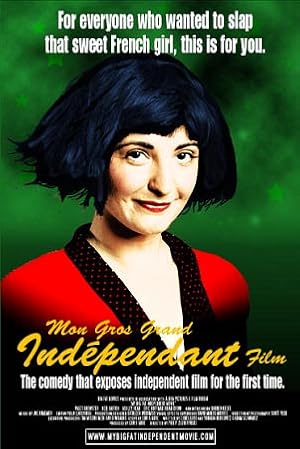
My Big Fat Independent Movie
"My Big Fat Independent Movie" is a spoof along the lines of "Scary Movie" and "Not Another Teen Movie." It includes parodies of some of the indie film world's most renowned movies such as "Memento," "Pulp Fiction," "Magnolia," "My Big Fat Greek Wedding," "Amelie," "Run Lola Run," "El Mariachi," "The Good Girl," "Pi," "Swingers" and many others.
Despite its tight budget of $3.0M, My Big Fat Independent Movie became a financial success, earning $12.2M worldwide—a 305% return. The film's bold vision engaged audiences, showing that strong storytelling can transcend budget limitations.
2 wins
Plot Structure
Story beats plotted across runtime


Narrative Arc
Emotional journey through the story's key moments
Story Circle
Blueprint 15-beat structure
Arcplot Score Breakdown
Weighted: Precision (70%) + Arc (15%) + Theme (15%)
My Big Fat Independent Movie (2005) reveals carefully calibrated story structure, characteristic of Philip Zlotorynski's storytelling approach. This structural analysis examines how the film's 15-point plot structure maps to proven narrative frameworks across 1 hour and 20 minutes. With an Arcplot score of 7.4, the film balances conventional beats with creative variation.
Characters
Cast & narrative archetypes

Johnny Vince
Sam
Harland Williams Character
Ashley
Jason Mewes Character
Bob Guiney Character
Main Cast & Characters
Johnny Vince
Played by Paget Brewster
Ambitious filmmaker trying to make his independent movie despite constant obstacles
Sam
Played by Neil Barton
Johnny's best friend and production partner who helps navigate the chaotic filmmaking process
Harland Williams Character
Played by Harland Williams
Eccentric actor bringing unpredictable energy to the production
Ashley
Played by Ashley Head
Love interest who becomes entangled in the filmmaking chaos
Jason Mewes Character
Played by Jason Mewes
Supporting actor in the film-within-a-film bringing street credibility
Bob Guiney Character
Played by Bob Guiney
Producer or investor with conflicting vision for the project
Structural Analysis
The Status Quo at 1 minutes (1% through the runtime) establishes Opening parody establishing the mundane world of struggling independent filmmakers and aspiring artists in their ordinary, dysfunctional lives.. Of particular interest, this early placement immediately immerses viewers in the story world.
The inciting incident occurs at 10 minutes when An opportunity arises that disrupts the status quo - a chance at mainstream success or a film festival acceptance that changes everything.. At 13% through the film, this Disruption is delayed, allowing extended setup of the story world. This beat shifts the emotional landscape, launching the protagonist into the central conflict.
The First Threshold at 20 minutes marks the transition into Act II, occurring at 25% of the runtime. This demonstrates the protagonist's commitment to The protagonists actively choose to pursue their shot at success, committing to the journey that will test their values and friendships., moving from reaction to action.
At 40 minutes, the Midpoint arrives at 50% of the runtime—precisely centered, creating perfect narrative symmetry. Notably, this crucial beat A false victory where success seems within reach, or a revelation that raises the stakes and changes the characters' understanding of their situation., fundamentally raising what's at risk. The emotional intensity shifts, dividing the narrative into clear before-and-after phases.
The Collapse moment at 60 minutes (75% through) represents the emotional nadir. Here, Everything falls apart - the project fails, relationships break, or the characters lose what they were fighting for in their darkest moment., shows the protagonist at their lowest point. This beat's placement in the final quarter sets up the climactic reversal.
The Second Threshold at 64 minutes initiates the final act resolution at 80% of the runtime. A realization or new information synthesizes their journey, showing them how to move forward authentically and resolve the central conflict., demonstrating the transformation achieved throughout the journey.
Emotional Journey
My Big Fat Independent Movie's emotional architecture traces a deliberate progression across 15 carefully calibrated beats.
Narrative Framework
This structural analysis employs a 15-point narrative structure framework that maps key story moments. By mapping My Big Fat Independent Movie against these established plot points, we can identify how Philip Zlotorynski utilizes or subverts traditional narrative conventions. The plot point approach reveals not only adherence to structural principles but also creative choices that distinguish My Big Fat Independent Movie within the comedy genre.
Comparative Analysis
Additional comedy films include The Bad Guys, Ella Enchanted and The Evening Star.
Plot Points by Act
Act I
SetupStatus Quo
Opening parody establishing the mundane world of struggling independent filmmakers and aspiring artists in their ordinary, dysfunctional lives.
Theme
A character states the thematic premise about authenticity versus selling out, foreshadowing the central conflict of artistic integrity.
Worldbuilding
Introduction of the ensemble cast of indie film archetypes, their quirks, relationships, and the underground film scene they inhabit.
Disruption
An opportunity arises that disrupts the status quo - a chance at mainstream success or a film festival acceptance that changes everything.
Resistance
Characters debate whether to pursue the opportunity, resist selling out, and navigate the tension between artistic vision and commercial viability.
Act II
ConfrontationFirst Threshold
The protagonists actively choose to pursue their shot at success, committing to the journey that will test their values and friendships.
Mirror World
Introduction of a relationship or mentor figure that represents the thematic counterpoint - perhaps someone who successfully balanced art and commerce.
Premise
The fun parody sequences exploring the indie film world, spoofing various independent film tropes and conventions with comedic set pieces.
Midpoint
A false victory where success seems within reach, or a revelation that raises the stakes and changes the characters' understanding of their situation.
Opposition
Complications intensify as the characters' flaws and competing interests create conflict, threatening their relationships and goals.
Collapse
Everything falls apart - the project fails, relationships break, or the characters lose what they were fighting for in their darkest moment.
Crisis
Characters process the loss and confront what really matters, experiencing their dark night before finding new clarity about their values.
Act III
ResolutionSecond Threshold
A realization or new information synthesizes their journey, showing them how to move forward authentically and resolve the central conflict.
Synthesis
The finale where characters execute their plan, confront their challenges, and resolve the story on their own terms with newfound wisdom.
Transformation
Closing image mirroring the opening but showing transformation - the characters in a new state having learned their lesson about authenticity and art.