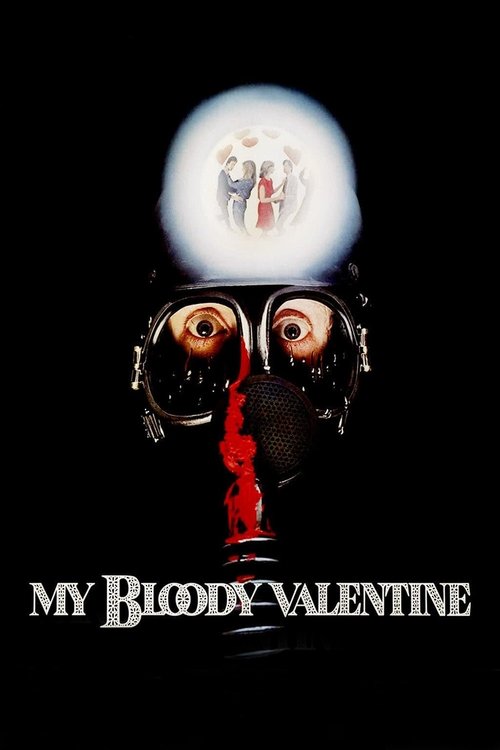
My Bloody Valentine
Twenty years after a Valentine's Day tragedy claimed the lives of five miners, Harry Warden returns for a vengeful massacre among teen sweethearts gearing up for another party.
Despite its tight budget of $2.2M, My Bloody Valentine became a commercial success, earning $5.7M worldwide—a 158% return.


Plot Structure
Story beats plotted across runtime


Narrative Arc
Emotional journey through the story's key moments
Story Circle
Blueprint 15-beat structure
Arcplot Score Breakdown
Weighted: Precision (70%) + Arc (15%) + Theme (15%)
My Bloody Valentine (1981) reveals strategically placed narrative design, characteristic of George Mihalka's storytelling approach. This structural analysis examines how the film's 15-point plot structure maps to proven narrative frameworks across 1 hour and 30 minutes. With an Arcplot score of 7.4, the film balances conventional beats with creative variation.
Characters
Cast & narrative archetypes

T.J. Hanniger

Sarah

Axel Palmer

Chief Jake Newby

Mayor Hanniger

Hollis
Main Cast & Characters
T.J. Hanniger
Played by Paul Kelman
Young miner who returns to Valentine Bluffs after a year away, trying to reconnect with his former girlfriend Sarah while a new killing spree begins.
Sarah
Played by Lori Hallier
A young woman caught in a love triangle between T.J. and Axel while the town faces a murderous threat.
Axel Palmer
Played by Neil Affleck
Aggressive miner and Sarah's current boyfriend who resents T.J.'s return and becomes increasingly volatile.
Chief Jake Newby
Played by Don Francks
The town police chief trying to prevent Valentine's Day celebrations and protect the town from Harry Warden's threat.
Mayor Hanniger
Played by Larry Reynolds
T.J.'s father and town mayor who dismisses warnings about celebrating Valentine's Day despite the past tragedy.
Hollis
Played by Keith Knight
Veteran miner and voice of reason who survived the original massacre and warns the younger generation.
Structural Analysis
The Status Quo at 1 minutes (1% through the runtime) establishes A woman in mining gear is seduced by a masked miner in a dark mine shaft. The romantic moment turns horrific as he impales her on a pickaxe—establishing the film's fusion of Valentine's Day romance and brutal violence.. The analysis reveals that this early placement immediately immerses viewers in the story world.
The inciting incident occurs at 11 minutes when The town receives a heart-shaped candy box containing a human heart and a warning note signed by Harry Warden: cancel the Valentine's dance or people will die. The twenty-year peace is shattered as the past returns to terrorize Valentine Bluffs.. At 12% through the film, this Disruption aligns precisely with traditional story structure. This beat shifts the emotional landscape, launching the protagonist into the central conflict.
The First Threshold at 23 minutes marks the transition into Act II, occurring at 25% of the runtime. This illustrates the protagonist's commitment to Despite the warnings and the official dance cancellation, T.J. And his friends decide to hold their Valentine's party at the Hanniger Mine recreation hall anyway. By choosing to defy the killer's threat and celebrate in the very location tied to the original tragedy, they cross into deadly territory., moving from reaction to action.
At 45 minutes, the Midpoint arrives at 50% of the runtime—precisely centered, creating perfect narrative symmetry. Structural examination shows that this crucial beat The group in the mine discovers Harriet's body hanging from the ceiling, her heart carved out. This is no longer a prank or an old legend—the killer is real, present, and hunting them underground. The party transforms into a fight for survival as they realize they're trapped in the mine with the murderer., fundamentally raising what's at risk. The emotional intensity shifts, dividing the narrative into clear before-and-after phases.
The Collapse moment at 68 minutes (75% through) represents the emotional nadir. Here, Hollis, trying to be a hero, is killed by the miner. T.J. And Sarah find his body and realize nearly everyone is dead. The killer has decimated their entire friend group. With no clear escape and bodies everywhere, hope seems lost in the darkness of the mine., indicates the protagonist at their lowest point. This beat's placement in the final quarter sets up the climactic reversal.
The Second Threshold at 72 minutes initiates the final act resolution at 80% of the runtime. Axel's behavior becomes erratic and violent. T.J. Realizes the horrifying truth: Axel is the killer. As a child, Axel witnessed Harry Warden murder his father, and the trauma broke something inside him. The anniversary of the dance triggered a psychotic break. The killer was among them all along—Sarah's boyfriend, T.J.'s rival., demonstrating the transformation achieved throughout the journey.
Emotional Journey
My Bloody Valentine's emotional architecture traces a deliberate progression across 15 carefully calibrated beats.
Narrative Framework
This structural analysis employs structural analysis methodology used to understand storytelling architecture. By mapping My Bloody Valentine against these established plot points, we can identify how George Mihalka utilizes or subverts traditional narrative conventions. The plot point approach reveals not only adherence to structural principles but also creative choices that distinguish My Bloody Valentine within the horror genre.
Comparative Analysis
Additional horror films include Thinner, A Nightmare on Elm Street and Mary Reilly.
Plot Points by Act
Act I
SetupStatus Quo
A woman in mining gear is seduced by a masked miner in a dark mine shaft. The romantic moment turns horrific as he impales her on a pickaxe—establishing the film's fusion of Valentine's Day romance and brutal violence.
Theme
Mayor Hanniger and the town elders discuss reviving the Valentine's dance after twenty years, with one elder warning: "Some things are better left buried." The theme emerges: suppressed trauma will resurface with deadly consequences when a community refuses to confront its past.
Worldbuilding
Valentine Bluffs is introduced as a working-class mining town preparing for its first Valentine's dance in two decades. We meet T.J., recently returned from out west, his ex-girlfriend Sarah who is now dating his friend Axel, and their group of young miner friends. The legend of Harry Warden is established through town gossip—a miner who went mad after being trapped underground and murdered those responsible.
Disruption
The town receives a heart-shaped candy box containing a human heart and a warning note signed by Harry Warden: cancel the Valentine's dance or people will die. The twenty-year peace is shattered as the past returns to terrorize Valentine Bluffs.
Resistance
Chief Newby and Mayor Hanniger debate whether to cancel the dance. The older generation recounts the Harry Warden massacre to the skeptical young miners. Meanwhile, T.J. struggles to reconnect with Sarah while Axel grows jealous. More bodies are discovered with their hearts removed. The town officially cancels the dance, but the young people decide to throw their own party at the mine.
Act II
ConfrontationFirst Threshold
Despite the warnings and the official dance cancellation, T.J. and his friends decide to hold their Valentine's party at the Hanniger Mine recreation hall anyway. By choosing to defy the killer's threat and celebrate in the very location tied to the original tragedy, they cross into deadly territory.
Mirror World
At the mine party, Sarah is caught between T.J. and Axel, forced to confront her feelings. The love triangle becomes the emotional heart of the film, mirroring the theme: just as the town cannot escape its violent past, Sarah cannot escape the consequences of unresolved relationships. Her choice will determine who survives.
Premise
The Valentine's party unfolds in the mine recreation hall with drinking, dancing, and romantic tension. The killer in miner's gear begins picking off partygoers one by one—a woman in a dryer, a man impaled on a shower head. The slasher film delivers its promised goods: creative kills in a claustrophobic industrial setting while the love triangle simmers. Some miners venture into the actual mine tunnels on a dare.
Midpoint
The group in the mine discovers Harriet's body hanging from the ceiling, her heart carved out. This is no longer a prank or an old legend—the killer is real, present, and hunting them underground. The party transforms into a fight for survival as they realize they're trapped in the mine with the murderer.
Opposition
Chaos erupts as the survivors split up in the mine tunnels. The killer systematically hunts them through the dark shafts—impaling Howard with a drill, killing Patty with a pickaxe. Chief Newby discovers the murders at the recreation hall and realizes the horror. T.J., Sarah, and Axel become separated as they try to find an exit. The mine itself becomes a character, its claustrophobic tunnels and industrial dangers adding to the terror.
Collapse
Hollis, trying to be a hero, is killed by the miner. T.J. and Sarah find his body and realize nearly everyone is dead. The killer has decimated their entire friend group. With no clear escape and bodies everywhere, hope seems lost in the darkness of the mine.
Crisis
T.J. and Sarah navigate the corpse-filled tunnels in despair, searching for any remaining survivors or a way out. They find Axel, seemingly wounded. The weight of the massacre presses down—their friends are gone, the legend has come true, and the killer is still hunting them in the darkness.
Act III
ResolutionSecond Threshold
Axel's behavior becomes erratic and violent. T.J. realizes the horrifying truth: Axel is the killer. As a child, Axel witnessed Harry Warden murder his father, and the trauma broke something inside him. The anniversary of the dance triggered a psychotic break. The killer was among them all along—Sarah's boyfriend, T.J.'s rival.
Synthesis
T.J. fights Axel in a brutal confrontation deep in the mine. Sarah flees through the tunnels as the two men battle. The fight moves through the cramped mine shafts, pickaxes swinging. T.J. manages to pin Axel, but Axel's arm becomes trapped in the mining machinery. Rather than be captured, Axel hacks off his own arm and escapes into the deeper tunnels, laughing maniacally and reciting Harry Warden's warning.
Transformation
T.J. and Sarah emerge from the mine, bloodied survivors of the massacre. The police descend, but Axel has vanished into the tunnels. The final image mirrors the opening—instead of romantic possibility corrupted by violence, we see survivors traumatized and a killer escaped. The town's buried past has claimed a new generation, and evil remains alive in the darkness below.