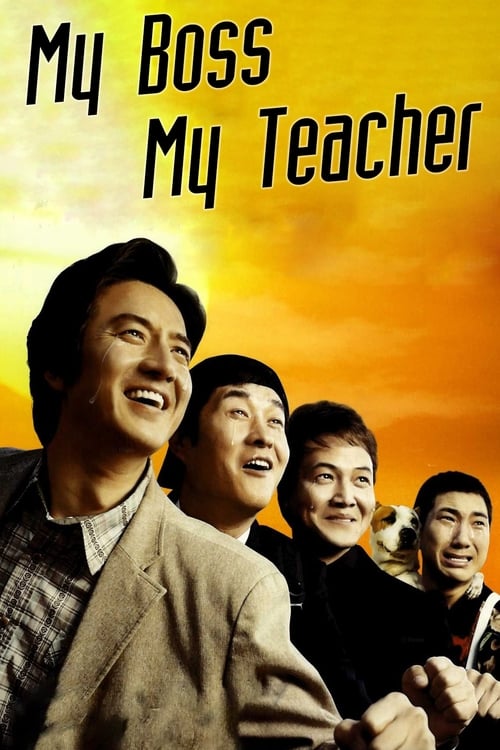
My Boss, My Teacher
A mobster must complete college and spend some time as an ethics teacher in order to receive a promotion to a coveted territory.
The film earned $30.6M at the global box office.
Plot Structure
Story beats plotted across runtime


Narrative Arc
Emotional journey through the story's key moments
Story Circle
Blueprint 15-beat structure
Arcplot Score Breakdown
Weighted: Precision (70%) + Arc (15%) + Theme (15%)
My Boss, My Teacher (2006) exemplifies meticulously timed story structure, characteristic of Kim Dong-won's storytelling approach. This structural analysis examines how the film's 15-point plot structure maps to proven narrative frameworks across 2 hours and 4 minutes. With an Arcplot score of 6.7, the film balances conventional beats with creative variation.
Characters
Cast & narrative archetypes

Kye Du-sik
Han Sang-doo
Soo-kyung
Principal
Rival Gang Boss
Main Cast & Characters
Kye Du-sik
Played by Jung Jun-ho
A gangster forced to go undercover as a high school teacher to protect a rival boss's daughter
Han Sang-doo
Played by Jung Woong-in
Du-sik's loyal gangster friend who poses as a student to support him
Soo-kyung
Played by Kim Sang-jung
A female student who becomes romantically interested in the new teacher
Principal
Played by Park Yeong-gyu
The school principal who is unaware of Du-sik's true identity
Rival Gang Boss
Played by Lee Geung-young
A rival gangster who threatens Du-sik's mission and territory
Structural Analysis
The Status Quo at 1 minutes (1% through the runtime) establishes Gyeong-tae, now a high school graduate, returns to his gangster life, operating as a powerful boss while trying to maintain his education credentials.. Notably, this early placement immediately immerses viewers in the story world.
The inciting incident occurs at 15 minutes when Gyeong-tae is ordered to become a high school teacher as part of the gang's plan to gain social legitimacy, forcing him into an impossible situation.. At 12% through the film, this Disruption aligns precisely with traditional story structure. This beat shifts the emotional landscape, launching the protagonist into the central conflict.
The First Threshold at 31 minutes marks the transition into Act II, occurring at 25% of the runtime. This shows the protagonist's commitment to Gyeong-tae makes the active choice to enter the school and take on his role as a teacher, crossing into the world of education despite his complete lack of qualifications., moving from reaction to action.
At 62 minutes, the Midpoint arrives at 50% of the runtime—precisely centered, creating perfect narrative symmetry. Significantly, this crucial beat False victory: Gyeong-tae successfully handles a school crisis using his street smarts, gaining genuine respect from students and faculty, making him believe he can maintain both worlds., fundamentally raising what's at risk. The emotional intensity shifts, dividing the narrative into clear before-and-after phases.
The Collapse moment at 92 minutes (74% through) represents the emotional nadir. Here, Gyeong-tae's true identity as a gangster is exposed to the school, destroying his teaching career and the respect he'd earned. His students feel betrayed, and his romantic relationship collapses., demonstrates the protagonist at their lowest point. This beat's placement in the final quarter sets up the climactic reversal.
The Second Threshold at 99 minutes initiates the final act resolution at 80% of the runtime. Gyeong-tae realizes that the respect he earned as a teacher was real, and he can use both his street experience and newfound teaching skills to protect his students from a genuine threat., demonstrating the transformation achieved throughout the journey.
Emotional Journey
My Boss, My Teacher's emotional architecture traces a deliberate progression across 15 carefully calibrated beats.
Narrative Framework
This structural analysis employs structural analysis methodology used to understand storytelling architecture. By mapping My Boss, My Teacher against these established plot points, we can identify how Kim Dong-won utilizes or subverts traditional narrative conventions. The plot point approach reveals not only adherence to structural principles but also creative choices that distinguish My Boss, My Teacher within the action genre.
Kim Dong-won's Structural Approach
Among the 2 Kim Dong-won films analyzed on Arcplot, the average structural score is 6.7, demonstrating varied approaches to story architecture. My Boss, My Teacher exemplifies the director's characteristic narrative technique. For comparative analysis, explore the complete Kim Dong-won filmography.
Comparative Analysis
Additional action films include The Bad Guys, Puss in Boots and Venom: The Last Dance. For more Kim Dong-won analyses, see City of Damnation.
Plot Points by Act
Act I
SetupStatus Quo
Gyeong-tae, now a high school graduate, returns to his gangster life, operating as a powerful boss while trying to maintain his education credentials.
Theme
A teacher tells Gyeong-tae: "Real power comes from respect, not fear" - establishing the film's exploration of authority, education, and personal transformation.
Worldbuilding
Introduction to Gyeong-tae's dual world: managing gang operations while dealing with pressure from his organization to complete his education. His boss pushes him toward teaching to legitimize their operations.
Disruption
Gyeong-tae is ordered to become a high school teacher as part of the gang's plan to gain social legitimacy, forcing him into an impossible situation.
Resistance
Gyeong-tae resists the teaching assignment, struggles with his inadequacy, and debates whether he can pull off this deception. His gang members help him prepare, coaching him on how to act like a teacher.
Act II
ConfrontationFirst Threshold
Gyeong-tae makes the active choice to enter the school and take on his role as a teacher, crossing into the world of education despite his complete lack of qualifications.
Mirror World
Gyeong-tae meets a fellow teacher who becomes his mentor and potential love interest, representing the legitimate, educated world he's been faking his way into.
Premise
The fish-out-of-water comedy as Gyeong-tae fumbles through teaching, creating chaos in the classroom, dealing with troublesome students using gangster methods, and slowly earning unexpected respect.
Midpoint
False victory: Gyeong-tae successfully handles a school crisis using his street smarts, gaining genuine respect from students and faculty, making him believe he can maintain both worlds.
Opposition
Complications mount as rival gangs threaten his operation, students discover hints of his real identity, and his double life becomes increasingly difficult to maintain. The pressure from both worlds intensifies.
Collapse
Gyeong-tae's true identity as a gangster is exposed to the school, destroying his teaching career and the respect he'd earned. His students feel betrayed, and his romantic relationship collapses.
Crisis
Gyeong-tae faces the emotional aftermath of his exposure, questioning who he really is and whether he can ever be more than a gangster. His students avoid him, and he must confront his self-worth.
Act III
ResolutionSecond Threshold
Gyeong-tae realizes that the respect he earned as a teacher was real, and he can use both his street experience and newfound teaching skills to protect his students from a genuine threat.
Synthesis
Gyeong-tae combines his gangster abilities with his teaching heart to save his students from danger, confronts rival gangs, and proves that his transformation, while imperfect, was genuine.
Transformation
Final image shows Gyeong-tae finding a new path that honors both sides of himself - no longer purely a gangster or purely a teacher, but someone who has genuinely grown through the experience.