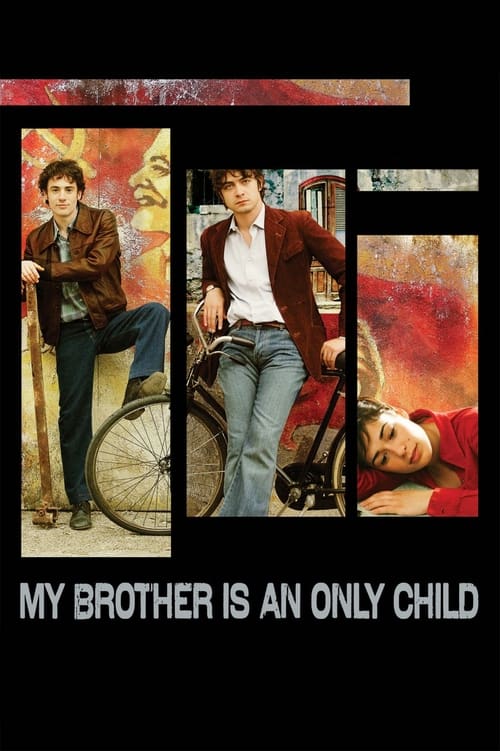
My Brother Is an Only Child
Accio and Manrico are siblings from a working-class family in 1960s Italy: older Manrico is handsome, charismatic, and loved by all, while younger Accio is sulky, hot-headed, and treats life as a battleground — much to his parents' chagrin. After the former is drawn into left-wing politics, Accio joins the fascists out of spite, but his flimsy beliefs are put to test when he falls for Manrico's like-minded girlfriend.
Working with a modest budget of $5.0M, the film achieved a modest success with $6.5M in global revenue (+29% profit margin).
19 wins & 29 nominations
Plot Structure
Story beats plotted across runtime


Narrative Arc
Emotional journey through the story's key moments
Story Circle
Blueprint 15-beat structure
Arcplot Score Breakdown
Weighted: Precision (70%) + Arc (15%) + Theme (15%)
My Brother Is an Only Child (2007) demonstrates carefully calibrated story structure, characteristic of Daniele Luchetti's storytelling approach. This structural analysis examines how the film's 15-point plot structure maps to proven narrative frameworks across 1 hour and 48 minutes. With an Arcplot score of 6.8, the film balances conventional beats with creative variation.
Characters
Cast & narrative archetypes

Accio Benassi
Manrico Benassi
Francesca
Ettore Benassi
Violetta Benassi
Main Cast & Characters
Accio Benassi
Played by Elio Germano
Impulsive younger brother who moves from fascism to communism, searching for identity and purpose in 1960s-70s Italy.
Manrico Benassi
Played by Riccardo Scamarcio
Charismatic older brother and communist activist who becomes Accio's political mentor and rival.
Francesca
Played by Diane Fleri
Beautiful literature student and communist activist who becomes the romantic interest of both brothers.
Ettore Benassi
Played by Luca Zingaretti
Traditional working-class father trying to maintain authority and values in a changing political landscape.
Violetta Benassi
Played by Angela Finocchiaro
Patient mother managing family tensions and supporting her sons despite their political extremes.
Structural Analysis
The Status Quo at 1 minutes (1% through the runtime) establishes Young Accio narrates his childhood in 1960s Italy, establishing his role as the rebellious younger brother in a working-class family during a time of political upheaval.. Of particular interest, this early placement immediately immerses viewers in the story world.
The inciting incident occurs at 13 minutes when Accio, seeking to rebel against his communist brother, joins a fascist group, creating deep conflict within his family and setting him on a path of political extremism.. At 12% through the film, this Disruption aligns precisely with traditional story structure. This beat shifts the emotional landscape, launching the protagonist into the central conflict.
The First Threshold at 27 minutes marks the transition into Act II, occurring at 25% of the runtime. This reveals the protagonist's commitment to Accio meets Francesca, Manrico's beautiful communist girlfriend, and becomes infatuated with her, beginning his emotional journey that will challenge his fascist beliefs., moving from reaction to action.
At 54 minutes, the Midpoint arrives at 50% of the runtime—precisely centered, creating perfect narrative symmetry. Of particular interest, this crucial beat Accio and Francesca begin a secret affair, representing a false victory - he believes he can have both worlds, but this betrayal of his brother and his political group cannot last., fundamentally raising what's at risk. The emotional intensity shifts, dividing the narrative into clear before-and-after phases.
The Collapse moment at 81 minutes (75% through) represents the emotional nadir. Here, Accio's affair with Francesca is discovered by Manrico, destroying their brotherhood and forcing Accio to confront the human cost of his political choices and betrayals., illustrates the protagonist at their lowest point. This beat's placement in the final quarter sets up the climactic reversal.
The Second Threshold at 87 minutes initiates the final act resolution at 81% of the runtime. Accio renounces his fascist past and attempts reconciliation with his brother, understanding that family and human connection matter more than political ideology., demonstrating the transformation achieved throughout the journey.
Emotional Journey
My Brother Is an Only Child's emotional architecture traces a deliberate progression across 15 carefully calibrated beats.
Narrative Framework
This structural analysis employs systematic plot point analysis that identifies crucial turning points. By mapping My Brother Is an Only Child against these established plot points, we can identify how Daniele Luchetti utilizes or subverts traditional narrative conventions. The plot point approach reveals not only adherence to structural principles but also creative choices that distinguish My Brother Is an Only Child within the comedy genre.
Comparative Analysis
Additional comedy films include The Bad Guys, Ella Enchanted and The Evening Star.
Plot Points by Act
Act I
SetupStatus Quo
Young Accio narrates his childhood in 1960s Italy, establishing his role as the rebellious younger brother in a working-class family during a time of political upheaval.
Theme
A family member or priest tells young Accio that "everyone must find their own path" - foreshadowing his journey between opposing political ideologies and his search for identity.
Worldbuilding
Establishment of the Benassi family dynamics, Accio's expulsion from seminary, his brother Manrico's communist activism, and the politically divided Italy of the 1960s-70s.
Disruption
Accio, seeking to rebel against his communist brother, joins a fascist group, creating deep conflict within his family and setting him on a path of political extremism.
Resistance
Accio navigates his involvement with the fascist movement while struggling with family rejection and his own doubts about the violent ideology he's embraced.
Act II
ConfrontationFirst Threshold
Accio meets Francesca, Manrico's beautiful communist girlfriend, and becomes infatuated with her, beginning his emotional journey that will challenge his fascist beliefs.
Mirror World
Accio and Francesca share meaningful conversations that expose him to humanist values and empathy, representing the thematic opposite of his fascist rigidity.
Premise
Accio lives a double life - publicly a fascist militant while secretly drawn to Francesca and the communist ideals, exploring the tension between ideology and human connection.
Midpoint
Accio and Francesca begin a secret affair, representing a false victory - he believes he can have both worlds, but this betrayal of his brother and his political group cannot last.
Opposition
Political violence escalates, Accio's dual loyalties become increasingly untenable, and the consequences of his choices close in as both his brother and his fascist comrades grow suspicious.
Collapse
Accio's affair with Francesca is discovered by Manrico, destroying their brotherhood and forcing Accio to confront the human cost of his political choices and betrayals.
Crisis
Accio faces the emotional wreckage of his actions - estranged from his family, rejected by Francesca, and disillusioned with the violence of fascism.
Act III
ResolutionSecond Threshold
Accio renounces his fascist past and attempts reconciliation with his brother, understanding that family and human connection matter more than political ideology.
Synthesis
The passage of time shows Accio and Manrico's gradual reconciliation as brothers, transcending their political differences through shared family experiences and maturity.
Transformation
An older Accio reflects on his journey, now at peace with his brother, having learned that identity comes not from ideology but from love, family, and personal growth.