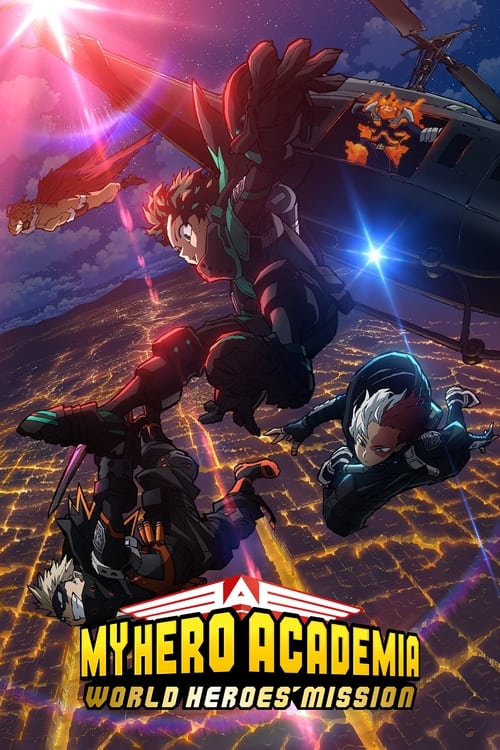
My Hero Academia: World Heroes' Mission
A mysterious group called Humarize strongly believes in the Quirk Singularity Doomsday theory which states that when quirks get mixed further in with future generations, that power will bring forth the end of humanity. In order to save everyone, the Pro-Heroes around the world ask UA Academy heroes-in-training to assist them and form a world-class selected hero team. It’s up to the heroes to save the world and the future of heroes in what is the most dangerous crisis to take place yet in My Hero Academia.
The film earned $46.9M at the global box office.











Plot Structure
Story beats plotted across runtime


Narrative Arc
Emotional journey through the story's key moments
Story Circle
Blueprint 15-beat structure
Arcplot Score Breakdown
Weighted: Precision (70%) + Arc (15%) + Theme (15%)
My Hero Academia: World Heroes' Mission (2021) demonstrates strategically placed narrative architecture, characteristic of Kenji Nagasaki's storytelling approach. This structural analysis examines how the film's 15-point plot structure maps to proven narrative frameworks across 1 hour and 45 minutes. With an Arcplot score of 7.0, the film balances conventional beats with creative variation.
Structural Analysis
The Status Quo at 1 minutes (1% through the runtime) establishes Heroes across the world perform their duties. Deku, Bakugo, and Todoroki are established as upcoming pro heroes working together, showcasing their current level of teamwork and confidence.. Structural examination shows that this early placement immediately immerses viewers in the story world.
The inciting incident occurs at 13 minutes when Bombs are discovered worldwide set to detonate simultaneously, threatening mass casualties. Deku encounters Rody Soul during a briefing interruption, and shortly after, Deku is framed for mass murder when an explosion kills multiple heroes and agents.. At 12% through the film, this Disruption aligns precisely with traditional story structure. This beat shifts the emotional landscape, launching the protagonist into the central conflict.
The First Threshold at 26 minutes marks the transition into Act II, occurring at 25% of the runtime. This demonstrates the protagonist's commitment to Deku makes the active choice to trust Rody despite his betrayal and decides to pursue Humarise actively rather than simply evade capture. He commits to stopping the bombs and saving everyone, even while branded a villain., moving from reaction to action.
At 53 minutes, the Midpoint arrives at 50% of the runtime—precisely centered, creating perfect narrative symmetry. Significantly, this crucial beat False defeat: Deku and Rody are cornered by Humarise forces. The truth is revealed that the bombs (Ideo Trigger devices) will cause Quirk users to lose control and destroy everything. The stakes escalate from terrorism to potential apocalypse. The plan is far worse than imagined., fundamentally raising what's at risk. The emotional intensity shifts, dividing the narrative into clear before-and-after phases.
The Collapse moment at 79 minutes (75% through) represents the emotional nadir. Here, Deku is severely injured and his Quirk begins to fail him. Rody appears to sacrifice himself to save Deku, seemingly dying in an explosion. The bombs' countdown reaches critical status worldwide with seemingly no way to stop them all in time., reveals the protagonist at their lowest point. This beat's placement in the final quarter sets up the climactic reversal.
The Second Threshold at 84 minutes initiates the final act resolution at 80% of the runtime. Rody survives and reunites with Deku, revealing crucial information about Humarise's headquarters. Deku realizes that by combining his power with his friends worldwide and trusting in others (the film's theme), they can stop all the bombs. He accepts he cannot save everyone alone., demonstrating the transformation achieved throughout the journey.
Emotional Journey
My Hero Academia: World Heroes' Mission's emotional architecture traces a deliberate progression across 15 carefully calibrated beats.
Narrative Framework
This structural analysis employs structural analysis methodology used to understand storytelling architecture. By mapping My Hero Academia: World Heroes' Mission against these established plot points, we can identify how Kenji Nagasaki utilizes or subverts traditional narrative conventions. The plot point approach reveals not only adherence to structural principles but also creative choices that distinguish My Hero Academia: World Heroes' Mission within the animation genre.
Kenji Nagasaki's Structural Approach
Among the 3 Kenji Nagasaki films analyzed on Arcplot, the average structural score is 7.4, reflecting strong command of classical structure. My Hero Academia: World Heroes' Mission takes a more unconventional approach compared to the director's typical style. For comparative analysis, explore the complete Kenji Nagasaki filmography.
Comparative Analysis
Additional animation films include The Bad Guys, The Quintessential Quintuplets Movie and Fate/stay night: Heaven's Feel I. Presage Flower. For more Kenji Nagasaki analyses, see My Hero Academia: Heroes Rising, My Hero Academia: Two Heroes.
Plot Points by Act
Act I
SetupStatus Quo
Heroes across the world perform their duties. Deku, Bakugo, and Todoroki are established as upcoming pro heroes working together, showcasing their current level of teamwork and confidence.
Theme
Introduction of Humarise's ideology that Quirks will doom humanity. Their leader Flect Turn states that they must "save humanity" by eliminating all Quirk users, establishing the thematic conflict between fear-based division and heroic unity.
Worldbuilding
Establishment of the global threat: Humarise is a cult-like organization that believes Quirks will cause human extinction. Heroes are deployed worldwide. The World Hero Association coordinates international response. Deku, Bakugo, and Todoroki are assigned to the Otheon branch.
Disruption
Bombs are discovered worldwide set to detonate simultaneously, threatening mass casualties. Deku encounters Rody Soul during a briefing interruption, and shortly after, Deku is framed for mass murder when an explosion kills multiple heroes and agents.
Resistance
Deku becomes a fugitive, debating whether to run or fight. He reluctantly teams with Rody Soul, a cynical civilian who initially betrays him for money. Deku learns about Rody's tragic past and his motivation to protect his siblings. The hero system hunts Deku while he tries to prove his innocence.
Act II
ConfrontationFirst Threshold
Deku makes the active choice to trust Rody despite his betrayal and decides to pursue Humarise actively rather than simply evade capture. He commits to stopping the bombs and saving everyone, even while branded a villain.
Mirror World
Rody's relationship with Deku deepens as they bond over their desire to protect others. Rody, a Quirkless civilian acting selflessly, serves as the thematic mirror showing that heroism isn't about powers but about choices and heart.
Premise
Deku and Rody on the run, evading both heroes and villains. Action sequences showcasing their growing partnership. Bakugo and Todoroki independently investigate Deku's framing. The global hero network works to locate bombs while Deku pursues the truth about Humarise's plan.
Midpoint
False defeat: Deku and Rody are cornered by Humarise forces. The truth is revealed that the bombs (Ideo Trigger devices) will cause Quirk users to lose control and destroy everything. The stakes escalate from terrorism to potential apocalypse. The plan is far worse than imagined.
Opposition
Humarise closes in on Deku and Rody. The activation time for worldwide bombs approaches. Heroes worldwide struggle against Humarise agents. Deku's powers are pushed to the limit. Rody's past as a former pilot becomes crucial but also makes him a target.
Collapse
Deku is severely injured and his Quirk begins to fail him. Rody appears to sacrifice himself to save Deku, seemingly dying in an explosion. The bombs' countdown reaches critical status worldwide with seemingly no way to stop them all in time.
Crisis
Deku's darkest moment as he processes Rody's apparent death and the weight of global catastrophe. He questions whether he can be the hero who saves everyone. Brief mourning before resolve returns.
Act III
ResolutionSecond Threshold
Rody survives and reunites with Deku, revealing crucial information about Humarise's headquarters. Deku realizes that by combining his power with his friends worldwide and trusting in others (the film's theme), they can stop all the bombs. He accepts he cannot save everyone alone.
Synthesis
Final battle: Deku confronts Flect Turn while heroes worldwide simultaneously defuse bombs. Bakugo and Todoroki join the fight. Deku uses 100% One For All, breaking his limits. The power of unity and cooperation across nations defeats Humarise's ideology of division. All bombs are stopped.
Transformation
Deku is cleared of all charges. Rody reunites with his siblings, now able to provide for them honestly. The image mirrors the opening but shows growth: Deku has proven himself as a true hero who saves everyone regardless of borders, and Rody has found hope and friendship.