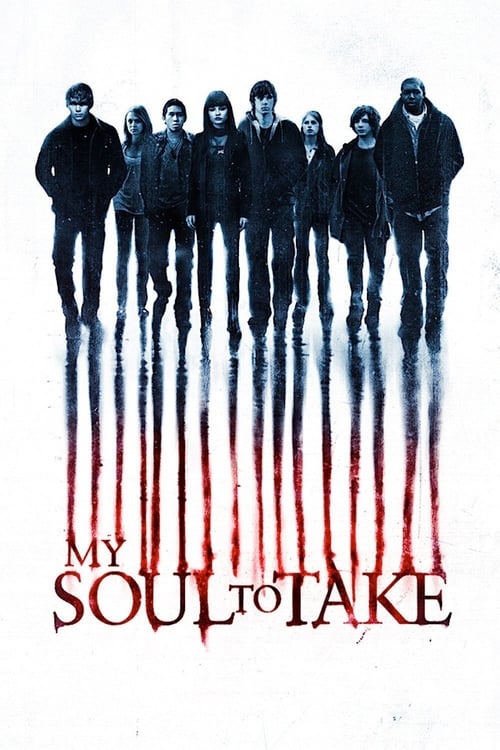
My Soul to Take
On the day the Riverton Ripper vanished without a trace, seven children were born. Today, they're all turning 16... and turning up dead.
The film underperformed commercially against its respectable budget of $25.0M, earning $21.5M globally (-14% loss).


Plot Structure
Story beats plotted across runtime


Narrative Arc
Emotional journey through the story's key moments
Story Circle
Blueprint 15-beat structure
Arcplot Score Breakdown
Weighted: Precision (70%) + Arc (15%) + Theme (15%)
My Soul to Take (2010) exemplifies deliberately positioned plot construction, characteristic of Wes Craven's storytelling approach. This structural analysis examines how the film's 15-point plot structure maps to proven narrative frameworks across 1 hour and 48 minutes. With an Arcplot score of 6.7, the film balances conventional beats with creative variation.
Structural Analysis
The Status Quo at 1 minutes (1% through the runtime) establishes The Riverton Ripper, a serial killer with multiple personalities, attacks his pregnant wife on the night seven children are born, establishing a dark legend that will haunt the town.. Notably, this early placement immediately immerses viewers in the story world.
The inciting incident occurs at 13 minutes when The first of the Riverton Seven is murdered on Bug's birthday, and Bug experiences disturbing visions suggesting a connection to the killings, disrupting his attempt at a normal life.. At 12% through the film, this Disruption aligns precisely with traditional story structure. This beat shifts the emotional landscape, launching the protagonist into the central conflict.
The First Threshold at 28 minutes marks the transition into Act II, occurring at 26% of the runtime. This illustrates the protagonist's commitment to Bug actively chooses to investigate the connection between himself, the other teens, and the Ripper, committing to uncovering the truth despite the danger and his own fears about what he might discover., moving from reaction to action.
At 54 minutes, the Midpoint arrives at 50% of the runtime—precisely centered, creating perfect narrative symmetry. The analysis reveals that this crucial beat Bug discovers that he himself contains multiple souls of the Ripper and that one of them is the killer - raising the stakes by making him both hunter and prey, protector and threat., fundamentally raising what's at risk. The emotional intensity shifts, dividing the narrative into clear before-and-after phases.
The Collapse moment at 81 minutes (75% through) represents the emotional nadir. Here, Bug loses control completely as the Ripper personality takes over, and those closest to him are in mortal danger. His worst fear is realized - he is the monster he's been hunting., indicates the protagonist at their lowest point. This beat's placement in the final quarter sets up the climactic reversal.
The Second Threshold at 87 minutes initiates the final act resolution at 80% of the runtime. Bug realizes he must confront and integrate all seven souls within himself - not fighting them but accepting them and choosing who he will be, synthesizing his fragmented identity into something whole., demonstrating the transformation achieved throughout the journey.
Emotional Journey
My Soul to Take's emotional architecture traces a deliberate progression across 15 carefully calibrated beats.
Narrative Framework
This structural analysis employs structural analysis methodology used to understand storytelling architecture. By mapping My Soul to Take against these established plot points, we can identify how Wes Craven utilizes or subverts traditional narrative conventions. The plot point approach reveals not only adherence to structural principles but also creative choices that distinguish My Soul to Take within the horror genre.
Wes Craven's Structural Approach
Among the 14 Wes Craven films analyzed on Arcplot, the average structural score is 7.0, demonstrating varied approaches to story architecture. My Soul to Take takes a more unconventional approach compared to the director's typical style. For comparative analysis, explore the complete Wes Craven filmography.
Comparative Analysis
Additional horror films include Thinner, Mary Reilly. For more Wes Craven analyses, see A Nightmare on Elm Street, Vampire in Brooklyn and The Serpent and the Rainbow.
Plot Points by Act
Act I
SetupStatus Quo
The Riverton Ripper, a serial killer with multiple personalities, attacks his pregnant wife on the night seven children are born, establishing a dark legend that will haunt the town.
Theme
Discussion of the "Riverton Seven" and the question of whether they harbor the Ripper's souls - exploring themes of identity, fate, and whether we are defined by forces beyond our control.
Worldbuilding
Introduction to present-day Riverton and the seven teenagers born the night the Ripper died. Bug is revealed as the protagonist - socially awkward, bullied, and struggling with his identity as he prepares for his 16th birthday.
Disruption
The first of the Riverton Seven is murdered on Bug's birthday, and Bug experiences disturbing visions suggesting a connection to the killings, disrupting his attempt at a normal life.
Resistance
Bug struggles with whether to investigate the murders or dismiss his visions as madness. He debates his role while experiencing more personality shifts and fragmentary memories that aren't his own.
Act II
ConfrontationFirst Threshold
Bug actively chooses to investigate the connection between himself, the other teens, and the Ripper, committing to uncovering the truth despite the danger and his own fears about what he might discover.
Mirror World
Bug's relationship with Fang deepens as she becomes his confidante, representing acceptance and the possibility of being understood despite his fractured sense of self.
Premise
Bug explores his theory that the Ripper's seven souls inhabit the seven teens. More murders occur as Bug confronts each of the remaining survivors, discovering their secrets and his own ability to shift between personalities.
Midpoint
Bug discovers that he himself contains multiple souls of the Ripper and that one of them is the killer - raising the stakes by making him both hunter and prey, protector and threat.
Opposition
The killings intensify as Bug's grip on his own identity weakens. The surviving teens turn on each other in paranoia, and Bug struggles to control the murderous personality emerging within him.
Collapse
Bug loses control completely as the Ripper personality takes over, and those closest to him are in mortal danger. His worst fear is realized - he is the monster he's been hunting.
Crisis
Bug experiences his dark night, confronting the reality that he contains the Ripper's essence and must find the strength within himself to overcome it or be consumed entirely.
Act III
ResolutionSecond Threshold
Bug realizes he must confront and integrate all seven souls within himself - not fighting them but accepting them and choosing who he will be, synthesizing his fragmented identity into something whole.
Synthesis
Bug faces the Ripper personality in a final confrontation, using his acceptance of all parts of himself to overcome the murderous impulse and save the remaining survivors, proving he can choose his own identity.
Transformation
Bug stands transformed, no longer the bullied outcast but someone who has integrated his fractured self into a whole person, having proven that identity is chosen, not inherited.