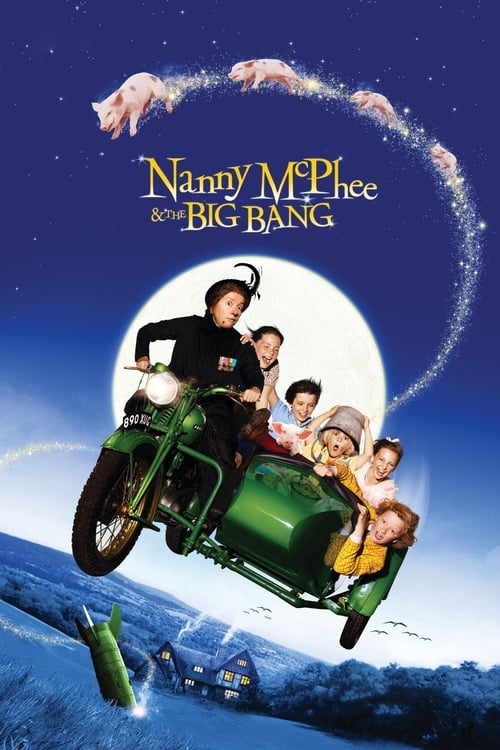
Nanny McPhee and the Big Bang
Nanny McPhee appears at the door of a harried young mother who is trying to run the family farm while her husband is away at war. But once she’s arrived, Nanny discovers that the children are fighting a war of their own against two spoiled city cousins who have just moved in. Relying on everything from a flying motorcycle and a statue that comes to life to a tree-climbing piglet and a baby elephant, Nanny uses her magic to teach her mischievous charges five new lessons.
Despite a respectable budget of $35.0M, Nanny McPhee and the Big Bang became a box office success, earning $93.3M worldwide—a 166% return.
1 win & 2 nominations


Plot Structure
Story beats plotted across runtime


Narrative Arc
Emotional journey through the story's key moments
Story Circle
Blueprint 15-beat structure
Arcplot Score Breakdown
Weighted: Precision (70%) + Arc (15%) + Theme (15%)
Nanny McPhee and the Big Bang (2010) exhibits deliberately positioned narrative architecture, characteristic of Susanna White's storytelling approach. This structural analysis examines how the film's 15-point plot structure maps to proven narrative frameworks across 1 hour and 49 minutes. With an Arcplot score of 6.9, the film balances conventional beats with creative variation.
Characters
Cast & narrative archetypes

Nanny McPhee
Isabel Green
Norman Green
Megsie Green
Vincent Green
Cyril Gray
Mrs. Docherty
Phil Green
Main Cast & Characters
Nanny McPhee
Played by Emma Thompson
A mysterious magical nanny who arrives to help the Green family during wartime, teaching children five important lessons through supernatural means.
Isabel Green
Played by Maggie Gyllenhaal
A struggling mother managing the farm alone while her husband fights in WWII, trying to keep her family together under financial pressure.
Norman Green
Played by Asa Butterfield
The eldest Green child, a responsible and protective boy who takes his role as man of the house seriously during his father's absence.
Megsie Green
Played by Lil Woods
The imaginative middle child who loves to read and write, finding escape in stories during difficult wartime circumstances.
Vincent Green
Played by Oscar Steer
The youngest Green child, energetic and innocent, who bonds with his cousins and learns courage through the story.
Cyril Gray
Played by Eros Vlahos
The snobbish eldest cousin from London, initially antagonistic but learns humility and cooperation during his time on the farm.
Mrs. Docherty
Played by Maggie Smith
The cheerful and supportive village shopkeeper who stands by Isabel and helps the community resist exploitation.
Phil Green
Played by Rhys Ifans
Isabel's gambling-addicted brother-in-law who attempts to force the sale of the farm to pay his debts, creating the central conflict.
Structural Analysis
The Status Quo at 1 minutes (1% through the runtime) establishes Isabel Green struggles to manage her farm and three children alone while her husband is away at war. The children are wild and undisciplined, the farm is failing, and Isabel is exhausted trying to hold everything together during WWII.. The analysis reveals that this early placement immediately immerses viewers in the story world.
The inciting incident occurs at 13 minutes when Nanny McPhee arrives unbidden at the Green farmhouse, banging her stick on the ground. At the same moment, Phil sends word that he's selling the farm unless Isabel pays an impossible debt, and his spoiled children Cyril and Celia arrive to stay, creating immediate chaos.. At 12% through the film, this Disruption aligns precisely with traditional story structure. This beat shifts the emotional landscape, launching the protagonist into the central conflict.
The First Threshold at 27 minutes marks the transition into Act II, occurring at 24% of the runtime. This shows the protagonist's commitment to The children choose to work together for the first time, deciding to put aside their differences and actively participate in Nanny McPhee's lessons. They commit to learning cooperation and begin taking responsibility for saving the farm, entering a new dynamic of teamwork., moving from reaction to action.
At 55 minutes, the Midpoint arrives at 50% of the runtime—precisely centered, creating perfect narrative symmetry. Of particular interest, this crucial beat False victory: The children successfully harvest the barley and believe they've saved the farm. They've learned to work together, and Isabel has the crop that will solve their financial problems. The stakes raise when Phil arrives with his scheme to force Isabel to sell, revealing the external threat is greater than they thought., fundamentally raising what's at risk. The emotional intensity shifts, dividing the narrative into clear before-and-after phases.
The Collapse moment at 80 minutes (73% through) represents the emotional nadir. Here, Phil destroys the barley harvest in an explosion, eliminating any chance of saving the farm. Isabel receives a telegram that appears to say her husband has been killed in action. All hope seems lost—the farm will be sold, the family broken apart, and their father is dead. The children's worst fears realized., demonstrates the protagonist at their lowest point. This beat's placement in the final quarter sets up the climactic reversal.
The Second Threshold at 86 minutes initiates the final act resolution at 79% of the runtime. The children realize the telegram was misread—their father is alive and coming home. This revelation, combined with everything Nanny McPhee has taught them about believing in themselves and working together, gives them the courage for one final stand. They choose to fight for their home using all five lessons., demonstrating the transformation achieved throughout the journey.
Emotional Journey
Nanny McPhee and the Big Bang's emotional architecture traces a deliberate progression across 15 carefully calibrated beats.
Narrative Framework
This structural analysis employs structural analysis methodology used to understand storytelling architecture. By mapping Nanny McPhee and the Big Bang against these established plot points, we can identify how Susanna White utilizes or subverts traditional narrative conventions. The plot point approach reveals not only adherence to structural principles but also creative choices that distinguish Nanny McPhee and the Big Bang within the comedy genre.
Susanna White's Structural Approach
Among the 2 Susanna White films analyzed on Arcplot, the average structural score is 6.7, demonstrating varied approaches to story architecture. Nanny McPhee and the Big Bang represents one of the director's most structurally precise works. For comparative analysis, explore the complete Susanna White filmography.
Comparative Analysis
Additional comedy films include The Bad Guys, Ella Enchanted and The Evening Star. For more Susanna White analyses, see Our Kind of Traitor.
Plot Points by Act
Act I
SetupStatus Quo
Isabel Green struggles to manage her farm and three children alone while her husband is away at war. The children are wild and undisciplined, the farm is failing, and Isabel is exhausted trying to hold everything together during WWII.
Theme
Mrs. Docherty tells Isabel that "There's always hope" when things seem darkest. This establishes the film's central theme about finding strength through family unity and believing in oneself even during impossible circumstances.
Worldbuilding
We see the Green family's chaotic world: three children (Norman, Megsie, Vincent) running wild, the farm in disarray, and Isabel receiving desperate letters demanding money from her brother-in-law Phil. The children refuse to help with farm work, creating elaborate pranks instead. Isabel's husband is fighting in the war, and she must manage everything alone.
Disruption
Nanny McPhee arrives unbidden at the Green farmhouse, banging her stick on the ground. At the same moment, Phil sends word that he's selling the farm unless Isabel pays an impossible debt, and his spoiled children Cyril and Celia arrive to stay, creating immediate chaos.
Resistance
The children resist Nanny McPhee's authority and refuse to cooperate with the "posh" London cousins. Nanny McPhee begins teaching her five lessons through magical consequences. The town and farm children are at war with each other, mirroring the larger conflict. Isabel debates whether to trust this strange nanny.
Act II
ConfrontationFirst Threshold
The children choose to work together for the first time, deciding to put aside their differences and actively participate in Nanny McPhee's lessons. They commit to learning cooperation and begin taking responsibility for saving the farm, entering a new dynamic of teamwork.
Mirror World
The relationship between the five children deepens as they discover common ground. Norman and Cyril begin to respect each other, and the cousins start appreciating farm life. This subplot carries the theme of unity across class divides and shows that cooperation conquers division.
Premise
The children embark on adventures learning Nanny McPhee's lessons through magical mishaps. They synchronize-swim with piglets, create controlled explosions, and work together to harvest the barley. The promise of the premise: watching spoiled and wild children transform through magical lessons while trying to save the farm from Uncle Phil.
Midpoint
False victory: The children successfully harvest the barley and believe they've saved the farm. They've learned to work together, and Isabel has the crop that will solve their financial problems. The stakes raise when Phil arrives with his scheme to force Isabel to sell, revealing the external threat is greater than they thought.
Opposition
Phil intensifies pressure on Isabel, scheming with the odious Miss Topsey and Miss Turvey to force the sale. The children's unity is tested as they try increasingly desperate measures to stop him. War comes closer to home with bombs falling nearby. The father's absence becomes more painful, and time runs out on the debt.
Collapse
Phil destroys the barley harvest in an explosion, eliminating any chance of saving the farm. Isabel receives a telegram that appears to say her husband has been killed in action. All hope seems lost—the farm will be sold, the family broken apart, and their father is dead. The children's worst fears realized.
Crisis
The family grieves together in their darkest moment. The children process the apparent death of their father and the loss of their home. Isabel breaks down, having fought so hard for nothing. Even Cyril and Celia feel the weight of loss, having come to love this family and farm. Nanny McPhee watches silently as they must find strength within themselves.
Act III
ResolutionSecond Threshold
The children realize the telegram was misread—their father is alive and coming home. This revelation, combined with everything Nanny McPhee has taught them about believing in themselves and working together, gives them the courage for one final stand. They choose to fight for their home using all five lessons.
Synthesis
The children execute an elaborate plan using all five lessons to outwit Phil and the horrible Miss Topsey and Turvey. They use cooperation, courage, imagination, and the bonds they've forged to defend their home. The father returns from war, and Phil's schemes are exposed. The family stands united, transformed by their trials.
Transformation
The Green family stands together—united, confident, and capable. The once-wild children are responsible and kind. Isabel is empowered rather than exhausted. The farm thrives. As Nanny McPhee walks away, now beautiful with her mission complete, the family no longer needs her because they've learned to believe in themselves.