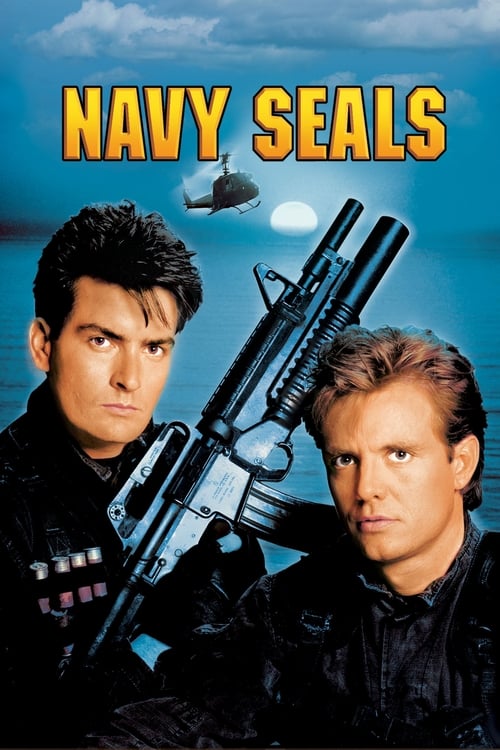
Navy Seals
During a rescue mission, a team of Navy Seals discovers that a terrorist group has access to deadly, US-built Stinger missiles and must set out to locate and destroy them before they can be used.
The film earned $25.1M at the global box office.


Plot Structure
Story beats plotted across runtime


Narrative Arc
Emotional journey through the story's key moments
Story Circle
Blueprint 15-beat structure
Arcplot Score Breakdown
Weighted: Precision (70%) + Arc (15%) + Theme (15%)
Navy Seals (1990) reveals deliberately positioned narrative design, characteristic of Lewis Teague's storytelling approach. This structural analysis examines how the film's 15-point plot structure maps to proven narrative frameworks across 1 hour and 53 minutes. With an Arcplot score of 6.5, the film balances conventional beats with creative variation.
Characters
Cast & narrative archetypes

Dale Hawkins
James Curran
Claire Varrens
Billy Graham
Dane
Leary
Ramos
Ben Shaheed
Main Cast & Characters
Dale Hawkins
Played by Charlie Sheen
Reckless and impulsive Navy SEAL who struggles with authority and following orders but is fiercely loyal to his team.
James Curran
Played by Michael Biehn
Dedicated and by-the-book Navy SEAL team leader who must balance mission objectives with his team's safety.
Claire Varrens
Played by Joanne Whalley
Resourceful journalist covering Middle East conflicts who becomes romantically involved with Hawkins.
Billy Graham
Played by Dennis Haysbert
Calm and religious Navy SEAL who serves as the team's moral compass and voice of reason.
Dane
Played by Rick Rossovich
Loyal and dependable Navy SEAL team member who supports Hawkins through thick and thin.
Leary
Played by Cyril O'Reilly
Tough and pragmatic Navy SEAL demolitions expert who provides technical expertise to the team.
Ramos
Played by Bill Paxton
Hot-headed Navy SEAL whose family man status adds emotional weight to the team's dangerous missions.
Ben Shaheed
Played by Nicholas Kadi
Ruthless terrorist leader who possesses stolen Stinger missiles and threatens American interests.
Structural Analysis
The Status Quo at 1 minutes (1% through the runtime) establishes The SEAL team celebrates a successful hostage rescue operation in Beirut, establishing Curran as a hotshot, reckless operator and Hawkins as his by-the-book partner.. The analysis reveals that this early placement immediately immerses viewers in the story world.
The inciting incident occurs at 13 minutes when Intelligence reveals that Stinger missiles from the Beirut operation have surfaced and are being sold by terrorist Ben Shaheed. The team is called to active duty for a critical mission.. At 12% through the film, this Disruption aligns precisely with traditional story structure. This beat shifts the emotional landscape, launching the protagonist into the central conflict.
The First Threshold at 27 minutes marks the transition into Act II, occurring at 24% of the runtime. This reveals the protagonist's commitment to The SEAL team launches their assault on Shaheed's compound. They actively choose to enter enemy territory, crossing into the world of direct combat with the terrorist network., moving from reaction to action.
At 57 minutes, the Midpoint arrives at 50% of the runtime—precisely centered, creating perfect narrative symmetry. Significantly, this crucial beat A mission goes wrong due to Curran's impulsive decision-making. The team barely escapes, and one of their own is seriously wounded. The false victory of their earlier successes collapses into real consequences., fundamentally raising what's at risk. The emotional intensity shifts, dividing the narrative into clear before-and-after phases.
The Collapse moment at 84 minutes (74% through) represents the emotional nadir. Here, Curran's best friend and teammate is killed in action, a direct result of his reckless tactics. This death forces Curran to confront the cost of his individualism. The "whiff of death" is literal and devastating., illustrates the protagonist at their lowest point. This beat's placement in the final quarter sets up the climactic reversal.
The Second Threshold at 90 minutes initiates the final act resolution at 79% of the runtime. Curran synthesizes his maverick skills with Hawkins' discipline and teamwork. He chooses to honor his fallen friend by leading one final mission - but this time as part of the team, not above it. The team reunites around him., demonstrating the transformation achieved throughout the journey.
Emotional Journey
Navy Seals's emotional architecture traces a deliberate progression across 15 carefully calibrated beats.
Narrative Framework
This structural analysis employs systematic plot point analysis that identifies crucial turning points. By mapping Navy Seals against these established plot points, we can identify how Lewis Teague utilizes or subverts traditional narrative conventions. The plot point approach reveals not only adherence to structural principles but also creative choices that distinguish Navy Seals within the action genre.
Lewis Teague's Structural Approach
Among the 3 Lewis Teague films analyzed on Arcplot, the average structural score is 6.7, demonstrating varied approaches to story architecture. Navy Seals takes a more unconventional approach compared to the director's typical style. For comparative analysis, explore the complete Lewis Teague filmography.
Comparative Analysis
Additional action films include The Bad Guys, Puss in Boots and Venom: The Last Dance. For more Lewis Teague analyses, see The Jewel of the Nile, Cat's Eye.
Plot Points by Act
Act I
SetupStatus Quo
The SEAL team celebrates a successful hostage rescue operation in Beirut, establishing Curran as a hotshot, reckless operator and Hawkins as his by-the-book partner.
Theme
Hawkins confronts Curran about his recklessness: "One of these days your cowboy bullshit is gonna get someone killed." The theme of individual glory vs. team responsibility is stated.
Worldbuilding
Introduction to the SEAL team dynamics, their training, and personal lives. Curran pursues journalist Claire, while tensions simmer between his maverick approach and military discipline. The team bonds through combat exercises.
Disruption
Intelligence reveals that Stinger missiles from the Beirut operation have surfaced and are being sold by terrorist Ben Shaheed. The team is called to active duty for a critical mission.
Resistance
Mission briefing and debate about the operation. The team prepares and deploys to the Middle East. Curran struggles with following orders while maintaining his relationship with Claire. Intelligence gathering on Shaheed's location.
Act II
ConfrontationFirst Threshold
The SEAL team launches their assault on Shaheed's compound. They actively choose to enter enemy territory, crossing into the world of direct combat with the terrorist network.
Mirror World
Curran's relationship with Claire deepens as she challenges his machismo and makes him consider what he's fighting for beyond personal glory. She represents the life and values outside of combat.
Premise
The "fun and games" of SEAL operations - tactical missions, firefights, and close calls. The team pursues Shaheed through multiple engagements, showcasing their skills while Curran's recklessness creates both victories and tension.
Midpoint
A mission goes wrong due to Curran's impulsive decision-making. The team barely escapes, and one of their own is seriously wounded. The false victory of their earlier successes collapses into real consequences.
Opposition
Shaheed gains the upper hand, anticipating the team's moves. Internal conflict escalates as Hawkins and others challenge Curran's leadership. The stakes rise as civilian casualties mount and political pressure increases to abort the mission.
Collapse
Curran's best friend and teammate is killed in action, a direct result of his reckless tactics. This death forces Curran to confront the cost of his individualism. The "whiff of death" is literal and devastating.
Crisis
Curran processes his grief and guilt. He contemplates quitting and faces condemnation from the team. His dark night of the soul involves accepting responsibility for his friend's death and questioning his entire approach to being a SEAL.
Act III
ResolutionSecond Threshold
Curran synthesizes his maverick skills with Hawkins' discipline and teamwork. He chooses to honor his fallen friend by leading one final mission - but this time as part of the team, not above it. The team reunites around him.
Synthesis
The finale assault on Shaheed's stronghold. Curran leads with both courage and caution, trusting his team and following tactical discipline. The operation succeeds through coordinated teamwork rather than individual heroics.
Transformation
Curran, now humbled and matured, stands with his team as equals. He honors his fallen friend and has become the soldier who puts team above self - the transformation from cowboy to true SEAL.